
How to Extend Your LG Washer Shift Actuator Life — Maintenance Guide
Unplug washer before any inspection. The actuator motor can engage unexpectedly.
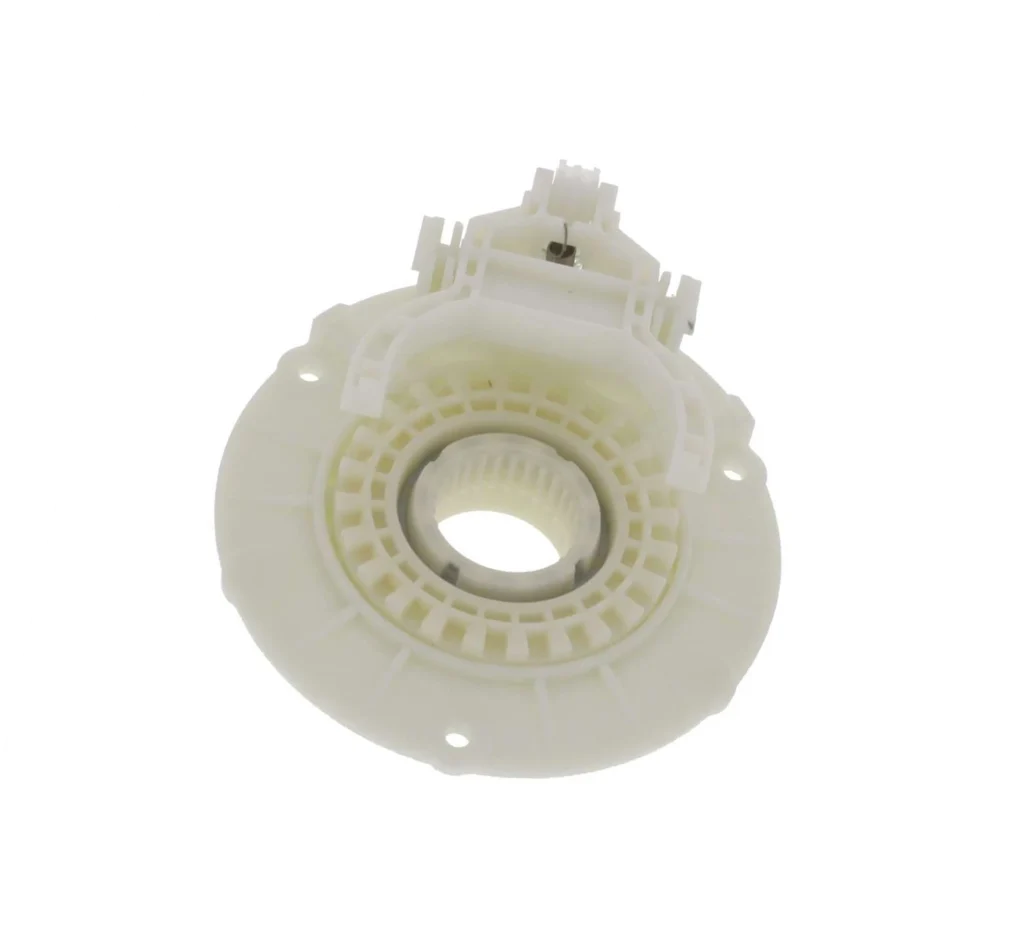
The shift actuator coupling in your LG top-load washer should last 8–10 years, but most fail around year 5. That's because it's working every single wash cycle — switching between agitate and spin modes dozens of times a day. When you're running 6–8 loads a week, that's over 15,000 mode changes before it gives out.
This $41 part (SKU 4323EA2001C) is the mechanical link between your actuator motor and the transmission. It's plastic, it's under constant stress, and it's sitting in a humid environment. But you can double its lifespan with the right approach.
How Long Should It Last?
Under normal conditions, the shift actuator coupling assembly lasts 8–10 years in models like the WT1101CW, WT5101HW, and WT5270CW. That's about 3,000–4,000 wash cycles if you're running typical loads.
What kills it faster:
- Overloading — Extra weight means extra torque on the coupling when switching modes
- Hard water deposits — Mineral buildup creates friction in the transmission, forcing the actuator to work harder
- Unbalanced loads — The actuator tries to shift while components are still moving, wearing down the plastic teeth
- High humidity environments — Accelerates plastic degradation in the coupling
If you've got a WT4970CW or WT5070CW in a basement laundry room and you're washing king-size comforters weekly, you're looking at 5–6 years max.
Signs It's Wearing Out
The coupling doesn't just snap one day. It tells you it's dying, usually weeks before complete failure.
The Washer Won't Switch to Spin Cycle
You hear the actuator motor trying to engage — there's a humming or clicking sound — but the drum stays in agitate mode. The water just sits there. This happens when the plastic teeth inside the coupling have worn down enough that they're slipping instead of catching. It'll work sometimes (usually with lighter loads) and fail other times.
Grinding or Clicking During Mode Changes
That grinding noise between agitate and spin? That's the coupling teeth trying to mesh but hitting at the wrong angle because they're chipped or rounded off. On models like the WT1801HVA and WT5170HV, you'll hear this most clearly during the transition right after the final rinse. It sounds like gears trying to catch.
Intermittent Spin Failures
Some loads spin fine. Others don't. There's no pattern. This is classic coupling wear — the teeth are damaged but not completely gone, so whether it engages depends on exactly where the coupling stops after agitate mode. Eventually it stops engaging at all.
Maintenance That Actually Works
Here's the truth: you can't directly access this coupling without disassembling the washer. It's sealed inside the drive system. But you can protect it indirectly.
Stop Overloading (Seriously)
LG's 4.5 cu ft models like the WT1301CW can technically hold a lot, but filling it to the top means the actuator has to shift under maximum load. That's when the coupling takes the most abuse. Leave at least 4–6 inches of space at the top of the drum. If you can't fit your hand between the clothes and the top of the basket, it's too full.
Balance Your Loads
The washer needs to stop completely before the actuator shifts modes. When loads are wildly unbalanced, the drum's still coasting when the shift happens. That shears the coupling teeth over time. Mix heavy items (towels, jeans) with lighter ones. Don't wash a single bath mat by itself.
Run a Cleaning Cycle Monthly
Hard water deposits don't just build up in the tub — they get into the transmission area through the drain holes at the bottom of the basket. Use the tub clean cycle with affresh or white vinegar monthly. This reduces friction in the entire drive system, which means less stress on the coupling.
Address Spin Issues Immediately
If your WT5101HV or WT4801CW starts having trouble spinning, don't just run the cycle again and hope it works. A failing coupling forces the actuator motor to work harder on every attempt, which accelerates wear on both parts. You'll end up replacing the motor too, turning a $41 repair into a $180+ repair.
When to Replace vs Maintain
If you're hearing grinding during mode changes more than once a week, the coupling's already damaged. Maintenance won't fix it — the plastic teeth are physically worn down. You're looking at replacement within 1–2 months.
If the washer's still shifting smoothly but you're at the 5–6 year mark on a heavily-used machine, you're in the prevention window. This is when load management and cleaning cycles actually extend life.
One test: run an empty spin cycle. If it shifts into spin immediately and smoothly, the coupling's still good. If there's hesitation or noise, start planning for replacement.
Frequently Asked Questions
Can I lubricate the shift actuator to make it last longer?
No. The coupling is sealed inside the drive system, and adding lubricant would require partial disassembly. By the time you're in there, you might as well replace the coupling if it's showing wear. Focus on reducing load stress instead — that's what actually prevents premature failure.
Will using cold water extend the actuator coupling life?
Not significantly. Temperature affects the tub and seals more than the mechanical drive components. What matters more is cycle selection — using the heavy-duty cycle for everything creates extra strain. Match the cycle to the actual load weight and soil level.
How do I know if it's the coupling or the actuator motor itself?
If you hear the motor trying to run (humming or clicking) but the washer won't shift modes, it's usually the coupling. If there's complete silence during the shift attempt — no sound at all from the bottom of the machine — the motor's likely failed. On models like the WT1701CV and WT1901CW, you can sometimes hear the difference between motor hum and grinding gears. The coupling makes a grinding or ratcheting sound. A dead motor makes no sound.
Element showing wear?
4323EA2001C · Replace before it fully fails