
How to Extend Your Dryer High Limit Thermostat Life — Maintenance Guide
Always unplug the dryer before accessing internal components. High limit thermostats operate at 240V and can deliver dangerous shocks even when the dryer appears off.
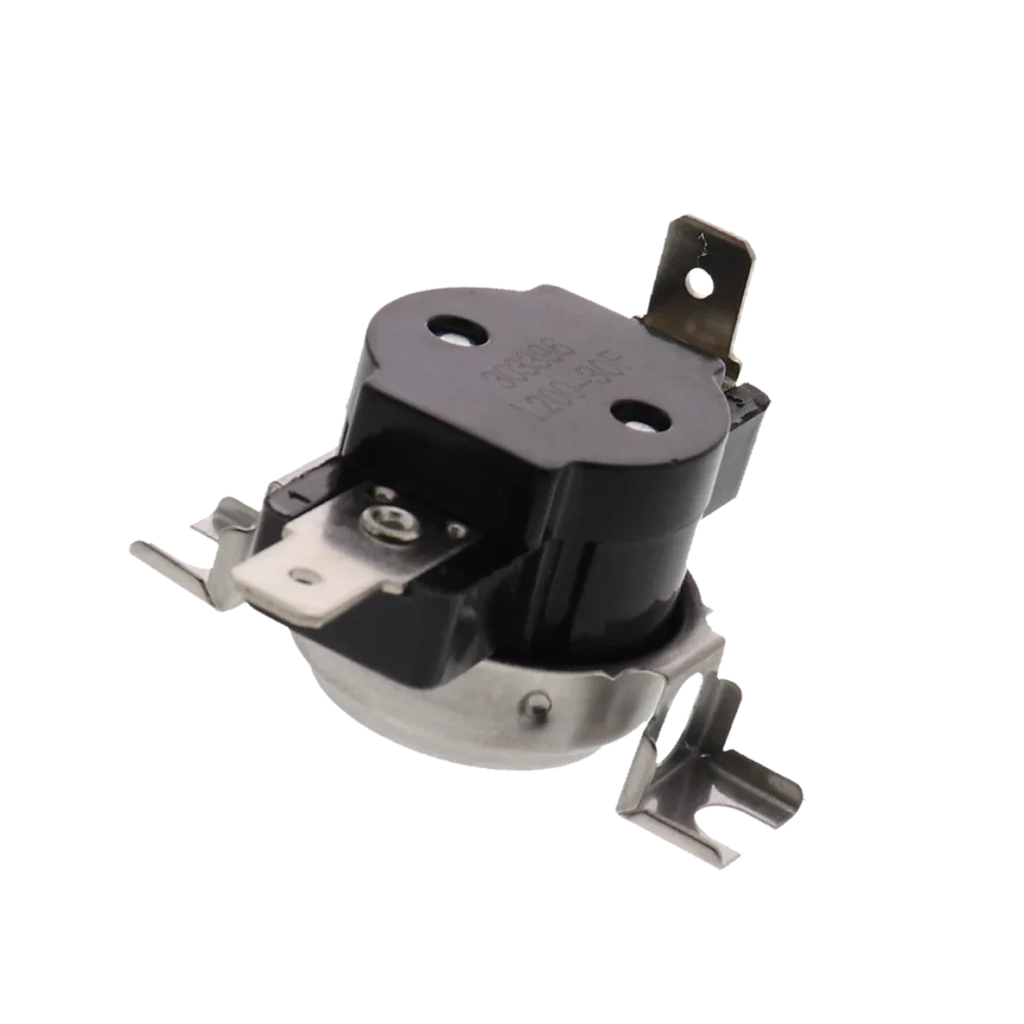
Here's the reality: most dryer high limit thermostats fail between 7-10 years, but I've seen units last 15+ years with proper care. The difference? Usually comes down to airflow. When your Maytag MDE7600AYW starts running too hot or stops heating altogether, that thermostat has likely been cycling way more than it should — and it's exhausted.
The 303396 high limit thermostat isn't just a safety device — it's your dryer's last line of defense against fire. When exhaust temps hit around 250°F, it cuts power to the heating element. Do that a thousand times? You're fine. Do it ten thousand times because your vent's clogged? You'll be shopping for a replacement.
How Long Should It Last?
Under normal conditions, the high limit thermostat in Whirlpool, Maytag, Admiral, and Kenmore dryers should last 10-12 years. That's roughly 3,000-4,000 complete dry cycles. But here's what actually affects its lifespan:
- Vent restriction — The #1 killer. A partially blocked vent makes the thermostat cycle 3-5 times per load instead of once.
- Overloading — Stuffing the drum forces longer dry times and higher temps.
- Lint buildup inside the cabinet — Creates hot spots that trigger unnecessary cycles.
- Running back-to-back loads — Doesn't let components cool between cycles.
With proper maintenance? I've personally seen these thermostats reach 15-18 years on models like the MDE9606AYW and LSE7806ACE. Without it? You might get 5 years before you're dealing with a dryer that won't heat or runs dangerously hot.
Signs It's Wearing Out
The thermostat doesn't just die overnight — it gives you warnings. Most people miss them until the dryer completely stops heating or starts scorching clothes.
Too Hot — Clothes Coming Out Nearly Burning
If your towels feel like they've been in an oven and your shirts have that crispy feel, the high limit thermostat might be failing to cut power when it should. The contacts inside wear out and don't open cleanly at the proper temperature. This isn't just annoying — it's dangerous. On models like the MDE5500AYW and GDE8000, this usually happens after years of cycling due to poor airflow.
Check the exhaust vent outside while the dryer's running. If air flow feels weak, you've found your problem's root cause.
Not Heating — Thermostat Stuck Open
More common than overheating is a thermostat that's stuck in the open position. The dryer runs, the drum tumbles, but there's zero heat. What happened? The contacts inside corroded or welded slightly apart from repeated high-temp cycling. On Maytag models like the MDE7400AYW and DE7400, this failure mode typically shows up after the unit starts taking longer to dry loads over several months.
Before replacing, test it with a multimeter — you should see continuity at room temp. No continuity? It's done.
Inconsistent Drying Times
One load takes 45 minutes, the next takes 90 minutes with the same settings? The thermostat's contacts are degrading. They're making intermittent connection, cutting heat on and off randomly. This drives people crazy on models like the LDE7304ACE because you never know if your clothes will actually be dry.
This symptom usually appears 1-2 years before complete failure. It's your early warning.
When to Replace vs Maintain
Let's be honest — you can't really "maintain" the thermostat itself. Once those internal contacts wear out, you're replacing it. But you can absolutely extend its life by maintaining everything around it:
Replace if: You've confirmed it's failed with a multimeter test, or your dryer exhibits the "too hot" or "not heating" symptoms after you've verified clean vents and normal airflow.
Maintain the system if: The dryer's working fine but you want to prevent premature failure. Focus on airflow — clean the lint screen after every load, vacuum inside the cabinet yearly, and check the exhaust vent twice a year.
For models like the MDG7600AWW and MDE6400AYW, I've seen $30 worth of annual maintenance prevent a $200 service call. The math's easy.
One more thing — if you're replacing the high limit thermostat, replace the operating thermostat at the same time. They've both lived the same life, and the second failure usually happens within six months.
Frequently Asked Questions
Can I Test the High Limit Thermostat Without Removing It?
Not reliably. You need to disconnect at least one wire and test for continuity with a multimeter at room temperature. It should show continuity (closed circuit). If you heat it above its rated temp (usually with a heat gun — carefully), it should open and show no continuity. But honestly? By the time you've got the cabinet open, just pull it and test it on your bench.
Why Does My Dryer Keep Blowing This Thermostat Every Year?
Your vent system is restricted. Period. The thermostat's doing its job — protecting against overheating — but it's cycling way too often because hot air can't escape. Check the entire vent run from the dryer to the outside. Look for crushed sections, excess length (should be under 25 feet), too many 90-degree turns, or a clogged exterior vent hood. On Maytag models especially, I've found birds' nests in the exterior vent hood more times than I can count.
Is the 303396 Different from Other High Limit Thermostats?
The 303396 is rated for a specific temperature cutoff (usually around 250°F) and designed for Whirlpool-family dryers. Using a different thermostat with a higher or lower rating can cause your dryer to overheat or cut off too early. Stick with the correct part number — it replaces WP303396, AP6007530, PS11740647, and 3-3396. They're all the same thermostat with different manufacturer numbers.
Element showing wear?
303396 · Replace before it fully fails