
How to Extend Your Frigidaire Defrost Thermostat Life — Maintenance Guide
Always unplug your refrigerator before accessing internal components. Allow 30 minutes for the freezer to warm before removing the back panel to avoid contact with frozen metal surfaces. Never attempt to chip away ice buildup with sharp tools — you can puncture refrigerant lines.
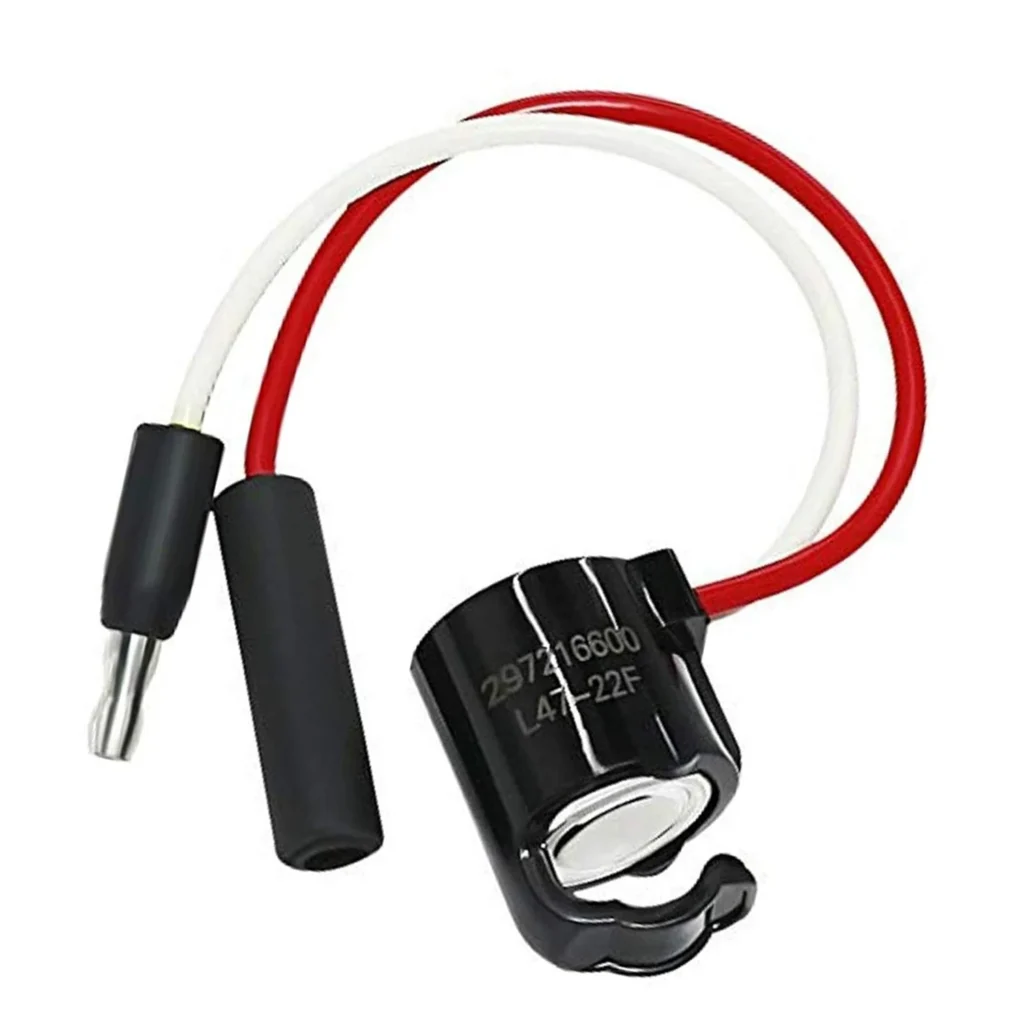
Here's something most people don't realize: a defrost thermostat that should last 10-12 years often fails in 5-7 because of one thing — frost buildup nobody notices until it's too late. I've pulled hundreds of these out of Frigidaire and Kenmore units, and the story's always the same: "It was running constantly for months, but I thought that was normal."
The 297216600 defrost thermostat is a simple component with a critical job — it tells your freezer when to stop defrosting. When it starts wearing out, you'll see your energy bill climb before you notice anything wrong with the fridge itself.
How Long Should It Last?
Under normal conditions, a defrost thermostat should last 10-12 years. That's the design life. But here's what actually happens in the field:
- Average actual lifespan: 6-8 years
- With proper maintenance: 10-14 years
- In humid climates: 4-6 years (the killer)
What affects lifespan? Three main factors. First, how often your freezer door opens — every time warm air rushes in, the defrost cycle works harder. Second, ambient humidity. If you're in Florida or along the Gulf Coast, moisture accelerates electrical contact degradation. Third, freezer loading patterns. An overpacked freezer restricts airflow, making the thermostat cycle more frequently.
Over time, the thermostat may develop electrical issues that lead to inconsistent performance. The contacts inside wear from thousands of heating and cooling cycles. It's not dramatic — just gradual drift until one day it doesn't trip when it should.
Signs It's Wearing Out
The thermostat doesn't just suddenly die. It gives you warnings, and if you catch them early, you can plan the replacement instead of dealing with an emergency at 10 PM when your freezer's defrosting all over the floor.
Frost Buildup on the Back Wall
This is the earliest sign. You'll see a thin layer of frost on the back panel inside your freezer that doesn't go away after a normal defrost cycle. It starts as a small patch, maybe 3-4 inches across, usually centered where the evaporator coils sit behind the panel.
What's happening: the thermostat isn't reaching its cutoff temperature consistently, so defrost cycles run short or skip entirely. The frost accumulates slowly — a millimeter here, a millimeter there. Within 2-3 months, you've got a serious buildup.
Freezer Running Constantly
One user told me: "Freezer was running all the time and this part looks like it solved the problem." That constant hum isn't normal. Your compressor should cycle on and off throughout the day — roughly 15 minutes on, 10-15 minutes off in normal conditions.
When the defrost thermostat sticks in the closed position, the defrost heater never activates properly. Ice builds up on the evaporator coils. This insulates them, so they can't absorb heat efficiently. The compressor runs longer trying to maintain temperature, but it's fighting a losing battle.
Temperature Swings in Both Compartments
Your freezer section measures warmer than usual (above 5°F), or your fridge section swings between too cold and too warm within the same day. This happens because ice-blocked evaporator coils can't maintain consistent cooling.
Check your freezer temp with a simple thermometer. Put it in a glass of water, leave it for 4 hours. Should read 0-5°F. If it's reading 10-15°F, and you're hearing the compressor running constantly, the thermostat's likely the culprit.
Simple Maintenance Tasks That Extend Life
The defrost thermostat sits behind your freezer's back panel, clipped to the evaporator coils. You can't directly clean or service it without removing the panel, but you can create conditions that reduce wear.
After Each Door Opening (If You're Loading Groceries)
Let the freezer run through one complete cycle before opening again. I know this sounds fussy, but if you're unloading a Costco run and opening the freezer 15 times in 20 minutes, you're forcing rapid temperature swings. Each swing makes the thermostat work.
Simple rule: load everything at once, close the door, walk away for 30 minutes.
Monthly: Check for Frost Buildup
Open your freezer, look at the back wall. Run your hand across it (don't press hard). You should feel the cold panel, maybe a very thin layer of frost that's barely noticeable. If you feel a bumpy ice layer, or if frost extends beyond the panel edges, you've got a problem developing.
Early frost buildup means the defrost cycle isn't completing. The thermostat might still be working, but it's trending toward failure. Catching it now, when it's just starting, means you can order the part and install it on your schedule instead of in an emergency.
Every 6 Months: Vacuum the Condenser Coils
Wait, the condenser coils? Those are on the outside, not connected to the defrost thermostat. True. But here's what I've seen: dirty condenser coils make the compressor run hotter and longer. This increases the freezer's internal temperature swings. More swings mean more defrost cycles. More cycles mean faster thermostat wear.
Pull the fridge away from the wall, find the coils (usually on the back or underneath behind a grille), vacuum them with a brush attachment. Takes 10 minutes. Extends the life of every temperature-sensitive component in your fridge.
Annually: Check Door Seals
Worn door seals let humid air infiltrate constantly. This creates more frost, which triggers more defrost cycles, which wears the thermostat faster. Test: close the door on a dollar bill. Pull it out. Should feel resistance. If it slides out easily, your seal's shot.
Replace worn seals. They're cheap compared to a service call for a frozen evaporator coil.
When to Replace vs Maintain
Here's the honest truth: you can't really "repair" a defrost thermostat. It's a sealed component. Once the contacts inside degrade or the bi-metal element loses calibration, it's done. At $26.99, the 297216600 is cheaper than a service call to diagnose the problem.
Replace if you're seeing:
- Constant frost buildup despite manual defrosting
- Freezer running 24/7 for more than 3 days straight
- Temperature readings consistently above 10°F in the freezer
- Ice blocking the evaporator fan (you'll hear clicking or grinding)
Don't replace if:
- You've only noticed frost once, and it went away after a manual defrost
- The issue started after a power outage (wait 48 hours for cycles to normalize)
- You just installed a new part less than 6 months ago (check installation instead)
The replacement takes less than 15 minutes. One user said: "Removed trays and back panel. Replaced thermostat. Reinstalled back panel and trays. Freezer works fine again." You need a screwdriver, maybe a nut driver depending on your model. The hard part is waiting for the freezer to warm up enough to remove the back panel safely — give it 30 minutes unplugged.
The Real Cost of Waiting
I had a customer wait 8 months after noticing frost buildup. "I kept chipping it away manually," she said. By the time she called me, ice had completely blocked the evaporator fan. The fan motor burned out trying to spin. What should've been a $27 thermostat repair became a $180 job with a new fan motor.
The defrost thermostat fails gradually, but the damage it causes accelerates quickly once frost starts blocking airflow. Catch it early.
Frequently Asked Questions
How Do I Know If My Defrost Thermostat Is Bad or If It's the Heater Element?
Unplug the fridge, remove the back panel inside the freezer (usually 4-6 screws), and locate the thermostat clipped to the evaporator coils. Use a multimeter set to continuity. Touch the probes to the thermostat terminals. In a cold state (below 20°F), it should show continuity (beep). Warm it with your hand — continuity should break. If it stays open or closed regardless of temperature, it's bad.
The heater element, by contrast, either works or doesn't. Test it with the multimeter — should show 10-50 ohms of resistance. Infinite resistance means it's burned out.
Can I Just Manually Defrost Instead of Replacing the Thermostat?
Short answer: yes, but you're setting yourself up for bigger problems. Manual defrosting every 2-3 weeks will keep your freezer running, but it won't fix the underlying issue. The thermostat will continue degrading, and eventually it'll fail in a way that causes the defrost heater to run too long — that can warp plastic components or even create a fire risk.
Plus, you're wasting energy. A freezer with frost buildup runs 20-30% less efficiently. At today's electricity rates, you'll spend more on your power bill in 6 months than the thermostat costs.
Will This Part Work in My Kenmore 253 Series?
The 297216600 is compatible with most Frigidaire, Kenmore (253 prefix), Gibson, and Kelvinator models made between 2005-2020. It replaces part numbers AP4374171, PS2350702, 1483781, 216731000, and 218673001. Check your model number against the compatibility list on the product page — if your model's from that era and uses a similar numbering system, it'll fit. When in doubt, pull your existing thermostat and compare the terminal configuration and mounting bracket.
Element showing wear?
297216600 · Replace before it fully fails