
How to Extend Your Whirlpool Dryer Heating Element Life — Maintenance Guide
Always disconnect power at the breaker before accessing the heating element area. The element operates at high voltage and can cause serious electrical shock even when the dryer appears off.
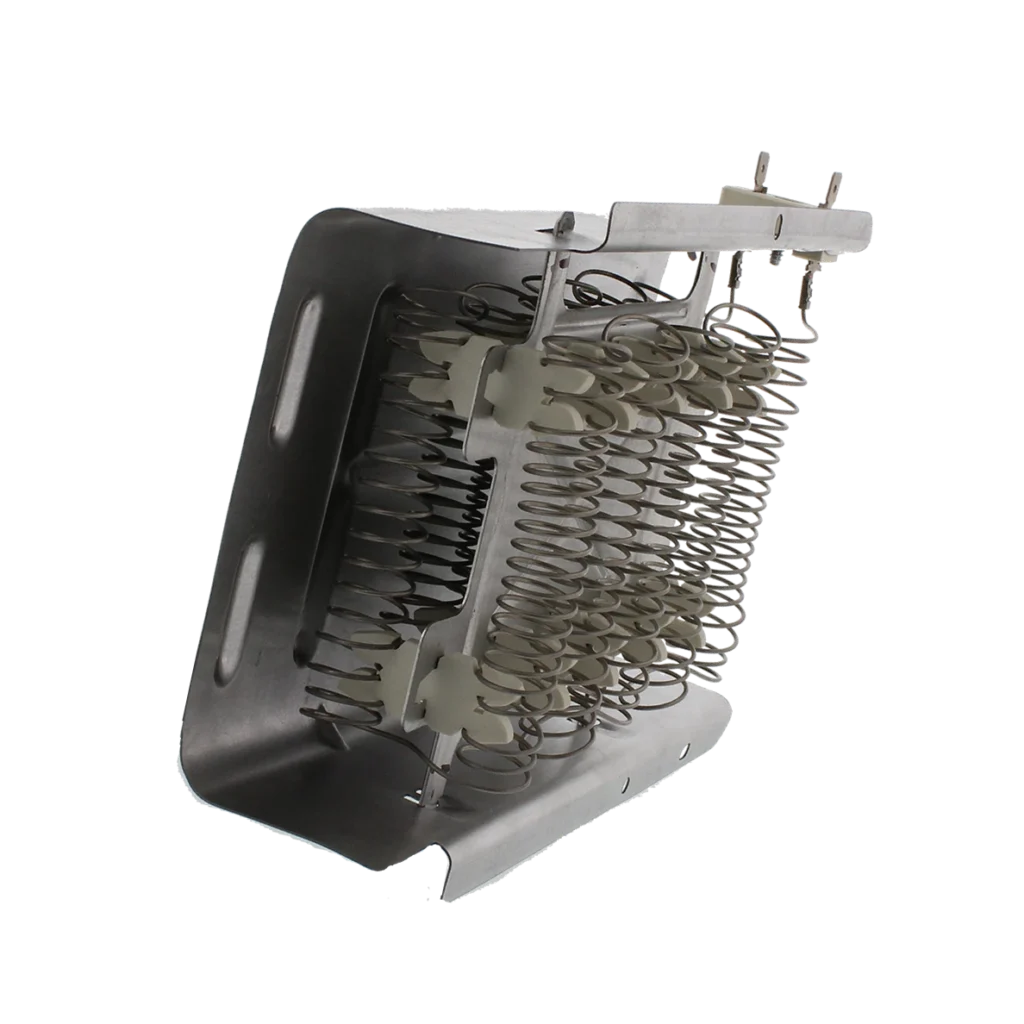
Most dryer heating elements should last 8-15 years, but lint buildup can cut that lifespan in half. If you've got a Whirlpool WED4815EW1 or Maytag MEDC215EW1, your 279838 heating element is working at temperatures around 155°F every cycle — and every bit of lint that accumulates near those coils becomes a heat trap that accelerates metal fatigue.
I've replaced hundreds of these elements, and the ones that fail early almost always have one thing in common: they're buried under months of lint accumulation. The good news? Ten minutes of maintenance every few months can double the life of this $56 part.
How Long Should It Last?
Under normal conditions, the 279838 heating element should give you 10-15 years of service. But that assumes two critical things: proper ventilation and regular cleaning. When airflow gets restricted, the element runs hotter than designed, which accelerates the material fatigue that eventually causes the coils to break.
The element itself is a simple coil of nichrome wire inside a metal housing. It's designed to heat up and cool down thousands of times. What kills it isn't the heating — it's the overheating that happens when lint blocks the airflow path or when the vent hose gets kinked behind the dryer.
I've seen elements last 20+ years in homes where the owners clean the lint trap religiously and vacuum behind the dryer twice a year. I've also seen them fail after 3 years when the vent hose looked like a felt tube from all the accumulated lint.
Signs It's Wearing Out
The 279838 doesn't give you much warning before it fails completely, but there are a few telltale signs if you know what to look for:
Clothes Taking Multiple Cycles to Dry
This is the earliest warning sign. If your dryer that used to finish a load in 45 minutes now needs 90 minutes or two full cycles, the element might be partially compromised. Sometimes a section of the coil develops a high-resistance spot that reduces overall heat output without failing completely.
Before blaming the element, check your vent hose first — a clogged vent mimics the exact same symptom. Pull the dryer away from the wall, disconnect the vent, and run a cycle. If it dries normally with no vent attached, your element is fine and your vent needs cleaning.
Dryer Runs But Produces Zero Heat
This is the classic failure mode. You hear the drum turning, feel air coming out, but it's room temperature. One user described it perfectly: "Dryer still runs, but the heating element stopped working." When the nichrome coil breaks — usually at a stress point where it connects to the terminals — you get complete loss of heat.
On models like the WED4800BQ1 or LER5620KQ0, you might also notice the cycle never advances past the heating phase because the thermostats never sense sufficient temperature to trigger the next stage.
Inconsistent Heating or Excessive Heat
If your dryer occasionally gets so hot it's uncomfortable to touch the door, or if you're noticing scorch marks on clothes, the element might be developing a short that bypasses the thermal fuses. This is less common but more dangerous — it means the safety systems aren't controlling temperature properly.
Another scenario: heat stays on after the drum has stopped. This indicates a control board issue usually, but it can also mean the element's circuit isn't breaking cleanly, which puts extra stress on the coils.
Maintenance That Actually Extends Lifespan
Here's what actually works, based on elements I've seen last 15+ years versus the ones that fail at year 5:
After Every Load
Clean the lint screen. Not just pull it out and wipe it — actually scrub it under running water once a month with a soft brush. Fabric softener leaves a film that blocks airflow through the screen mesh, forcing more lint past the trap and into the element housing.
Every Three Months
Vacuum behind and under the dryer. Use the crevice tool to get into the vent connection area. You'd be amazed how much lint escapes around the vent hose connection and settles around the element housing. On models like the WED5000DW2, the rear panel gives you access to this area with just a few screws.
Check the vent hose for kinks or compression. If your dryer is pushed tight against the wall, the hose might be partially crushed, reducing airflow by 40% or more.
Every Six Months
Pull the dryer out and disconnect the vent hose completely. Vacuum both the dryer outlet and the vent hose opening. If you can't see daylight through the vent hose, it needs professional cleaning. A clogged vent is the #1 cause of premature element failure.
While you're back there, remove the lower rear panel (usually 4-6 screws on models like the WED6400SW1). You'll see the element housing — it's a rectangular metal box on the right side. Vacuum around it gently. Don't touch the element itself, but remove any lint buildup in the surrounding area.
Once a Year
Have your entire vent system professionally cleaned if it runs more than 10 feet or has any elbows. I've pulled vent hoses that were 80% blocked with compressed lint, and the homeowner had no idea because the dryer still technically worked — it just took forever and was slowly cooking the element.
When to Replace vs Maintain
If your element has completely failed — zero heat, drum spinning — maintenance won't help. You need the new element. The repair takes 30-60 minutes with basic tools (nutdriver, screwdrivers, socket set), and as one user put it: "Moved away from wall, disconnected discharge hose, disconnected power, removed rear panel, cleaned the area of lint, removed old element and replaced with new one, reinstalled everything and tested. Works great now."
But if you're catching the early signs — longer dry times, occasional cool cycles — aggressive maintenance might buy you another year or two. Pull the dryer out, clean everything thoroughly, and monitor performance for a week. If cleaning the vent system doesn't restore normal operation, the element's probably on its way out.
Here's the honest truth: a heating element is a wear item. Even with perfect maintenance, the thermal cycling eventually causes metal fatigue. But perfect maintenance means 12-15 years instead of 5-7 years. That's the difference between replacing it once versus three times over the life of your dryer.
What Actually Kills These Elements
The technical answer is prolonged high temperature exposure and material fatigue. But practically, here's what that means:
When lint restricts airflow, the element can't cool itself properly between heating cycles. The coils reach higher temperatures than designed. Nichrome wire gets brittle when it's repeatedly overheated, and eventually it develops a crack at a stress point — usually where the coil attaches to the terminal. That crack propagates until the wire breaks completely, and you get zero heat.
The second killer is moisture. If you're venting into a humid space or if your vent hose has a sag where condensation can collect, that moisture eventually works its way back toward the element. Water and high-resistance heating coils don't mix well — it accelerates corrosion at the terminals.
On models like the Roper or Kenmore variants using this same element, I've also seen failures traced back to voltage issues. If your home has frequent power fluctuations or surges, the element takes the brunt of it. A whole-house surge protector is cheap insurance for expensive appliance parts.
Frequently Asked Questions
Can a heating element partially fail, or is it all-or-nothing?
Usually it's all-or-nothing — the coil breaks and you get zero heat. But I have seen elements develop high-resistance spots that reduce heat output by 30-40%, giving you those frustratingly long dry times. If you're getting some heat but not enough, check the vent system first before condemning the element. A partially blocked vent mimics the exact same symptom.
Will cleaning the element housing actually extend its life?
Absolutely. Lint buildup around the element acts like insulation, trapping heat that should be dissipating into the airflow. This raises the operating temperature of the coils, which accelerates the fatigue process. I've measured a 20-30°F temperature difference between a clean element housing and one packed with lint. Over thousands of cycles, that difference is the difference between 8 years and 15 years.
My dryer is only 4 years old and the element failed — is that normal?
No, that's early for a 279838 element. Four-year failures almost always trace back to ventilation problems. Check your entire vent run — length, kinks, blockages, and termination point. If you're venting more than 25 feet or through multiple elbows, you're working the element harder than it's designed for. Also check if you're overloading the dryer or using high heat for loads that should be on medium. The element doesn't care what the dial says — it heats until the thermostat is satisfied, and overloading extends that heating time significantly.
Element showing wear?
279838 · Replace before it fully fails