
How to Extend Your Frigidaire Air Damper Control Assembly Life — Maintenance Guide
Always unplug the refrigerator before attempting any inspection or repair. The control panel area contains live electrical connections.
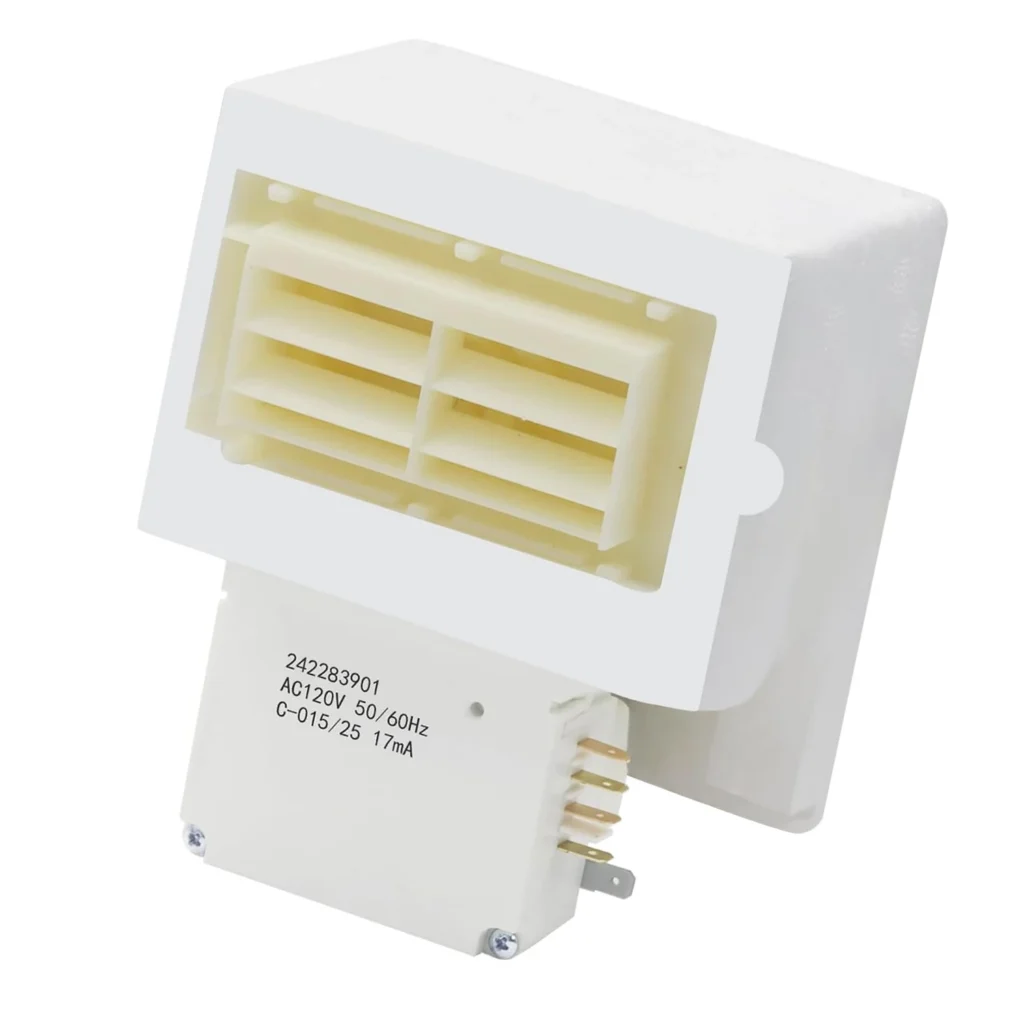
Here's a frustrating scenario: your Frigidaire fridge starts running warm while your freezer's cranking out ice like it's a competition. Nine times out of ten, the air damper control assembly (part 242303001) is stuck closed. Most people replace it after 4–6 years. With proper care, you can push that to 7–9 years — and avoid the $97 replacement bill for as long as possible.
How Long Should It Last?
The 242303001 damper assembly typically fails between 4 and 6 years in normal use. Why? Because it's constantly opening and closing (sometimes hundreds of times per month) to regulate cold air flow from your freezer to your fridge. The motor and plastic gears inside take a beating.
What affects lifespan:
- Frost buildup — when moisture accumulates around the damper vent, it freezes and forces the motor to work harder pushing the door open
- Door gasket condition — a leaky door seal lets humid air in, creating ice plugs that jam the damper
- Temperature setting abuse — constantly cranking temps up and down makes the damper cycle more frequently
- Dust accumulation — believe it or not, dust on the motor housing can cause it to overheat slightly, shortening motor life
If you maintain it properly, you can hit 7–9 years. I've seen a few make it to 10, but that's rare.
Signs It's Wearing Out
The damper usually doesn't fail suddenly — it gives you warnings. Here's what to watch for on models like the FFHS2311LBB, FFHS2611P, and FFHS2322M:
Refrigerator Running Warm (While Freezer Works Fine)
This is the classic sign. Your freezer's at zero degrees, but your milk's spoiling because the fridge is sitting at 45°F. The damper door is stuck closed, blocking cold air from reaching the refrigerator compartment. You might also notice the compressor running constantly, trying to compensate.
Damper Door Stuck Closed or Not Opening
You can actually check this yourself. The damper is behind the front panel where your temperature controls are. If you listen carefully when the fridge cycles on, you should hear a quick "click-click" sound within 30 seconds — that's the damper opening. No click? It's stuck. As one user put it: "Damper door was shut and would not open."
Ice Plug in Damper Vent or Light Frost in Freezer
See frost building up around the damper vent area? That ice is the enemy. It jams the damper door and forces the motor to strain. Over time, this accelerates wear on the gears inside. If you're seeing consistent frost buildup, your damper's working overtime — and it won't last as long.
Freezer Too Cold (More Than Usual)
If your freezer's colder than normal and your fridge is warm, the damper's likely stuck closed. All the cooling power is trapped in the freezer because the damper won't open to let cold air through. This isn't just inconvenient — it burns extra electricity and stresses the compressor.
Maintenance Schedule That Actually Works
The damper assembly isn't easily accessible — it's buried behind the control panel with wires running through both pieces. But you don't need to disassemble anything for basic maintenance.
Every 3 Months: Check for Frost Buildup
Open your freezer and look at the back wall near the damper vent. See frost? Wipe it down with a dry cloth. If it's heavy, unplug the fridge for 30 minutes to let it melt, then wipe it dry. This simple step prevents ice jams that kill the motor.
Every 6 Months: Test the Damper Click
After the compressor kicks on, stand near the fridge and listen for that "click-click" within 30 seconds. If you don't hear it, the damper might be struggling. You can also open the fridge and feel for cold air coming through the vent — if it's blocked, you've got a problem brewing.
Annually: Inspect Door Gaskets
A worn door gasket lets humid air in, which creates frost around the damper. Close the door on a dollar bill — if you can pull it out easily, the gasket's shot. Replace it before it ruins your damper.
When to Replace vs Maintain
Let's be honest: if the damper motor or gears have already failed (the most common failure mode), maintenance won't save it. You'll need to replace the entire 242303001 assembly.
Replace if:
- You hear grinding or clicking sounds constantly (gears are stripped)
- The damper door won't move at all, even after defrosting
- Your fridge temp won't stabilize no matter what you do
- You've already cleaned frost buildup multiple times and it keeps coming back worse
Maintain if:
- The damper still clicks and opens (you can hear it or feel airflow)
- You're only seeing occasional light frost
- Temperature issues are intermittent, not constant
Here's the deal: if you're already looking at a 1–2 hour repair job with reversed nuts (lefty-tighty, righty-loosy — yes, really) and hard-to-reach pockets that need a long nut driver, you might as well replace the part if it's showing any serious symptoms. Preventive maintenance works best when you start before problems appear.
Frequently Asked Questions
Can I manually open the damper door if it's stuck?
Not really. The damper door is motorized and sits behind the control panel. You'd need to remove the entire front assembly (with those reversed nuts) to access it. By that point, you're better off just replacing it if it's truly stuck.
Will cleaning my freezer coils help the damper last longer?
Indirectly, yes. Clean condenser coils mean your fridge doesn't work as hard, which means less frequent temperature cycling, which means fewer damper cycles. Clean those coils every 6 months if you want everything to last longer.
Why does frost keep building up around my damper vent?
Usually it's a leaky door gasket or someone leaving the door open too long. Humid air gets in, condenses, and freezes around the coldest part — the damper vent. Fix the gasket or change your habits. If you don't, you'll keep icing up the damper until it fails.
Element showing wear?
242303001 · Replace before it fully fails