
How to Extend Your Frigidaire Water Inlet Valve Life — Maintenance Guide
Always disconnect both water supply AND electrical power before servicing. Energized solenoids pose shock hazard, and pressurized water lines can spray forcefully when disconnected.
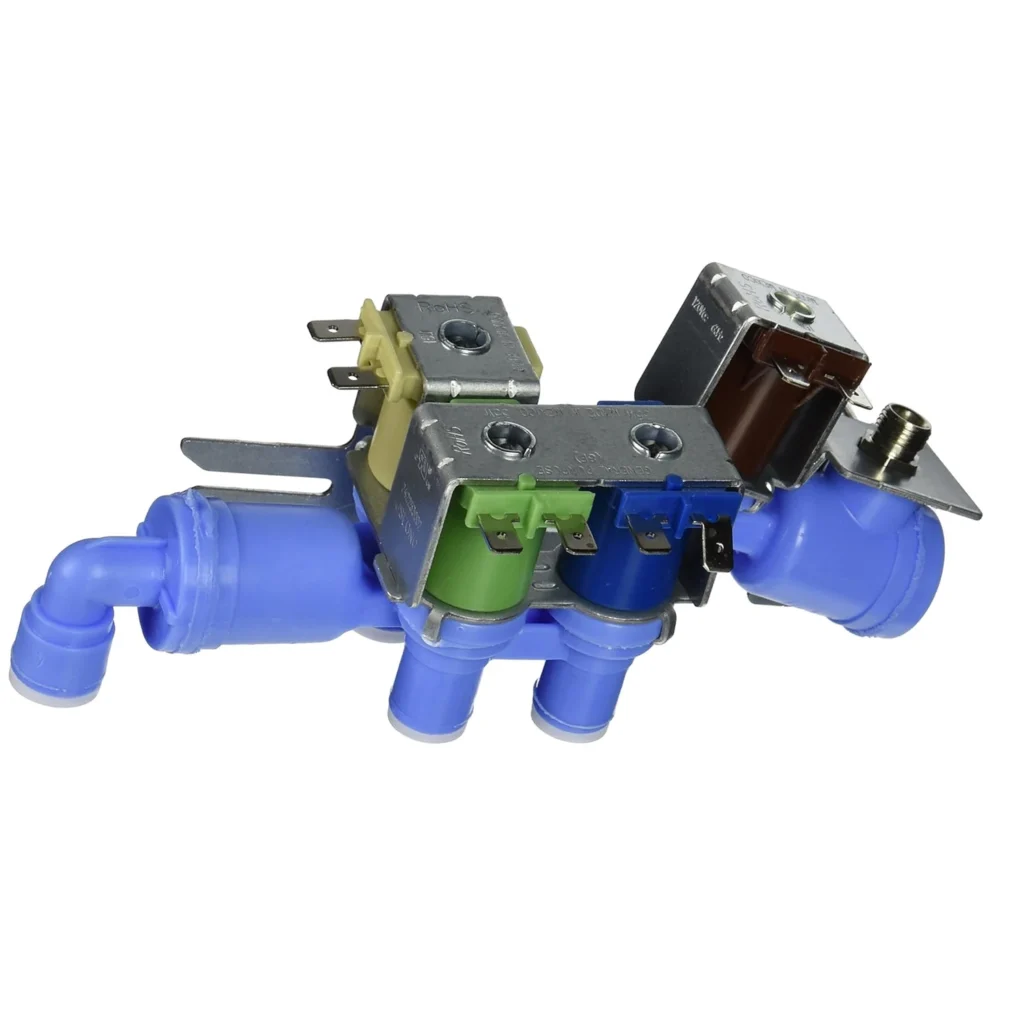
Here's a frustrating pattern: the 242253002 water inlet valve should last 5–7 years with normal use, but most homeowners replace theirs at the 3-year mark. The difference? Those extra years come down to water quality and a few preventive habits that take maybe 10 minutes every six months.
This 4-coil valve controls water flow to your ice maker and dispenser across dozens of Frigidaire, Electrolux, Kenmore, and Crosley models—from the FFHB2740PE6A to the FGHF2366PFEA. When it fails prematurely, you'll see one tech describe it like this: "no water flow.. no silenoid click...." That clicking sound is actually your first diagnostic tool.
How Long Should It Last?
Under ideal conditions—clean municipal water, normal household pressure (40–80 PSI), moderate ice maker use—this valve should give you 5–7 years. But "ideal" rarely describes reality.
Well water cuts that lifespan by 30–40% due to mineral content. Hard water (above 120 mg/L) accelerates sediment buildup inside the solenoid chambers. High water pressure (above 80 PSI) stresses the internal seals and diaphragm. If you're making ice constantly—say you entertain frequently or have teenagers—those solenoids cycle thousands more times per year.
The good news? With proactive care, you can push a valve to 8–10 years even with challenging water conditions. It's not magic—it's about controlling what damages the valve in the first place.
Signs It's Wearing Out
Catch these early and you might extend the valve's life with cleaning. Wait too long and you're buying a replacement.
Not Dispensing Water
This is the obvious one. You press the dispenser paddle and... nothing. No water, no sound, no flow. Sometimes it's intermittent—works Monday, doesn't work Tuesday. That inconsistency usually means sediment is partially blocking one of the valve's ports. If you hear the solenoid clicking but still get no water, the internal screen is likely clogged.
Ice Maker Not Making Ice
Your ice maker went silent. The bucket's empty and stays empty. The valve supplies water to the ice maker through a dedicated port—if that port clogs or the solenoid fails, ice production stops completely. One user described troubleshooting this: "no ice, etc. must be a frozen or pinched line.." Often it's not the line at all—it's the valve's ice maker solenoid that's quit.
Leaking
Water pooling under your fridge or dripping from the valve itself means the internal seals have degraded. You might see slow seepage at the connection points or a steady drip when the valve's supposed to be closed. This happens when mineral deposits prevent the diaphragm from seating properly, or when years of pressure cycling have cracked the seal material.
Preventive Maintenance Schedule
Most valve failures are preventable. Here's what actually works:
Every 6 months: Shut off the water supply and remove the inlet screens. These fine mesh screens catch sediment before it reaches the solenoids. Rinse them under running water, use a soft brush to remove mineral buildup. If they're corroded or torn, replace them—they're cheap insurance. While you're there, check the connection points for any moisture or corrosion.
Annually: Test your household water pressure with a gauge (under $15 at any hardware store). Screw it onto an outdoor spigot and turn on the water. If you're seeing above 80 PSI, install a pressure reducer on your main line. High pressure is the silent killer of these valves—it overstresses every component and shortens lifespan dramatically.
For well water or hard water: Install an inline sediment filter on the refrigerator's water line. Change it every 6 months. This $20 filter will save you $150 valve replacements. The filter catches what the inlet screens can't—fine particles that accumulate over time and eventually lock up the solenoid mechanisms.
When to Replace vs Maintain
Let's be honest about the economics. If your valve is leaking, replacement usually makes more sense than repair. The internal seals aren't serviceable parts, and the time you'd spend trying to clean and reseal it exceeds the 15–30 minute replacement job.
If you're getting no water flow and you've already cleaned the screens, pulled the valve, and verified it's not a frozen line, the solenoid coils have likely failed. When a tech reports "isolate water. isolate power.. back out screws. pull hose... push in parts re-energized the circuit. however, no water came through..." they've essentially confirmed the valve itself is dead.
But if you're catching intermittent operation early, cleaning the screens and checking for kinked lines can buy you years. The key is addressing symptoms when they first appear, not after you've been without ice for three months.
One decision factor: age. If your valve is already 5+ years old and showing symptoms, replacement makes sense even if cleaning might temporarily fix it. You're on borrowed time anyway. But if it's only 2–3 years old and you've never maintained it, cleaning and ongoing prevention can double its remaining life.
Frequently Asked Questions
Can I test if the solenoids are working without replacing the valve?
Yes—with the valve removed and water/power isolated, use a multimeter to check continuity across each solenoid coil. You should see 200–500 ohms of resistance. Infinite resistance means the coil is burned out. You should also hear a distinct click when 120V is applied (be extremely careful—this is a live electrical test). No click means the solenoid's mechanically failed even if it shows proper resistance.
Why does my valve work fine in winter but fail in summer?
Temperature affects water pressure—cold water is denser and flows differently than warm. If your valve works in winter when inlet water is 45°F but struggles in summer when it's 75°F, you likely have marginal solenoids that can't overcome the reduced pressure differential. This also happens if your home's water pressure drops in summer due to irrigation use in your neighborhood.
Is the clicking sound normal or a problem?
You should hear a single crisp click when the valve opens and another when it closes. That's the solenoid actuating—totally normal. If you hear rapid chattering or buzzing, the valve is either getting inadequate voltage or the solenoid is failing mechanically. Continuous humming without water flow means the solenoid is energized but stuck—usually due to sediment blocking the plunger movement.
Element showing wear?
242253002 · Replace before it fully fails