
How to Extend Your Frigidaire Door Shelf Bin Life — Maintenance Guide
Always support bins from underneath when loaded. Cold plastic is brittle — let bins warm to room temperature before removal for cleaning.
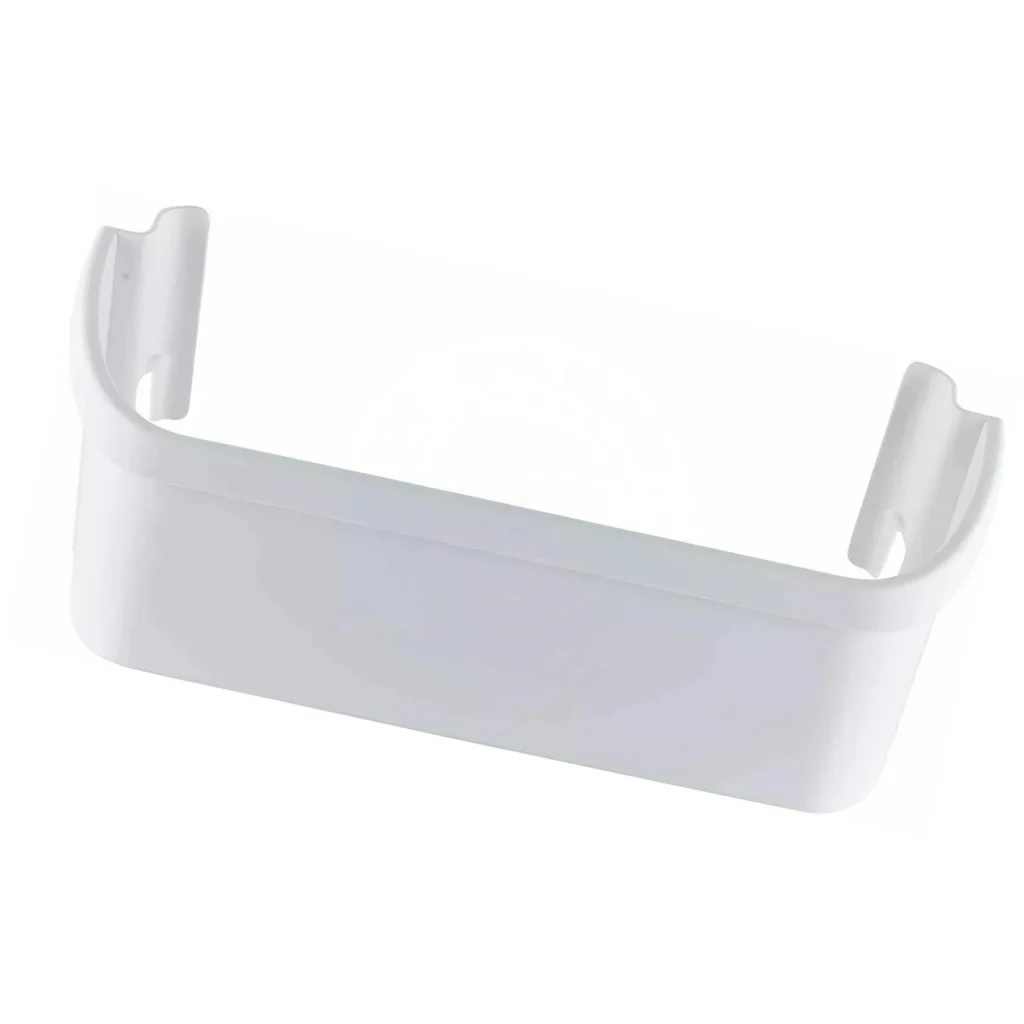
Most Frigidaire door shelf bins last 5-7 years, but I've seen them crack and break in less than two if you're not careful. The problem? It's not the plastic quality — it's how we treat them.
This bin (part 240363701) fits dozens of Frigidaire, Kenmore, Gibson, and Crosley models including the FFHS2311 and FFHS2313 series. At $36.99, it's worth protecting.
How Long Should It Last?
Under normal conditions, you're looking at 5-7 years. I've replaced bins that were still going strong after 10 years, and I've seen them crack in 18 months.
The difference? Temperature shock and overloading. These bins are engineered for specific weight limits and temperature ranges. Push those limits and the plastic becomes brittle.
Cold plastic is fragile plastic. When you yank a gallon of milk out of a bin that's been sitting at 38°F, you're stressing the mounting tabs. Do it roughly enough times, and those tabs snap.
Signs It's Wearing Out
Here's what to watch for before catastrophic failure dumps your condiments on the floor:
Stress Lines Around Mounting Points
Check where the bin attaches to the door. See white stress marks or hairline cracks? That's the plastic losing its flexibility. It'll still hold for now, but you're on borrowed time.
Run your finger along the inside edge of the mounting tabs. If you feel roughness or see crazing in the plastic, plan to replace it within 6 months.
The Bin Doesn't Sit Level Anymore
If one side sits lower than the other, a mounting tab has partially failed. The bin's trying to tell you something. Listen to it before it fails completely when loaded with glass jars.
This usually happens because someone grabbed the bin edge instead of the item they wanted. Over time, that sideways pressure warps the mounting system.
Visible Discoloration or Clouding
Clear plastic that's turned yellow or cloudy isn't just ugly — it's chemically degraded. UV exposure (if your fridge is near a window) or harsh cleaners break down the polymer chains.
Once plastic clouds, it's lost flexibility. A bin that would've flexed under stress now cracks instead.
Extending the Life: What Actually Works
Support from underneath when removing heavy items. Don't pull bottles by gripping the bin edge — your hand should go under the item itself.
Clean with warm water and dish soap. Skip the bleach, ammonia, and abrasive scrubbers. Those products accelerate plastic degradation.
Don't overload it. The bin's rated for about 10-12 pounds total. Two half-gallons of juice or three large condiment bottles — that's the limit. I've seen people try to store a full gallon of milk in these. That's how tabs break.
Let it warm up before deep cleaning. If you're taking the bin out for a thorough wash, give it 10 minutes at room temperature first. Cold plastic is brittle, and you'll crack it during handling.
When to Replace vs Maintain
If you've got stress marks but no cracks, you can keep using it. Just reduce the load and handle it gently.
Any visible crack means replacement time. Cracks propagate — they don't heal. What's a hairline crack today becomes a split tomorrow when you least expect it.
If the bin doesn't lock securely into position anymore, the mounting system has failed. You can't fix that. Order the replacement before the current bin fails catastrophically.
One more thing: if you're buying a used fridge, budget for new door bins. They're almost always the first thing to fail on older units.
Frequently Asked Questions
Can I repair a cracked door bin with epoxy or plastic welding?
Technically yes, but don't. I've tried both methods. The problem is the repair creates a stress point that's actually weaker than the original crack. You'll end up with condiment bottles on your floor at 2 AM. At $36.99, replacement is cheaper than the mess you'll be cleaning up.
Why do these bins crack more in winter?
Your kitchen's colder, the fridge works harder to maintain temperature, and the plastic gets colder than usual. Cold plastic is brittle plastic. If your kitchen drops below 65°F in winter, be extra gentle with door bins during those months.
Will using door bin liners protect the plastic?
Liners prevent staining and make cleanup easier, but they won't prevent structural failure. The cracks happen from mechanical stress and temperature cycling, not from contact with food. Use liners for convenience, not as a preservation strategy.
Element showing wear?
240363701 · Replace before it fully fails