
How to Extend Your Dishwasher Upper Spray Arm Life — Maintenance Guide
Always disconnect power and turn off water supply before removing spray arm. Hot water and steam can cause burns if removed immediately after a cycle.
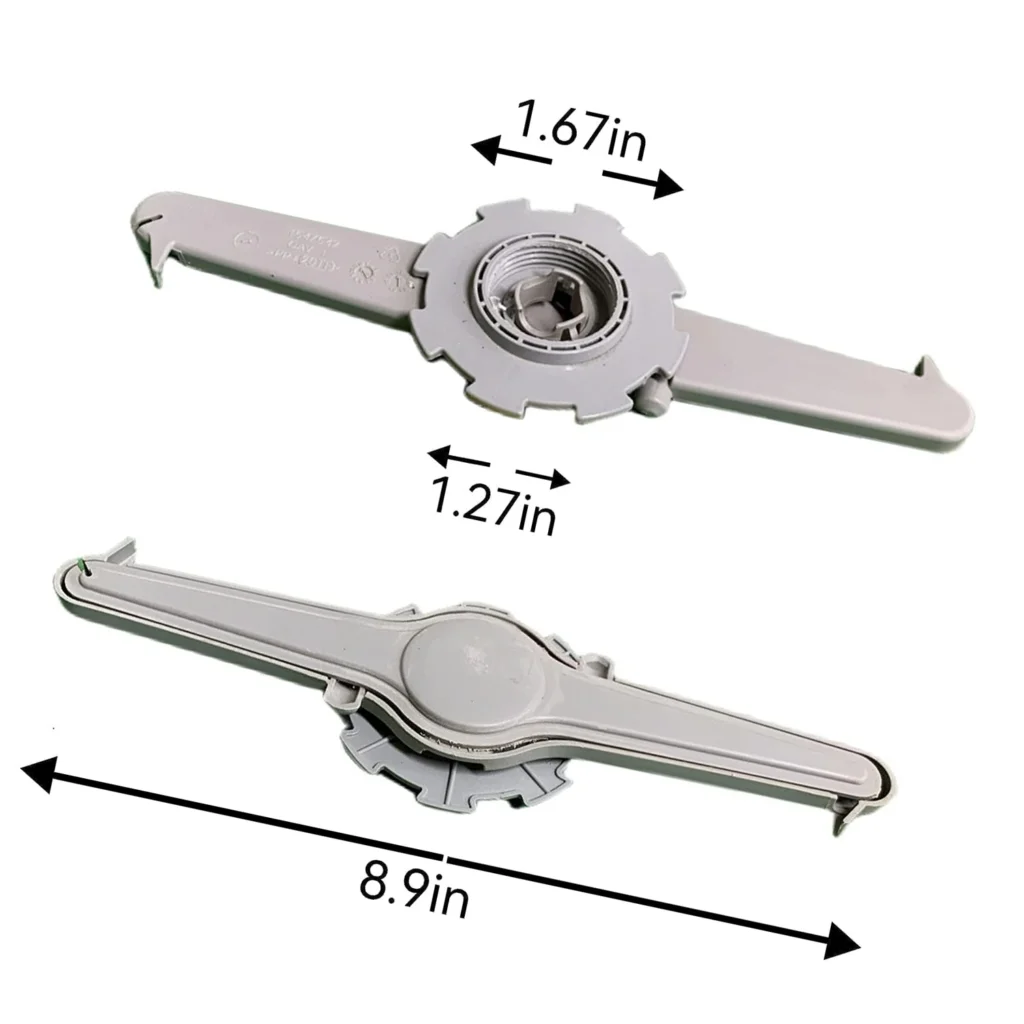
Your upper spray arm spins at 40 RPM while shooting pressurized water through dozens of tiny holes — that's 5,000+ rotations during a single wash cycle. Yet most people never clean it until their dishes come out grimy. The 154754502 upper spray arm assembly typically lasts 5-7 years, but I've seen them fail in under two when hard water deposits clog those spray holes or when mineral buildup locks up the bearing.
Here's the thing: this part fails gradually. You won't notice it's underperforming until your top rack dishes start coming out dirty or food particles stick to glasses. By then, you've already been running incomplete wash cycles for weeks.
How Long Should It Last?
The 154754502 spray arm assembly has a realistic lifespan of 5-7 years in normal conditions. That number drops fast if you've got hard water or if you're not pre-rinsing heavily soiled dishes. The bearing mechanism inside can handle about 15,000 hours of operation — that's roughly 1,800 wash cycles.
What kills spray arms early? Three things: mineral deposits that clog the spray holes, hard water buildup that seizes the rotating mechanism, and food particles that create an imbalance causing the arm to wobble or crack. If you live in an area with water hardness above 180 ppm (parts per million), expect the lower end of that lifespan estimate unless you're maintaining it properly.
This part is compatible with Frigidaire, Crosley, Kenmore, Kelvinator, and even some Ikea models like the 80465585. It replaces older part numbers 5304506516, 154478201, and 154698901 — so if you've got an older dishwasher running one of those original arms, this maintenance advice still applies.
Signs It's Wearing Out
The upper spray arm doesn't just quit spinning one day. It gives you warning signs — you just need to know what to look for.
Top Rack Dishes Stay Dirty
When the top rack consistently has dirty spots while the bottom rack comes out clean, your upper spray arm isn't distributing water properly. Pull the arm out and hold it up to a light. If you can't see light through every spray hole, they're clogged with mineral deposits or food particles. Even partially blocked holes reduce water pressure enough to leave dishes dirty.
Grinding or Clicking During Wash Cycles
That clicking sound? It's the spray arm hitting something it shouldn't — usually because the bearing has worn enough to let it wobble. The arm should spin freely and silently. If you hear rhythmic clicking or grinding during the wash cycle, the internal bearing is likely damaged or the spray arm has developed a crack that's throwing off its balance.
White Mineral Deposits on the Arm
Check the spray arm for white, chalky buildup. This isn't just cosmetic. Those deposits restrict water flow and add weight to the arm, making the bearing work harder. Eventually, the buildup can completely seize the rotating mechanism. If you see white deposits, they're also inside the spray holes — guaranteed.
Visible Cracks or Warping
Plastic spray arms can crack from the constant pressure changes and temperature swings. Look closely at the center hub where the arm attaches and along the seams. Even hairline cracks will leak water pressure and prevent proper spinning. Warping usually happens near the spray holes where heat concentration is highest.
Maintenance Schedule That Actually Works
You don't need to baby this part, but you can't ignore it either. Here's what I tell customers who want to get the full 7+ years out of their spray arm.
Monthly Deep Clean
Pull the upper spray arm out once a month — it just twists or clips off, depending on your model. Run it under hot water and use a toothpick or straightened paperclip to clear each spray hole. Don't skip any. I use a bowl of white vinegar and let the arm soak for 15 minutes to dissolve mineral deposits, then flush it under hot water again. Takes ten minutes total.
While it's out, spin the bearing with your finger. It should rotate smoothly without resistance or grinding. If it feels gritty or sticky, soak it in vinegar longer or use a calcium-lime-rust remover like CLR (follow the label directions — this stuff is strong).
After Each Wash (The Quick Check)
This sounds obsessive, but it takes five seconds. After the cycle finishes and you unload the dishwasher, spin the upper spray arm with your hand. It should rotate at least three full rotations from a gentle push. If it stops after one rotation or feels sluggish, something's already building up inside.
Quarterly Vinegar Flush
Every three months, run an empty dishwasher with two cups of white vinegar in a bowl on the bottom rack. Skip the detergent. This descales not just the spray arm but the entire circulation system. It'll extend the life of your pump and heating element too.
When to Replace vs Maintain
Here's the honest truth: maintenance only works if the part isn't already damaged. If your spray arm has cracks, if the bearing grinds even after cleaning, or if you can't clear all the spray holes after a vinegar soak, it's time to replace it. Don't waste time trying to resurrect a $29 part.
On the flip side, if the arm is structurally sound but just clogged or sticky, maintenance will buy you years. I've seen customers get 10+ years out of these spray arms with consistent cleaning — well beyond the typical lifespan.
Also consider your water quality. If you've got hard water and you're not using a water softener or rinse aid, you'll fight mineral buildup constantly. At that point, replacing the arm every 5 years and skipping the monthly maintenance might actually be easier. Calculate what your time is worth.
Hard Water Areas Need Extra Attention
If your water hardness is above 120 ppm, standard maintenance won't cut it. You'll need to clean the spray arm every two weeks instead of monthly, and you absolutely need to use rinse aid in every wash cycle. Rinse aid isn't optional in hard water areas — it's the difference between a 3-year spray arm and a 7-year spray arm.
Consider installing an inline water softener for your dishwasher if you're constantly battling white deposits. They're $40-60 and thread onto the water supply line. You'll save that in extended part life within the first year.
Frequently Asked Questions
How often should I remove and clean the upper spray arm?
Once a month for most households. If you have hard water or run your dishwasher more than once daily, bump it to every two weeks. The monthly cleaning should be thorough — soaking in vinegar and clearing every spray hole. This prevents the gradual buildup that eventually seizes the bearing or reduces spray pressure.
Can I put the spray arm in the dishwasher to clean it?
Yes, but it won't clean the spray holes thoroughly. Running it through a cycle will remove surface grime, but you still need to manually clear each hole with a toothpick. The dishwasher's own water pressure isn't concentrated enough to punch through mineral deposits blocking those tiny holes. Hand-cleaning is non-negotiable for proper maintenance.
Will using vinegar damage the spray arm plastic?
No, white vinegar is safe for the 154754502's plastic construction. I've soaked these arms in vinegar for hours without any degradation. The acetic acid in vinegar dissolves calcium and lime deposits without harming plastic, rubber, or the bearing mechanism. Just don't use undiluted CLR for extended soaks — follow the product directions if you're using commercial descalers.
Element showing wear?
154754502 · Replace before it fully fails