
How to Extend Your Frigidaire Shock Absorber Life — Maintenance Guide
Always disconnect power and water before inspecting shock absorbers. Washer drum can shift unexpectedly if shocks are disconnected. Wear safety glasses when working underneath the washer.
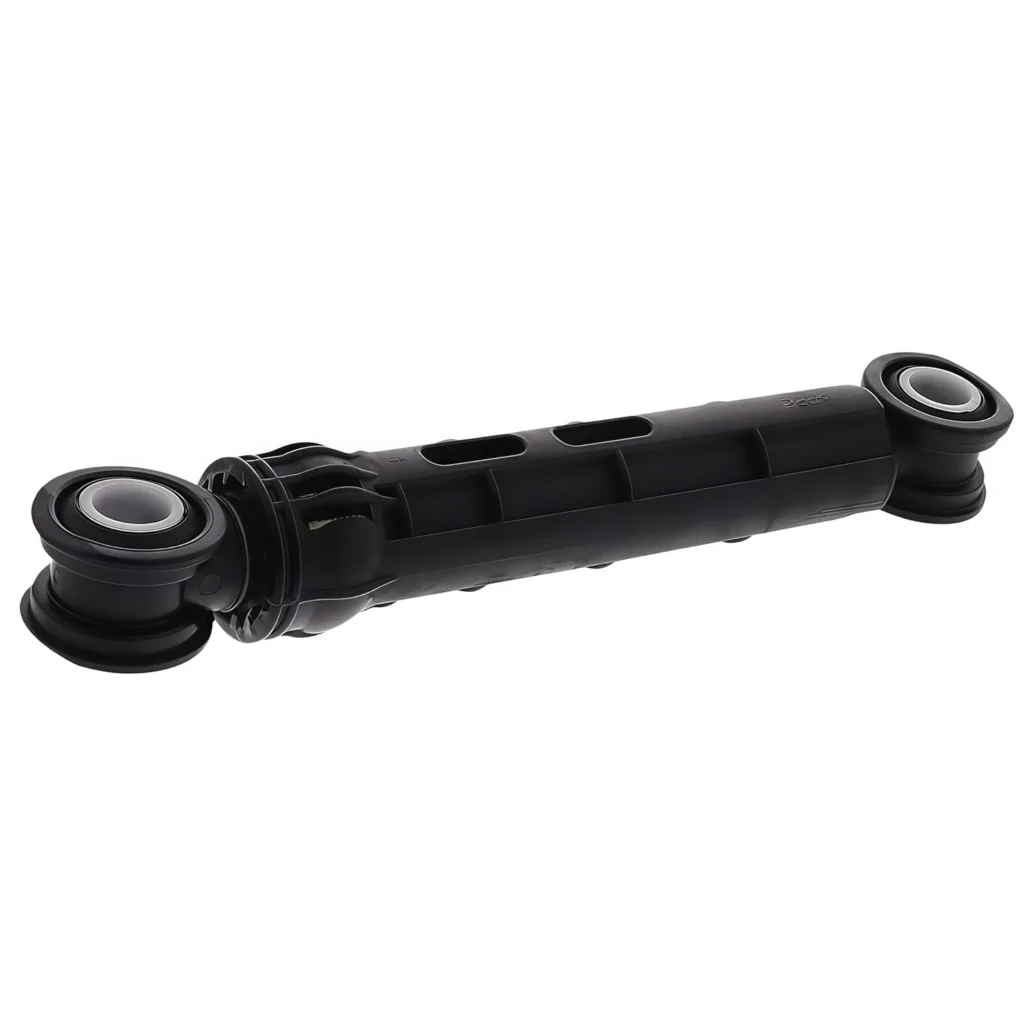
Most Frigidaire and Electrolux front-load washers have four shock absorbers that should last 8–10 years. But in my repair business, I'm replacing these on machines that are only 4–5 years old. The difference? How the washer gets loaded and what kind of loads it runs.
Part 137412601 fits over 80 Electrolux and Frigidaire models — from the EFLS517SIW0 to the GLEH1642FS1 — and when these shock absorbers wear out prematurely, it's usually because of consistent overloading or unbalanced loads that force them to work overtime.
How Long Should It Last?
Factory shock absorbers on Frigidaire and Electrolux washers are rated for about 2,500–3,000 wash cycles under normal conditions. That translates to roughly 8–10 years for an average household doing 6–8 loads per week.
But here's what affects that lifespan:
- Load size consistency — Constantly maxing out capacity shortens life by 40–50%
- Load balance — Heavy items on one side force uneven compression
- Floor stability — Washers on unlevel floors make shocks work harder
- Spin speed settings — Always using maximum spin (1,200+ RPM) increases wear
- Pedestal installation — Raises center of gravity, adds stress during spin
Models like the EFLS627UIW0 and EFLW427UIW0 have higher spin speeds (up to 1,300 RPM), which means their shocks handle more force per cycle than older models.
Signs It's Wearing Out
Shock absorbers don't fail suddenly — they deteriorate gradually. You'll notice the washer behavior changing before you see physical damage to the parts.
Shaking and Moving During Spin Cycle
This is the primary symptom. When shock absorbers lose their dampening ability, the drum movements during high-speed spin aren't absorbed properly. Your washer will:
- Walk forward or sideways across the floor during spin
- Bang against nearby walls or cabinets
- Make the entire laundry room floor vibrate
- Require you to push it back into position after loads
On models like the EFLS517STT0 and EFLW317TIW1, you might first notice this only with heavy loads like towels or jeans. As the shocks degrade further, even light loads cause excessive movement.
Loud Banging or Thumping Noises
When shocks can't cushion the drum properly, you'll hear metal-on-metal contact or hard thumping sounds. It sounds like something loose is hitting the cabinet walls — because essentially, that's what's happening. The drum is moving beyond its normal range.
Visible Fluid Leaks or Physical Damage
Pull the front panel off and inspect the shock absorbers directly. Look for:
- Hydraulic fluid dripping or pooled at the bottom mount
- Bent or dented shock body
- Broken mounting brackets
- Cracks in the plastic bushings at connection points
Once you see fluid leaking from a shock absorber, it's completely compromised. There's no fixing it — replacement is the only option.
Maintenance That Actually Extends Shock Life
After Each Use
Leave the door open for 30–60 minutes after the cycle completes. This isn't just for preventing mildew — it also allows the shock absorbers to cool down and return to their neutral position without pressure. The internal seals last longer when they're not compressed while still warm.
Every 2–3 Months
Check washer level with a bubble level across the top. If it's off by even half a bubble, adjust the leveling feet. An unlevel washer forces two shocks to carry more load than the other two, wearing them unevenly. Models like the EFLS627UTT0 sitting on pedestals are especially prone to settling over time.
Every 6 Months
Inspect the floor underneath and around the washer. Look for:
- Scuff marks indicating movement
- Cracks in tile or concrete from repeated impacts
- Anti-vibration pads that have deteriorated or shifted
If your washer is moving even slightly during cycles, address it immediately. Install anti-vibration pads or a rubber mat under the feet. This simple step can extend shock absorber life by 2–3 years.
Load Management
This is where most premature shock failure happens. Don't fill the drum past 75% capacity for regular loads. For heavy items like comforters or bath mats, go to 50% capacity max. The EFLS527UIW0 and EFLS527UTT0 have 4.4 cu ft capacities — that doesn't mean you should pack them full every time.
Also, redistribute loads manually if the washer pauses during spin cycle to rebalance. If it has to try rebalancing more than twice, stop the cycle and manually arrange items.
When to Replace vs Maintain
Here's the honest truth: shock absorbers aren't serviceable parts. You can't rebuild them or replace seals. Once they show symptoms, you're in replacement territory.
But you can delay that replacement:
- Minor vibration increase — Check level, add anti-vibration pads, adjust load habits
- Occasional walking on heavy loads only — Reduce heavy load frequency, ensure perfect level
- Consistent walking on all loads — Replace within 1–2 months to prevent drum bearing damage
- Loud banging or visible fluid leaks — Replace immediately
The cost of the shock absorber set (part 137412601 comes as a single unit; you need four for a complete replacement) is around $144. Compare that to $800+ for a new washer or $350+ if the excessive movement damages the drum bearings or suspension springs.
I've seen washers where someone ignored worn shocks for six months, and the resulting drum movement cracked the outer tub — a repair that costs more than replacement.
The Floor Matters More Than You Think
I've done this test dozens of times: take a washer with "bad shocks" and move it from a second-floor laundry room with wood joists to a concrete basement floor. Suddenly the shaking drops by 60%.
If your washer is upstairs or on a suspended floor:
- Install a 3/4" plywood platform spanning at least two floor joists
- Use heavy-duty anti-vibration pads rated for 200+ lbs
- Consider lowering maximum spin speed by 100–200 RPM in settings
Models like the EFLW317TIW0 and EFLW417SIW0 have adjustable spin speed settings. Dropping from 1,200 to 1,000 RPM adds maybe 5 minutes to dry time but can double shock absorber lifespan on a flexible floor.
Frequently Asked Questions
Should I replace all four shock absorbers at once?
Yes, always. Even if only one is leaking or obviously damaged, the other three have the same age and wear patterns. Replacing just one creates an imbalance — the new shock will be stiffer than the worn ones, causing uneven drum movement. That actually accelerates wear on the remaining old shocks. Do all four at once or you'll be back inside the washer in six months.
Can I run the washer with worn shock absorbers until they completely fail?
Not if you care about the rest of the washer. Worn shocks allow excessive drum movement, which puts abnormal stress on the suspension springs, drum bearings, drive belt, and even the outer tub. I've seen cases where someone ran a washer with bad shocks for a year, and when they finally replaced the shocks, the drum bearings were shot too — adding another $300 to the repair. Fix shocks when you first notice symptoms, not when they catastrophically fail.
Will adding a washer stabilizer pad fix my shaking problem?
It depends. If your shocks are still good but the floor is the problem, anti-vibration pads absolutely help. But if the shocks themselves are worn and leaking, no amount of padding will fix it — you're treating a symptom, not the cause. Do this test: with the washer unplugged, manually push down on the front of the drum. It should compress smoothly and return slowly. If it drops hard or doesn't return, the shocks are done. Pads won't fix that.
Element showing wear?
137412601 · Replace before it fully fails