
How to Extend Your Frigidaire Dryer Heating Element Life — Maintenance Guide
Always disconnect power at the breaker before inspecting heating elements. Even after unplugging, capacitors can hold dangerous voltage. Never operate the dryer with the element housing removed.
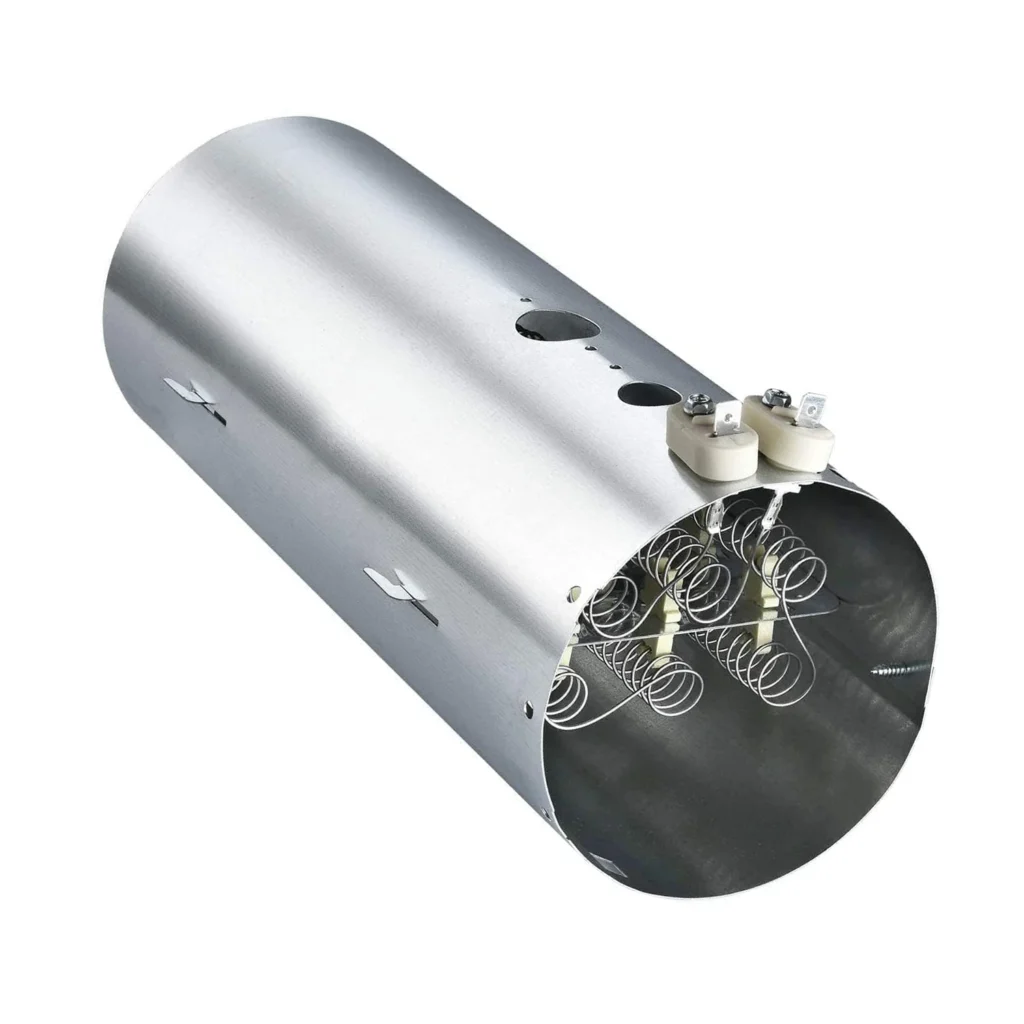
Most dryer heating elements like the 137114000 are rated for 10,000–15,000 cycles, but the average homeowner replaces theirs after just 3,000–5,000 cycles. That's roughly half the expected lifespan. The difference? How you operate your dryer day-to-day.
This heating element assembly works with dozens of Frigidaire, Electrolux, Crosley, and Kenmore models — including the BAQE7073KW0, FAQE7017KW0, and GLEH1642FS1. It's a simple coil design that generates heat when electricity flows through it, but that simplicity hides some vulnerability. Every cycle creates thermal expansion and contraction. Every lint particle that escapes your filter becomes a potential hot spot. Every overloaded drum forces the element to work harder.
Here's how to make yours last closer to its design life instead of half that.
How Long Should It Last?
Under ideal conditions, the 137114000 heating element should deliver 10–15 years of regular use. That assumes roughly 3–4 loads per week with proper maintenance. In reality, most fail between 5–8 years.
What affects lifespan:
- Lint accumulation — The number one killer. Lint restricts airflow, forcing the element to overheat and shortening coil life by 40–60%.
- Overloading — Stuffing the drum forces longer cycle times. More run time equals more thermal stress on the coil.
- Voltage fluctuations — Power surges can weaken the element over time. If your lights dim when the dryer kicks on, you've got a problem.
- Vent length and configuration — Long, twisted vents with multiple turns create backpressure. The heating element compensates by running hotter.
- Climate — Dryers in damp basements or humid climates work harder to dry clothes, accumulating more cycles faster.
The element itself doesn't wear out from age — it fails from accumulated thermal stress. You're essentially managing fatigue, not decay.
Signs It's Wearing Out
The 137114000 typically gives warning signs before total failure. Most people ignore them until the dryer stops heating completely.
Inconsistent Heating During Cycles
The dryer heats for the first 10–15 minutes, then stops. Or it heats intermittently throughout the cycle. This usually means the coil has developed a weak spot that breaks connection when it expands from heat, then reconnects when it cools. You'll notice clothes are damp in spots or take 2–3 cycles to fully dry.
Burning Smell When Running
A sharp, electrical burning odor — not the normal warm-air smell — indicates the element is overheating. This happens when lint has accumulated inside the element housing or when the coil is touching the metal housing due to warping. Don't ignore this. It's a fire risk.
Complete Loss of Heat
The drum tumbles, the timer counts down, but zero heat. This is the most common symptom and typically means the coil has broken completely. Sometimes you'll hear a distinct "pop" during a cycle when it finally gives out. The element on the 137114000 can't be repaired — it's a replace-only part.
Tripped Thermal Fuse
If your dryer stops heating and you find the thermal fuse has blown, don't just replace the fuse. The element likely caused it by overheating due to restricted airflow. Check the element for visible breaks or warping before reassembling.
When to Replace vs Maintain
Here's the honest answer: if the heating element coil is broken, maintenance won't help. You need part 137114000. But if it's still working — even if it's showing early warning signs — aggressive maintenance can buy you another 2–3 years.
Replace immediately if:
- The coil has visible breaks or gaps
- You see the element touching the metal housing
- The housing itself is warped or discolored from extreme heat
- You've had multiple thermal fuse failures in 6 months
Maintain aggressively if:
- Heating is still consistent but drying takes longer than it used to
- The dryer is 5+ years old but still functions normally
- You've recently noticed mild burning smells that go away
- You've never cleaned the vent system
Most people wait until complete failure. That's a mistake because by then, lint buildup has usually damaged other components like the thermostat or thermal cutoff. Fixing the root cause early costs less.
Frequently Asked Questions
How often should I clean the vent to protect my heating element?
Every 6–12 months depending on usage. If you run 7+ loads per week, aim for every 6 months. For lighter use (3–4 loads weekly), annual cleaning works. The vent is the primary cause of heating element failure, and it's entirely preventable. Pull the dryer out, disconnect the vent, and vacuum both the dryer exhaust port and the vent duct. Also check the outdoor vent cap — birds love to nest there.
Can I test if my heating element is weak before it fails completely?
Yes, with a multimeter. Disconnect power, remove the element, and test continuity across the two terminals. You should get 8–12 ohms of resistance. If it reads infinite (no continuity), the coil is broken. If it reads near zero, you've got a short. Anything in the normal range doesn't guarantee the element is healthy, but out-of-range readings confirm it's bad. Most homeowners just wait for symptoms instead of testing.
Does using lower heat settings make the element last longer?
Not really. The element either heats or it doesn't — the thermostat just cycles it on and off more frequently on lower settings. What matters more is cycle length. Shorter cycles from not overloading and maintaining good airflow reduce total thermal stress. Using the moisture sensor (if your model has one) instead of timed dry also helps because it stops the cycle as soon as clothes are dry rather than running the full timer.
Element showing wear?
137114000 · Replace before it fully fails