
How to Replace WR60X10168 Condenser Fan Motor on GE Refrigerator — Step-by-Step
Always unplug the refrigerator before working on electrical components. The condenser fan motor operates on household voltage and can cause serious shock if the unit is still powered.
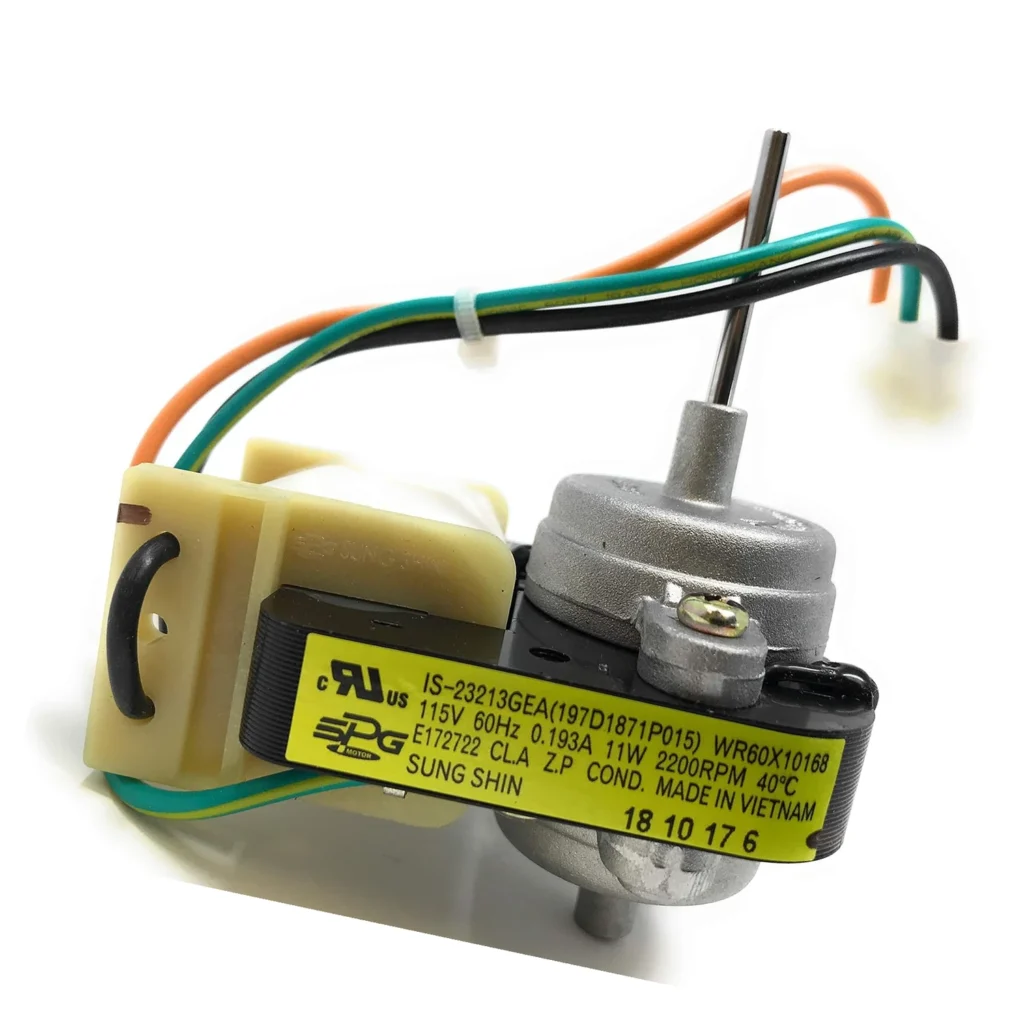
Your GE refrigerator's making a clicking sound every few minutes, and you've noticed the fridge section feels warmer than usual. You check the freezer — it's holding up okay, but something's off. That clicking is usually your condenser fan motor trying to start and failing. On models like the GTS18FBRERWW and TBX18SABQRWW, this WR60X10168 motor sits behind the lower back panel and runs constantly to cool the compressor and condenser coils. When it fails, heat builds up fast.
The good news? This is one of those repairs that looks intimidating but breaks down into simple steps once you understand the layout. You're working at the back of the fridge, not inside the sealed system, so there's no refrigerant involved. Let's walk through exactly how to swap this motor.
What You Need Before Starting
Tools required:
- 1/4" nut driver or socket
- Phillips head screwdriver
- Flathead screwdriver (for wire connectors)
- Work gloves (metal edges can be sharp)
- Flashlight or headlamp
Estimated time: 30-45 minutes
Difficulty: MODERATE
You'll need enough space to pull the refrigerator away from the wall — about 3 feet of clearance behind it works well. Make sure you've got someone to help move the fridge if it's fully loaded.
Safety First
Unplug the refrigerator completely before starting. Don't just flip the breaker — actually disconnect the power cord from the wall outlet. The condenser fan motor runs on household voltage, and you'll be working near the compressor which also carries live power when plugged in. If your fridge has an ice maker, shut off the water supply valve behind it and disconnect the water line to give yourself room to work. Keep kids and pets away from the work area — you're dealing with heavy appliances and sharp metal panels.
Step 1: Access the Back Panel
Pull the fridge away from the wall so you can work comfortably behind it. You'll see a cardboard or metal panel covering the compressor area at the bottom rear. Remove the screws holding this panel — usually four to six 1/4" hex head screws. Some GE models like the CTX16HABNRWW have a snap-on plastic cover instead. Once the panel's off, you'll see the compressor (the black cylindrical component), the condenser coils above it, and the fan motor mounted to the right side.
Step 2: Disconnect the Wiring
Locate the wire connector leading to the fan motor. It's usually a two-wire plug that slides off the motor terminals. Pull the connector straight off — don't yank on the wires themselves. On some units, the wires are held in place with a plastic clip on the mounting bracket. Pop that clip out first. Take a photo of the wire routing before disconnecting anything so you know exactly how it runs back through the bracket and clips.
Step 3: Remove the Old Motor
The motor mounts to a metal bracket with two or three screws. These are typically Phillips head screws that thread directly into the motor housing. Remove these mounting screws completely. The motor and fan blade assembly should now lift out as one unit. If the fan blade seems stuck on the coils, gently wiggle it free — sometimes dust buildup makes it tight. Don't force it; you want to avoid bending the condenser coils.
Step 4: Transfer the Fan Blade (If Needed)
Check if your new WR60X10168 motor came with a fan blade attached. If it didn't, you'll need to transfer the blade from your old motor. The blade sits on a flat-sided motor shaft and is held by a small setscrew or spring clip. Loosen the setscrew with a small flathead screwdriver or pop the clip off. Slide the blade off the old shaft and onto the new motor shaft, making sure it seats fully against the motor housing. The flat side of the shaft only fits one way. Tighten the setscrew firmly but don't strip it — you're threading into soft metal.
Step 5: Install the New Motor
Position the new motor in the mounting bracket with the fan blade facing the condenser coils. Thread in the mounting screws and tighten them evenly. You want the motor secure but not over-torqued — if you crack the plastic housing, you're starting over. Reconnect the wire harness to the motor terminals. Give the fan blade a spin by hand to make sure it rotates freely without hitting the coils or any wiring.
Step 6: Test and Reassemble
Before putting the back panel on, plug the refrigerator back in and listen. The condenser fan should start running immediately — you'll hear a steady hum and feel air movement near the coils. If you don't hear anything, unplug it again and double-check your wire connections. Once you've confirmed the motor runs, unplug it one more time, reinstall the back panel, and push the fridge back into place. Plug it back in and give it a few hours to stabilize temperature. The clicking sound should be gone, and both compartments should start cooling properly.
Testing After Installation
Let the refrigerator run for 4-6 hours, then check the temperatures. The fridge should be between 37-40°F, and the freezer around 0°F. Feel the condenser coils at the back — they should be warm to the touch but not burning hot. If the coils are extremely hot or the fridge isn't cooling after 12 hours, you might have a separate issue like a failed compressor or sealed system problem. But in most cases where the only symptom was clicking and warm temps, this motor replacement solves it completely.
Frequently Asked Questions
Will my refrigerator run without the condenser fan motor?
The compressor will still run, but it'll overheat quickly and shut off on thermal protection. You'll hear it cycling on and off every few minutes — that clicking sound — and neither compartment will maintain proper temperature. Running the fridge with a failed condenser fan will eventually damage the compressor, turning a $45 repair into a $400+ problem.
Can I use a different fan motor if WR60X10168 is out of stock?
This motor replaces WR60X10028 and WR60X10153, which are functionally identical. Check the voltage (usually 115V) and rotation direction before substituting. The mounting bracket and wire connector must match exactly. Using an incorrect motor can cause the fan to spin backward, which pushes hot air into the cabinet instead of pulling it across the coils.
Why does my new fan motor run louder than the old one?
Brand new motors sometimes run louder for the first few days while the bearings break in. If it's excessively loud — grinding, squealing, or rattling — check that the fan blade isn't hitting the condenser coils or any loose wiring. Also verify the mounting screws are tight. A motor that's vibrating against the bracket will amplify noise. If the sound doesn't settle down after a week, you might have received a defective motor.
Take a photo of the wire routing before disconnecting anything. The wires often clip into specific guides, and getting them back in the wrong position can cause rubbing against the fan blade.
Need the part for this repair?
WR60X10168 · In Stock · Ships next business day