
How to Replace W10510667 Dishwasher Circulation Pump Motor on Whirlpool & KitchenAid — Step-by-Step
Turn off power at the circuit breaker and shut off water supply before starting. Residual water in the sump will spill during pump removal.
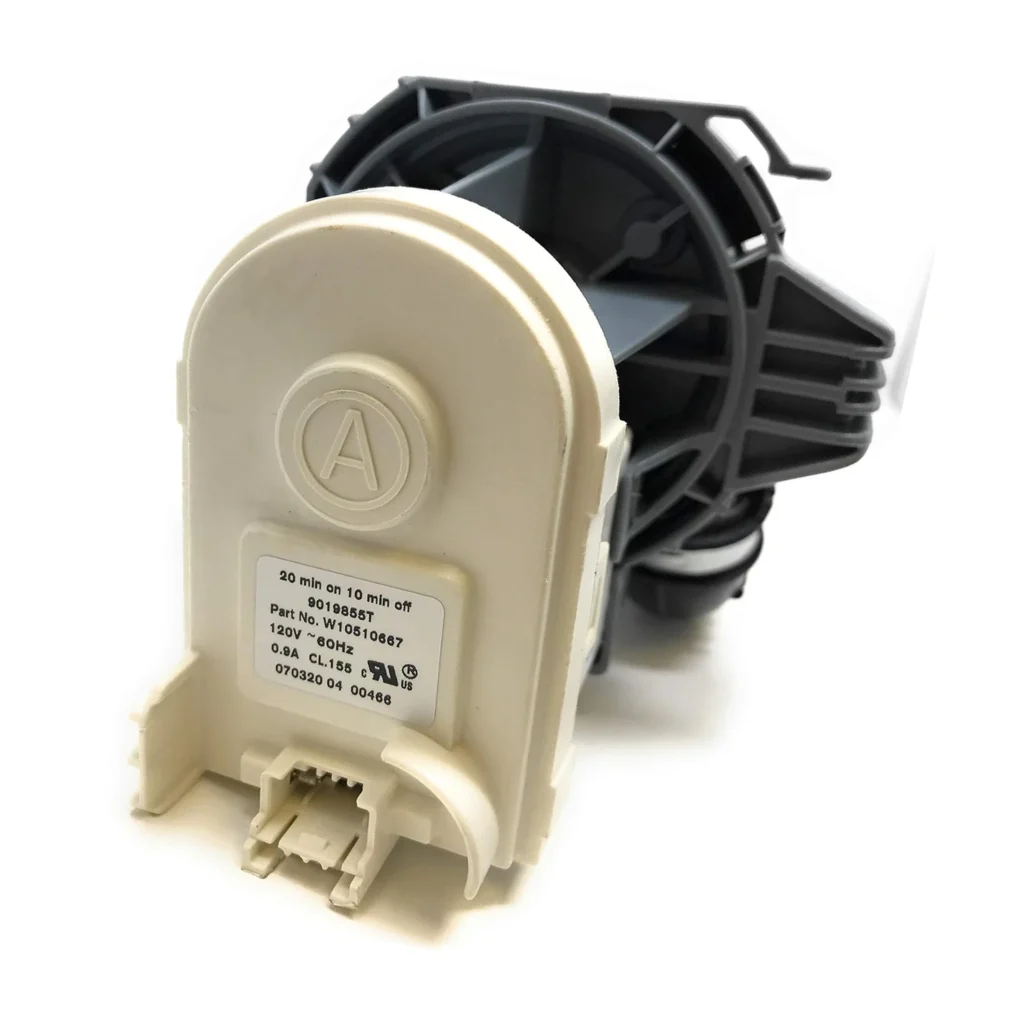
Your Whirlpool WDF560SAFB0 is running through the wash cycle, but when you open the door, there's still dried food stuck to the plates. The spray arms barely move, and you can tell the water pressure's just not there anymore. That's usually your circulation pump calling it quits — it's the heart of your dishwasher's cleaning system, and when it fails, nothing gets clean no matter how much detergent you use.
The W10510667 pump motor is one of the most common replacement parts for Whirlpool, KitchenAid, and Kenmore dishwashers made in the last decade. It replaces older numbers like WPW10510667, W10349483, and W10440715. If you've got a model like the WDF750SAYM3, WDT720PADM2, or KDTE104DBL0, this guide walks you through swapping it out without calling a tech.
What You Need Before Starting
This isn't a complicated repair, but you'll need to access the bottom of the dishwasher, which means lying on the floor and working in tight quarters. Here's what to grab:
- 1/4" nut driver or socket wrench
- Torx T20 screwdriver (some models)
- Flathead screwdriver
- Towels (for water cleanup)
- Shallow pan or bowl
- Needle-nose pliers
- Headlamp or work light
Repair Time: 45-60 minutes
Difficulty: Moderate — You're working with water connections and electrical plugs in a cramped space.
Safety First
Shut off power to the dishwasher at your circuit breaker — not just the door switch. The circulation pump runs on 120V, and you'll be disconnecting wire harnesses with wet hands in a metal tub. Also turn off the water supply under your sink. There will be residual water in the sump area, so expect to mop up a cup or two even after you've drained everything you can.
Step 1: Remove the Lower Spray Arm and Filter Assembly
Open the dishwasher door and pull out the bottom rack completely. Twist the lower spray arm counterclockwise and lift it out — no tools needed. Then remove the cylindrical filter assembly by turning it a quarter-turn and pulling straight up. You'll see the sump cover underneath with several screws around the perimeter. Keep these parts nearby because you'll reinstall them in reverse order.
Step 2: Access the Circulation Pump from Below
You need to get under the dishwasher now. Remove the lower front kickplate by pulling it toward you — it usually just snaps off. If your unit's built-in, you might need to pull the entire dishwasher out from the counter. Remove the screws securing the lower access panel (usually 4-6 screws along the bottom edge). Once that's off, you'll see the circulation pump mounted to the bottom of the sump assembly. It's the largest component down there, about the size of a softball, with a wire harness and a rubber hose attached.
Step 3: Disconnect and Remove the Old Pump Motor
Unplug the wire harness from the pump by squeezing the locking tab and pulling straight out. Use your shallow pan to catch water, then disconnect the large rubber drain hose by loosening the clamp with pliers and sliding it off. You'll get a splash here — that's normal. Now locate the three or four screws or nuts holding the pump motor to the sump housing. These are usually 1/4" hex head. Remove them and carefully twist the pump counterclockwise about 30 degrees while pulling down. The whole motor assembly should drop free. Watch out — it's heavier than it looks, around 3-4 pounds.
Step 4: Install the W10510667 Replacement Pump
Check the rubber seal on your new W10510667 pump. It should be seated properly in the groove around the mounting flange. Hold the new pump up to the sump opening and align the tabs, then twist clockwise while pushing up until it locks into position. Reinstall the mounting screws and tighten them evenly — don't crank down on one side first or you'll pinch the seal. Reconnect the drain hose and secure the clamp. Finally, plug in the wire harness until you hear it click.
Step 5: Reassemble and Test
Button everything back up in reverse order: access panel, kickplate, sump cover screws, filter assembly, spray arm. Turn the water and power back on. Run a quick rinse cycle and watch for leaks underneath — check around the pump seal especially during the first five minutes. If you see water dripping, shut it down and reseat the pump. You should hear a solid humming sound when the pump kicks on, much stronger than before if your old one was failing. Open the door mid-cycle and check the spray arm — it should be spinning fast with strong water pressure.
Testing After Installation
Don't just assume it's working because it's not leaking. Run a full normal cycle with dirty dishes. Check that water's spraying forcefully from all the spray arms. Listen for the pump — it should be steady, not grinding or squealing. After the cycle, your dishes should actually be clean, not just wet. If you're still seeing food residue, you might have a clogged spray arm or a separate issue with the water inlet valve, but nine times out of ten, a new circulation pump solves the cleaning problem immediately.
Frequently Asked Questions
Will this pump fit my KitchenAid KDTE104 series dishwasher?
Yes, the W10510667 is a direct replacement for most KitchenAid built-in dishwashers from 2010-2020, including the KDTE104DBL0 and related models. Check your model number against the compatibility list on the product page, but if your old pump has the same mounting flange and electrical connector, you're good to go.
Why is my dishwasher still noisy after replacing the circulation pump?
If you're hearing noise during the drain cycle (not the wash cycle), that's your drain pump, which is a separate part. The circulation pump only runs during washing and rinsing. Also check that you didn't leave any debris in the sump area — a piece of broken glass or a twist-tie can cause rattling even with a brand new pump.
How long should a dishwasher circulation pump last?
You'll typically get 7-10 years out of a Whirlpool circulation pump if you're running 5-7 cycles per week. Hard water areas see more failures because mineral buildup adds resistance to the motor. If you're replacing this pump on a machine that's less than 5 years old, check your water hardness and consider installing a whole-house softener to protect the new pump.
Tighten pump mounting screws in a crisscross pattern to avoid pinching the rubber seal and causing leaks.
Need the part for this repair?
W10510667 · In Stock · Ships next business day