
How to Replace 285753A Direct Drive Motor Coupling on Whirlpool Washer — Step-by-Step
Always unplug the washer before starting repairs. Do not attempt to test the coupling while the machine is plugged in or running.
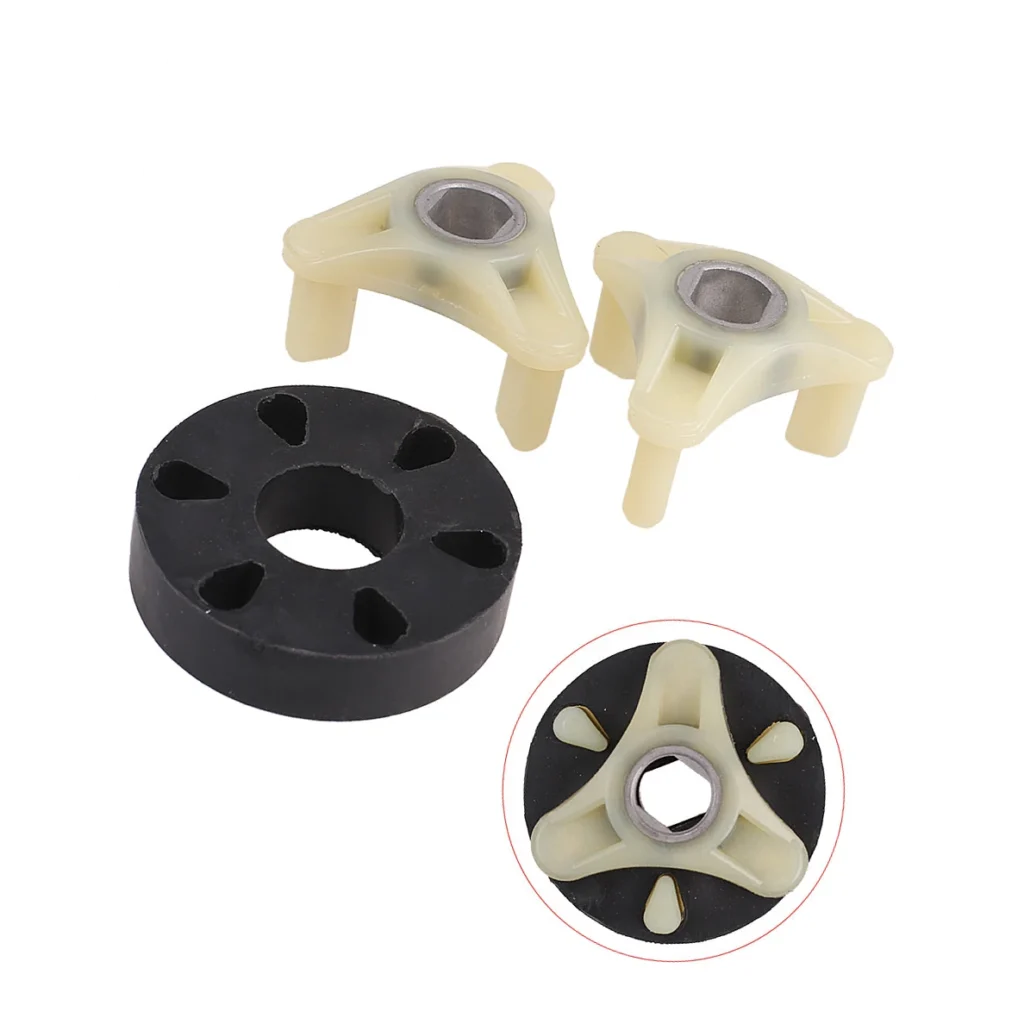
Your Whirlpool washer fills with water just fine, but when it's time to agitate, nothing happens. The motor hums, maybe you smell something burning, but the agitator sits there doing absolutely nothing. Nine times out of ten, that's your motor coupling — a small white plastic part between the motor and transmission that fails more often than any other washer component.
The 285753A coupling is essentially a shock absorber that connects your washer's motor to the transmission. It's designed to fail before more expensive parts get damaged, which is good news — replacing it costs about $22 and takes less than an hour.
What You Need Before Starting
This is one of the easier washer repairs you'll tackle. Here's what you'll need:
- 285753A motor coupling (replaces AP3963893, 285753, 1195967)
- 1/4" nut driver or socket wrench
- Flathead screwdriver
- Towels for any residual water
- Work gloves (optional but helpful)
Repair Time: 30-45 minutes
Difficulty: EASY
Safety First
Unplug the washer completely — don't just turn it off. You'll be working near the motor, and you don't want any surprises. Also, turn off the water supply valves behind the washer. Pull the machine away from the wall so you've got room to work on all sides. If there's water in the tub, run a drain cycle first or bail it out with a cup.
Step 1: Remove the Cabinet
On most Whirlpool direct-drive washers (models like WTW5900TW0, LSR7233BQ2, or Kenmore 110 series), you'll find two cabinet clips at the top front corners. Slide a flathead screwdriver into each clip, push in, and pop them loose. Tilt the cabinet forward slightly, then lift straight up. The whole cabinet comes off in one piece — set it aside somewhere it won't get scratched.
Step 2: Locate the Failed Coupling
Look down between the motor and transmission. You'll see three pieces: two white plastic drive forks (they look like stubby tridents) and a rubber coupling in between. If your washer won't agitate, you'll probably see broken teeth on the plastic forks or the rubber piece completely shredded. Sometimes it's just worn smooth. Either way, all three pieces need replacing — they come as a set with the 285753A.
Step 3: Remove the Motor Mounting Bolts
The motor sits on a bracket with typically four bolts — two in front, two in back. Use your 1/4" nut driver to remove these bolts. Don't lose them; you're reusing these. Once the bolts are out, tilt the motor slightly to create space. You don't need to disconnect any wires or remove the motor completely. Just angle it enough to access the coupling.
Step 4: Install the New Coupling
Pull the old coupling pieces off the motor shaft and transmission shaft. They should come right off — if they're stuck, wiggle them gently. Take your new 285753A coupling and separate the three pieces. Slide one drive fork onto the motor shaft (flat side toward the motor), place the rubber coupling in the middle, then slide the other drive fork onto the transmission shaft. The rubber piece acts as a buffer between the two forks. Make sure everything's seated properly — the forks should align so the rubber coupling fits snugly between the teeth.
Step 5: Reinstall the Motor and Test
Lower the motor back into position on its mounting bracket. Thread the four bolts back in and tighten them firmly — you want the motor secure but don't overtighten and strip anything. Replace the cabinet by sliding the bottom tabs into the base slots, then tilting the cabinet back until the top clips snap into place. Plug the washer back in, turn on the water, and run a short cycle. You should hear normal operation — no burning smell, no grinding, just the satisfying sound of an agitator doing its job.
Testing After Installation
Run a complete wash cycle with a load of towels. Listen during agitation — it should be smooth and rhythmic. During the spin cycle, watch for proper speed and no unusual vibration. If you still have issues like slow spinning or drainage problems, you might have a separate problem with the pump or transmission, but a failed coupling is almost always the culprit when the motor runs but nothing moves.
Frequently Asked Questions
How long does a motor coupling typically last?
Most motor couplings last 5-10 years depending on use. Overloading the washer or washing heavy items like rugs shortens the lifespan significantly. If you've got a family of six doing a load every day, you might see failure closer to the 5-year mark. Light use can push it past a decade.
Will a broken coupling damage other washer parts?
That's actually what it's designed to prevent. The coupling is the sacrificial part — it fails so your motor and transmission don't. If you keep running the washer after the coupling breaks, though, you can burn out the motor or damage the transmission. Stop using it as soon as you notice agitation problems.
Can I use 285753A on a Kenmore or Maytag washer?
Absolutely. This coupling works across Whirlpool-manufactured brands including Kenmore 110 series washers, Maytag, KitchenAid, Amana, and Roper. Check your model number against the compatibility list — models like WTW5700SW0, LSC9000PW2, and various Kenmore 110 series all use this same coupling. It's one of the most universal washer parts out there.
When installing the new coupling, make sure the rubber piece sits evenly between the two drive forks. Misalignment causes premature failure.
Need the part for this repair?
285753A · In Stock · Ships next business day