
Whirlpool Washer F7 E1 Error Code — What It Means & How to Fix
Lid lock failure — washer cannot verify lid is locked
The F7 E1 error appears when the washer's control board sends a signal to lock the lid but doesn't receive confirmation back that the lock engaged. This prevents the spin cycle from starting, as an unlocked lid at high RPM is a safety hazard. The error indicates either a failed lid lock assembly, damaged wiring, or rarely, a control board communication issue.
Never bypass the lid lock safety system. An unlocked lid during spin cycle can cause severe injury from contact with moving parts or ejected items.
You load the washer, close the lid, press start — and instead of that satisfying click and hum, you get F7 E1 flashing on the display. The lid just sits there. Won't lock. Won't spin. Won't do anything except blink that error code at you like a broken record.
This is one of the most common codes on Whirlpool, Maytag, and Kenmore top-load washers made after 2015. The good news? It's usually a straightforward fix once you understand what's actually failing.
What F7 E1 Actually Means
F7 E1 translates to "Lid Lock Failure." Your washer's control board is trying to engage the lid lock mechanism before starting the spin cycle — which it must do for safety reasons — but it's not getting the signal back that the lock actually engaged.
Think of it like a conversation: the control board says "lock the lid," the lid lock assembly is supposed to say "lid locked," but instead there's silence. The control board waits a few seconds, tries again, then gives up and throws the F7 E1 code.
The lid lock isn't just a safety feature. Modern top-load washers spin at 1,000+ RPM. An unlocked lid at that speed is dangerous. So if the machine can't verify the lock engaged, it simply refuses to run.
Most Likely Causes
1. Failed lid lock assembly (80% of cases)
The W11394572 lid lock assembly contains both a mechanical striker mechanism and electrical switch contacts. Over thousands of cycles, the plastic striker wears down, or the internal switch fails. You'll often hear a faint click when you close the lid, but the lock never fully engages. This is the part that fails on models like the WTW5105HW1, WTW6120HC1, and WTW8120HW0.
2. Wiring harness damage (15% of cases)
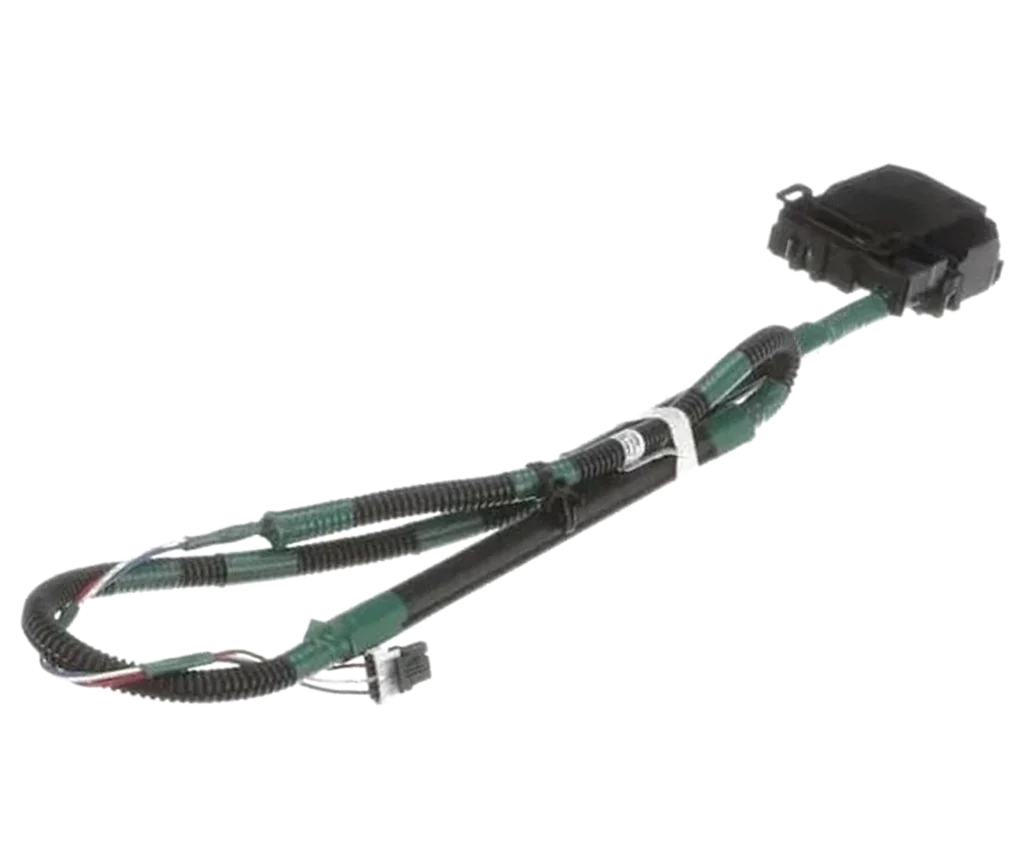
The wire connector at the lid lock can corrode from detergent residue or moisture. Sometimes the wires themselves get pinched during a previous repair. If the electrical signal can't travel from the lock to the control board, you get F7 E1 even if the lock mechanism works fine.
3. Control board communication failure (4% of cases)
Occasionally the main control board itself stops recognizing the lid lock signal. This is rare but happens after power surges or if the board has other failing components.
4. Misaligned lid strike (1% of cases)
If the washer cabinet shifted or someone forced the lid, the striker might not line up with the lock. The lock tries to engage but physically can't reach the strike point.
Step-by-Step Fix
Step 1: Confirm the error
Unplug the washer for 60 seconds to reset the control board. Plug back in and try a cycle. If F7 E1 returns immediately when you press start, the problem is real, not a glitch.
Step 2: Access the lid lock
Open the lid. The lock assembly is mounted under the washer lid, usually on the right side near the hinge. You'll see a plastic housing about 3 inches square with a wire connector attached. On most Whirlpool models (WTW5100HC0, WTW7120HC0, etc.), you can reach it without removing the cabinet — just tilt the lid back fully.
Step 3: Inspect the striker alignment
Close the lid slowly and watch where the striker (the plastic tab on the lid) meets the lock. It should slide smoothly into the lock mechanism. If it's hitting the edge or missing entirely, the lid hinge may need adjustment. This is rare but check it first since it's free.
Step 4: Test the lock electrically
Disconnect the wire harness from the lock assembly. Set a multimeter to continuity mode. Close the lid manually (which should engage the lock striker). Test across the lock's switch terminals. You should see continuity when engaged, open circuit when disengaged. No continuity? The internal switch is dead. Replace the lock assembly.
Step 5: Check the wiring
Inspect the wire connector for corrosion (white or green crusty buildup). Check the wires back to where they enter the cabinet for any pinch points or damage. If the connector looks sketchy, clean it with electrical contact cleaner or replace the harness.
Step 6: Install the new lid lock (W11394572)
Unplug the washer. Disconnect the old lock's wire harness. Remove the two mounting screws holding the lock assembly (usually Phillips head). The old lock lifts out. Position the new W11394572 lock, secure with the two screws (don't overtighten — it's plastic housing), reconnect the harness. Plug in the washer and test.
Step 7: Run a test cycle
Close the lid and start a rinse/spin cycle. You should hear a distinct click as the lock engages, and the cycle should start within 3-5 seconds. If it works, you're done. If F7 E1 persists, the issue is either wiring or the control board.
When the Fix Doesn't Work
If you've replaced the lock assembly and checked all wiring but still get F7 E1, you're looking at a control board issue. This means the board isn't sending power to the lock or isn't reading the return signal. Control board replacement costs $200-$350 installed, so at that point you need to decide if the washer is worth repairing.
Before replacing the board, try one more thing: swap the lock wire connector to a different port on the board (if available) to rule out a single bad terminal. If you have a second identical washer or can borrow a known-good lock assembly, test with that to 100% confirm it's the board.
Frequently Asked Questions
Can I bypass the lid lock to finish my laundry?
Technically yes, but don't. Some people jumper the lock connector to fool the control board, but you're defeating a critical safety feature. An unlocked lid during spin cycle can cause serious injury. Just replace the lock — it's a $25 part and 20 minutes of work.
Why does F7 E1 happen more on Whirlpool than other brands?
The design of the W11394572-style lock uses a plastic striker that wears faster than older metal designs. Whirlpool, Maytag, and Kenmore all use this same assembly across dozens of models (WTW5105HW2, WTW6120HW1, WTW8120HC0, etc.), so the failure mode is widespread. It's not that the part is poorly made — it's just high-cycle wear on a mechanical component.
How long does a replacement lid lock typically last?
The W11394572 should last 5-8 years under normal use (6-8 loads per week). If you're doing 15+ loads weekly, expect 3-5 years. The failure is purely mechanical wear — the plastic striker wears down until the switch can't detect engagement anymore.
Before ordering parts, unplug the washer for 60 seconds to reset. If F7 E1 returns immediately on the next cycle, it's a real failure, not a control board glitch.
Need the control board or touchpad?
Genuine OEM & aftermarket options in stock