
Frigidaire Oven F10/F11 Error Code — What It Means & How to Fix
Oven runaway temperature fault
The control board detected an unsafe temperature reading from the oven sensor probe — either showing the oven is overheating or the sensor has failed and is sending erratic signals. This triggers an automatic shutdown to prevent actual overheating or fire risk.
Always disconnect power before working inside the oven cavity. If splicing wires, use only porcelain wire nuts rated for high temperature — standard plastic connectors will melt during baking.
You're preheating for dinner when your Frigidaire oven starts beeping insistently. F10 flashes on the display, the oven shuts down, and you're left wondering if you need a repair tech or just a $24 part.
The F10 error (sometimes F11 on certain models like the FFEF3052TSG) means your oven thinks it's dangerously overheating — even when it's stone cold. It's the appliance equivalent of a false alarm, and 8 times out of 10, it's the temperature sensor probe sending bad readings to the control board.
What F10/F11 Error Codes Actually Mean
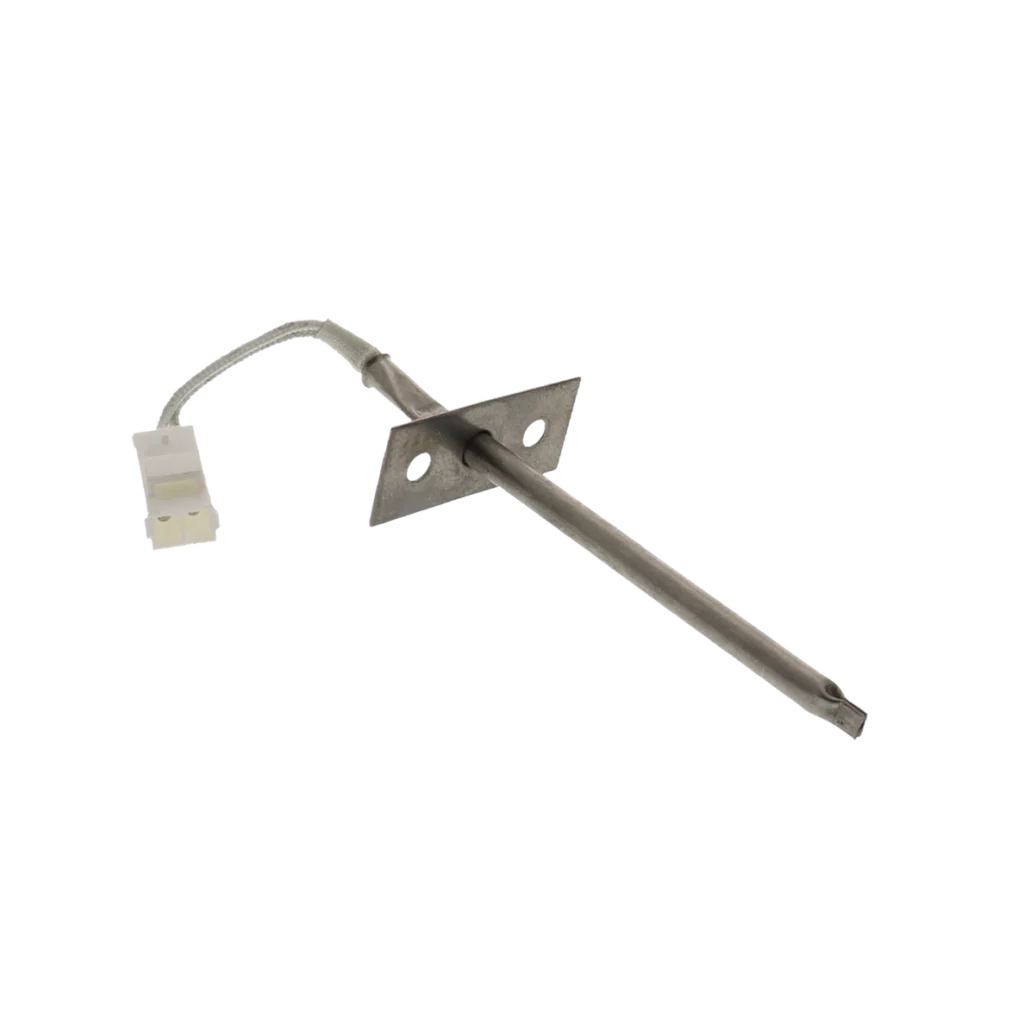
Your oven has a thin metal probe (the 316233902) that hangs inside the cavity, constantly measuring temperature. It's essentially a thermistor — a resistor that changes its electrical resistance based on heat. The control board reads that resistance to know if it's 200°F or 450°F.
When the sensor probe fails, it sends erratic readings. The board might see "800°F" when the oven's at room temperature, triggering the F10 runaway temperature fault. It's a safety feature, but it fires when the sensor's internal wiring breaks down or the connection corrodes.
On Frigidaire and Kenmore models (especially the CFEF3052TWD, CFGF337ESE, and FFGF3011LWK), this sensor typically lasts 5–8 years before the constant heat cycles degrade it.
Most Likely Causes
1. Failed Temperature Sensor Probe (85% probability)
The probe itself goes bad — internal wire breaks or the thermistor element degrades. You'll see F10 errors that won't clear even after unplugging the oven for 10 minutes. Sometimes the oven works for 5 minutes, then throws the code again.
2. Corroded Wiring Connection (10% probability)
The sensor plugs into a connector at the back of the oven cavity. If moisture got in (from cleaning or a boilover), corrosion creates intermittent contact. You might see the F10 come and go randomly.
3. Failed Control Board (4% probability)
Rare, but if the board's temperature monitoring circuit fails, it'll throw F10 even with a good sensor. Usually you'll have other weird symptoms — buttons not responding, display flickering.
4. Damaged Wiring Harness (1% probability)
If someone worked on the oven recently and pinched the sensor wires against a sharp edge, the insulation can melt during use and short out.
Step-by-Step Fix
Safety first: Unplug the oven or flip the breaker. This is a low-voltage part, but you're reaching into the back of a 240V appliance.
Step 1: Test the Existing Sensor
Pull the oven away from the wall. Remove the back panel (usually 4–6 screws). Locate the sensor probe wire — it's a thin braided metal tube coming through the back wall of the oven cavity.
Disconnect the wire connector (might be a spade connector or small plug). Set your multimeter to ohms. At room temperature (roughly 70°F), the sensor should read 1,080–1,100 ohms. If it reads infinite (open circuit) or under 500 ohms, it's dead.
Step 2: Remove the Failed Sensor
Inside the oven cavity, you'll see the probe held by a metal bracket with one or two screws. Remove those screws, gently pull the probe out through the back wall. The wire feeds through a rubber grommet.
Step 3: Install the 316233902 Replacement
Feed the new sensor through the same hole. Important: One user noted the connector might be different than your original. If the plug doesn't match, you'll need to cut both wires about 3 inches from the ends, strip 1/2", and join them with high-temp porcelain wire nuts (rated for 400°F+). Regular plastic wire nuts will melt.
Secure the probe bracket inside the oven cavity. Make sure the sensor tip isn't touching the back wall — it should hang freely in the air, about 1" from the back.
Step 4: Test Before Reassembly
Plug the connector in (or complete your wire splice). Turn the breaker back on. Set the oven to 350°F. Within 90 seconds, you should feel heat. Let it run for 10 minutes — if the F10 doesn't return, you've fixed it.
Step 5: Button It Up
Replace the back panel, push the oven back. Run a full bake cycle to confirm.
When the Fix Doesn't Work
If you installed a new sensor and still get F10 immediately:
- Check your wire splice: If you had to cut and join wires, make sure the connections are tight and not touching each other or the metal oven frame.
- Inspect the harness: Look for damaged insulation on the wires between the sensor and the control board.
- Test the new sensor: Sometimes you get a defective part. Disconnect it and ohm-test again — should still be 1,080–1,100 ohms at room temp.
If the sensor tests good and wiring looks fine, the control board's temperature monitoring circuit has likely failed. That's a $150–$250 part plus labor, and at that point you're evaluating whether the oven's worth repairing.
Frequently Asked Questions
Can I just reset the oven to clear F10?
You can try — unplug for 5 minutes or flip the breaker. Sometimes it'll work for one bake cycle, but if the sensor's failing, F10 comes back. It's not a permanent fix.
Why does F10 only happen when the oven's cold?
Failing sensors often show their worst behavior at temperature extremes. A sensor with a weak internal connection might work fine at 350°F but go open-circuit at room temp or above 450°F, sending nonsense readings to the board.
Will the 316233902 fit my Kenmore model?
Yes — this sensor works across Frigidaire, Electrolux, and Kenmore ranges built on the same platform. Check the compatible models list (includes FFEF3052TBD, CFEF312GSA, and dozens more). The physical mounting is identical, though you might need to splice the connector as noted above.
Test the old sensor with a multimeter before ordering parts. At 70°F room temperature, a good sensor reads 1,080–1,100 ohms. If it reads infinite or below 500 ohms, that confirms sensor failure.
Need the control board or touchpad?
Genuine OEM & aftermarket options in stock