
How to Extend Your Dryer Thermal Fuse Life — Maintenance Guide
Always unplug the dryer before servicing. The thermal fuse is located near the heating element where temperatures exceed 180°F during failure conditions. Never bypass a thermal fuse — it prevents dryer fires.
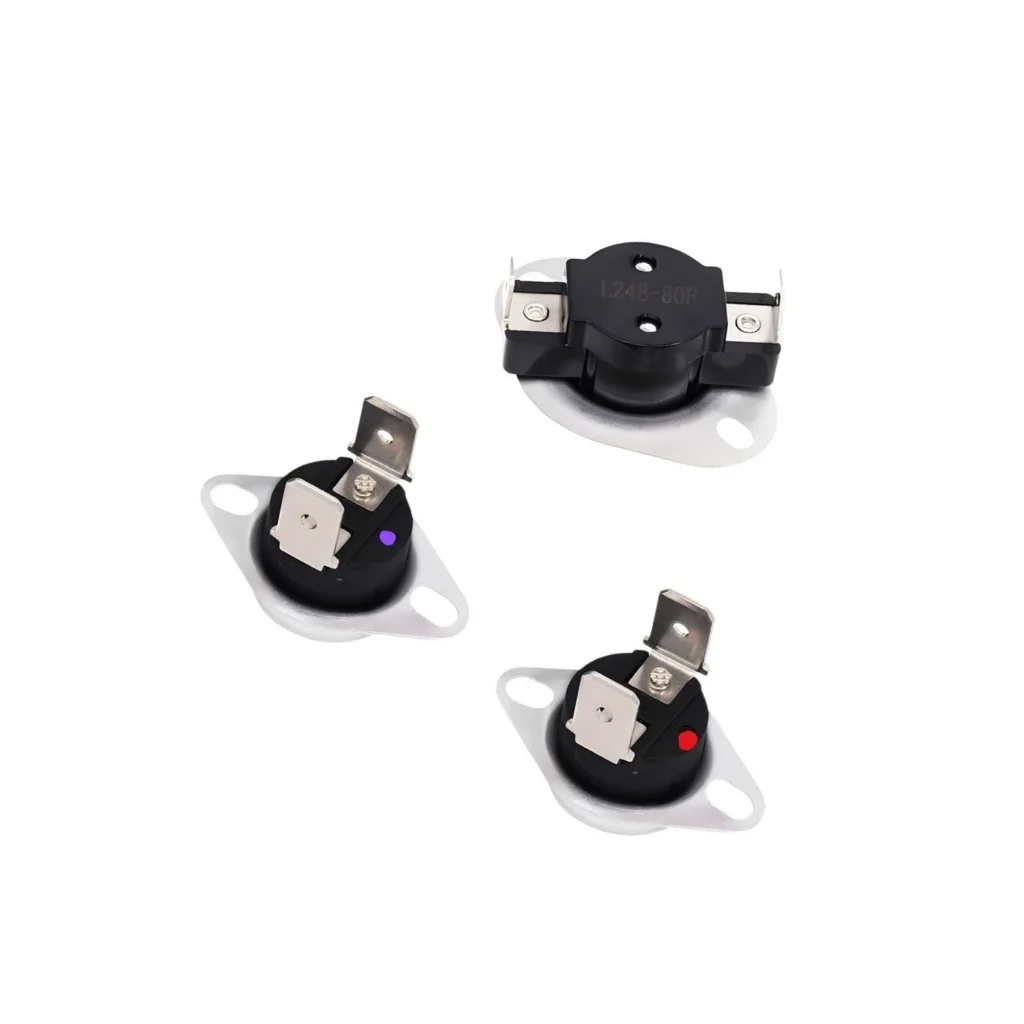
Here's something most people don't realize: the thermal fuse in your Whirlpool, Maytag, or Admiral dryer is designed to blow once and never reset. It's a one-shot safety device. Yet I've seen homeowners replace the same fuse three times in two years because they never addressed what killed it in the first place.
The LA-1053 kit includes both the thermal fuse and high-limit thermostat — two components that work together to prevent dryer fires. When your dryer stops heating suddenly, it's usually because one of these tripped. But here's the thing: they don't fail randomly. They fail because something's forcing your dryer to overheat.
How Long Should It Last?
Under normal conditions, a thermal fuse should outlast your dryer. I've seen original fuses still working fine in 15-year-old Maytag models like the HYG3658AWW. The high-limit thermostat is resettable and should last 8–12 years with proper airflow.
But that's the key phrase: with proper airflow. When your exhaust vent gets clogged with lint, temperatures inside the dryer can spike from a normal 140°F to over 200°F. The thermal fuse is calibrated to blow at around 185°F. It's doing its job — protecting your house from a fire — but it shouldn't have to.
The biggest factor affecting lifespan isn't the quality of the part. It's the condition of your vent system. A dryer with a short, straight vent and regular cleaning can run for decades without needing this kit. A dryer with a 20-foot vent full of bends and packed with lint? You'll be replacing fuses every 18 months.
Signs It's Wearing Out
Unlike parts that gradually degrade, thermal fuses don't give much warning. But the conditions that will kill your fuse absolutely do. Watch for these signs that you're headed for a failure:
Dryer Takes Multiple Cycles to Dry Clothes
This is your early warning system. If a normal load that used to dry in 45 minutes now needs two full cycles, your exhaust vent is partially blocked. Lint is building up somewhere in the system, restricting airflow. The dryer's working harder, running hotter, and the thermal fuse is experiencing higher temperatures than it was designed for.
Check the vent hood outside your house. Put your hand near it while the dryer runs. You should feel strong, warm airflow. If it's weak or barely there, you've got a blockage.
Dryer Feels Extremely Hot to Touch
The top and sides of your dryer should be warm during operation, not hot enough to be uncomfortable. If you can't keep your hand on the dryer cabinet, or if the area around it feels like a sauna, your exhaust system isn't removing heat properly. This is exactly the scenario that blows thermal fuses.
I've seen this especially in Admiral models like the ADE20N3V where the dryer's tucked into a closet with the vent making three 90-degree turns before reaching outside. Every bend adds resistance and traps more lint.
Burning Smell During Operation
This one's serious. A burning smell means lint is getting hot enough to singe. You're probably days or weeks away from either a blown thermal fuse or worse. Unplug the dryer immediately and clean the entire vent system, including inside the dryer cabinet around the heating element.
The thermal fuse exists to prevent fires, but it's your last line of defense. Don't count on it to save you if you're smelling burned lint regularly.
The One Thing That Kills This Part Early
I'll be blunt: clogged exhaust vents destroy more thermal fuses than any manufacturing defect ever could. The installation notes for this kit specifically mention that vents longer than 15 feet need yearly cleaning. But honestly? Every dryer vent needs yearly cleaning, regardless of length.
Here's what happens: lint bypasses your lint trap (which only catches about 60% of lint) and accumulates in the vent duct. Over months, it forms a dense mat that blocks airflow. Your dryer's blower fan can't push hot, moist air out fast enough. Heat builds up inside the drum. The high-limit thermostat tries to cut power to the heating element. But if the blockage is severe enough and the dryer runs long enough, temperatures keep climbing until the thermal fuse blows at 185°F.
That's why the LA-1053 kit includes both parts. The high-limit thermostat is your first defense (it resets). The thermal fuse is your final defense (it doesn't).
When to Replace vs Maintain
Here's the reality check: if your thermal fuse has blown, you must replace it. There's no maintaining it, no resetting it, no testing it to see if it's "still good." It's a one-time fuse. Once it opens the circuit, it's done forever.
But before you install the new LA-1053 kit, you need to address why it failed. Just swapping the fuse without cleaning the vent is like replacing a blown circuit breaker without fixing the short circuit. You'll be buying another kit in six months.
Here's my decision framework:
Replace the kit if: The thermal fuse has blown (dryer runs but won't heat), you're getting continuity errors when testing the fuse with a multimeter, or the high-limit thermostat won't reset even after the dryer cools down completely.
Perform maintenance if: The dryer still heats but drying times are increasing, you hear the blower fan straining, or it's been over a year since your last vent cleaning. This is preventive work that'll save you $47 and the hassle of a repair.
For models like the Maytag PYET344AYW or Admiral ADG20L2A, I've found the sweet spot is cleaning the vent every 9–12 months. Heavy users (families doing 8+ loads per week) should check it twice a year.
Maintenance Schedule That Actually Works
Most people treat their dryer like it's maintenance-free until it stops working. But if you want this thermal fuse to last the life of your dryer instead of blowing every couple years, here's what you need to do:
After each load: Clean the lint trap completely. Don't just pull off the visible lint — use your fingers to remove the lint that sticks to the screen edges. Every few months, wash the screen with soap and water to remove fabric softener residue that blocks airflow.
Monthly: Check the exterior vent hood. Make sure the flapper opens freely when the dryer runs and closes when it's off. Birds love to nest in these, and a blocked exterior vent has the same effect as a blocked interior duct — it'll blow your thermal fuse.
Annually: Clean the entire vent system from the dryer to the exterior hood. This isn't optional if you want to avoid replacing thermal fuses. Disconnect the duct from the back of the dryer, use a vent cleaning brush or shop vac to remove all lint buildup, and reconnect everything securely. While you're at it, vacuum around and under the dryer and inspect the blower wheel inside the cabinet for lint accumulation.
What the $47 Really Gets You
The LA-1053 kit includes both the thermal fuse and the high-limit thermostat because they work as a team. You're not just buying fuses — you're buying safety devices that prevent house fires. The kit replaces part numbers AP4242472, PS2162282, 53-1133, and 53-1526 across dozens of Whirlpool, Maytag, Admiral, and Norge models.
Installation takes about 20 minutes once you've accessed the components. They're usually located on or near the heating element housing. But remember: if you install this kit without cleaning your vent, you're wasting your money. The new fuse will blow just like the old one did.
Frequently Asked Questions
Can I Test If My Thermal Fuse Is Actually Blown?
Yes. Unplug the dryer, locate the thermal fuse (usually a small component with two wire terminals), and test it with a multimeter set to continuity or ohms. A good fuse shows continuity (0 ohms). A blown fuse shows infinite resistance (no continuity). If it's blown, it needs replacement — no exceptions.
Why Did My New Thermal Fuse Blow After Just Two Months?
Because the underlying problem wasn't fixed. In 99% of cases, this means your exhaust vent is still clogged or restricted. Pull the dryer out, disconnect the vent duct, and inspect it. You'll probably find a mat of lint somewhere in the system. Also check that the vent run isn't too long (more than 25 feet with bends) and that the duct isn't crushed behind the dryer.
Do I Need to Replace Both Parts in the Kit or Just the Fuse?
Test both. The thermal fuse will definitely be blown if your dryer won't heat. The high-limit thermostat might still be functional — it's resettable, unlike the fuse. That said, if one failed due to overheating, the other was subjected to the same conditions. I usually replace both to avoid having to tear into the dryer again in three months when the thermostat fails. For $47, you're getting both parts and peace of mind.
Element showing wear?
LA-1053 · Replace before it fully fails