
How to Extend Your LG Washer Water Inlet Valve Life — Maintenance Guide
Always disconnect power and shut off water supply before servicing inlet valve. Water under pressure can spray forcefully causing injury. Do not overtighten hose connections — plastic threads strip easily.
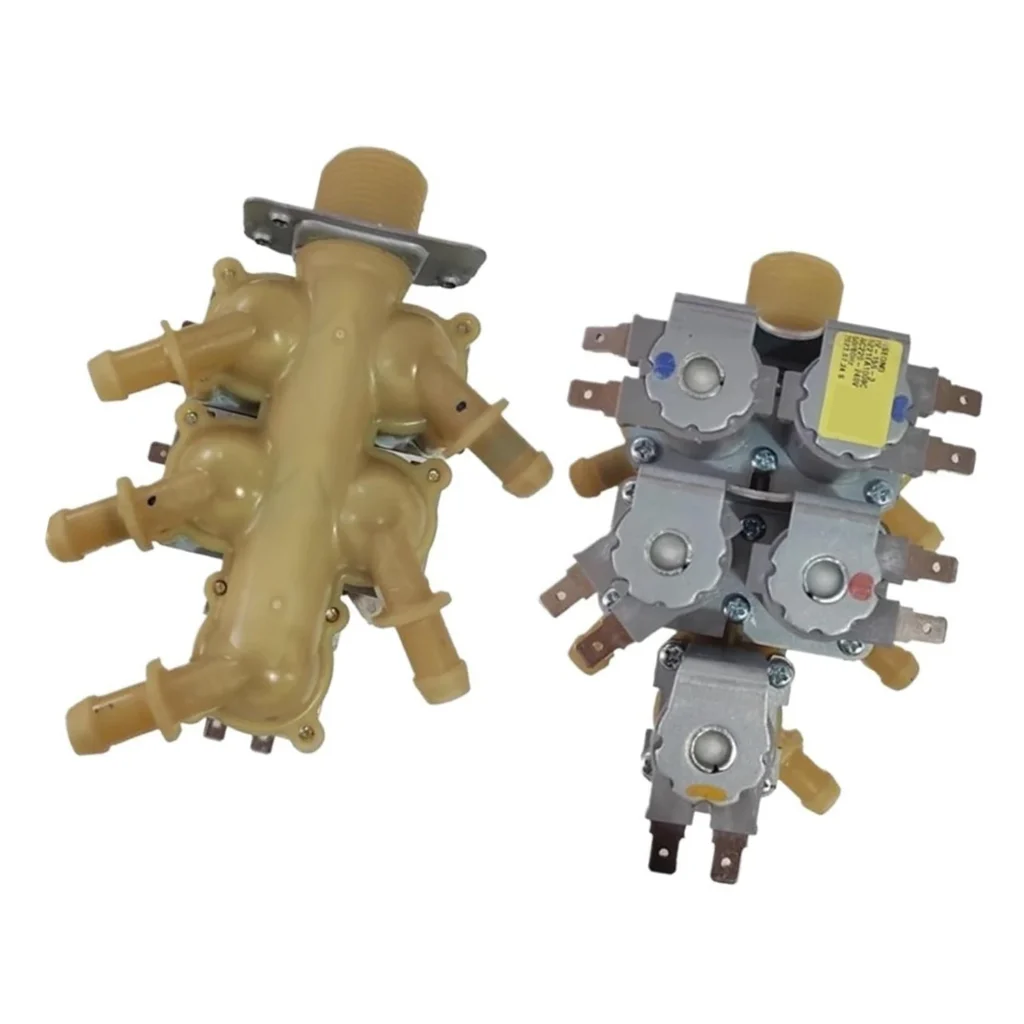
Most LG washer water inlet valves fail between 5 and 8 years — but yours can last 10+ if you know what's killing it early. The 5221EA1009C valve assembly (replaces 5221EA1009R) sits behind your washer taking constant pressure hits and mineral deposits. Every fill cycle chips away at its lifespan.
How Long Should It Last?
Under ideal conditions, the 5221EA1009C valve should give you 8–12 years of service. But "ideal" rarely happens in real life. Hard water cuts that down to 5–7 years. If you're in an area with high sediment or mineral content, you might see problems even sooner.
What affects valve lifespan:
- Water hardness — Mineral buildup clogs screens and damages solenoids
- Inlet pressure — Over 80 PSI stresses seals and causes premature leaks
- Temperature fluctuations — Plastic housings crack faster with extreme hot/cold cycles
- Usage frequency — 2 loads daily vs. 10 loads makes a massive difference
- Water quality — Sediment and rust particles accelerate wear
The valve assembly is used across multiple LG models including the F1103RDP, WD11VBS6, WD11DBS6, F1403RD, and WM3499HVA. All face the same wear patterns.
Signs It's Wearing Out
Catch these early and you'll save yourself a flooded laundry room.
Weak or Slow Fill
Your washer used to fill in 2–3 minutes. Now it takes 8–10. That's mineral buildup restricting flow through the valve screens. You'll notice it most on cold water cycles — the sediment accumulates faster there. If only hot or cold is slow, that specific solenoid is failing.
Water Doesn't Shut Off Completely
You hear a slight hissing after the fill cycle stops. Or you notice dampness on the floor near the back wall. The rubber diaphragm inside has hardened or cracked, and it's not sealing anymore. This starts as a trickle and gets worse fast.
No Water Entering at All
The cycle starts but the drum stays bone dry. Could be electrical — the solenoid coils burn out from mineral deposits causing resistance. Could be physical — complete blockage from sediment. Either way, the valve's done.
Error Codes IE or OE
Your LG displays "IE" (water inlet error) or "OE" (drain error, but sometimes triggered by inlet issues). The control board times the fill cycle. When water flow drops below threshold, it throws these codes. Don't ignore them — they're telling you the valve is struggling.
Visible Corrosion or Deposits
Pull the hoses off once a year and look at the inlet ports. White crusty buildup? That's calcium carbonate. Rust-colored staining? Iron deposits. Green oxidation on brass threads? You're past maintenance — you need replacement soon.
When to Replace vs Maintain
Be honest with yourself here. Maintenance works preventatively, but it won't resurrect a valve that's already failing.
Maintain if:
- Valve is less than 5 years old
- Fill times are still normal
- No leaks or drips present
- You're catching minor mineral buildup early
- No error codes showing up
Replace if:
- Active leaking from valve body
- Fill time doubled or water won't enter
- Repeated IE/OE error codes
- Visible cracks in plastic housing
- Valve is 8+ years old with hard water use
- Water won't shut off completely
The 5221EA1009C runs about $25–45 depending on where you buy it. Compare that to the cost of water damage from a failed valve — we're talking thousands. When in doubt, replace.
Frequently Asked Questions
Can I clean the screens inside the inlet valve?
Yes, but carefully. The fine mesh screens catch sediment before it enters the valve. Shut off water, disconnect hoses, and use needle-nose pliers to gently remove the screens. Rinse under warm water and use an old toothbrush for stubborn deposits. Never use harsh chemicals — they damage the mesh. Reinstall snugly but don't overtighten or you'll strip the plastic threads.
Should I install a water softener to protect the valve?
If you're dealing with hard water (over 10 grains per gallon), absolutely. A whole-house softener runs $500–1,500 installed, but it'll protect every appliance you own. For just the washer, an inline sediment filter costs $15–30 and catches the worst offenders. Change it every 6 months. It's cheaper than replacing valves every 4 years.
Why does only hot or cold water work on my LG washer?
The 5221EA1009C has separate solenoids for hot and cold. If one side works and the other doesn't, that specific solenoid coil has failed — usually from mineral deposits increasing electrical resistance until the coil burns out. Check the hose screens first, but if they're clean, the valve needs replacement. You can't replace individual solenoids on this assembly.
Element showing wear?
5221EA1009C · Replace before it fully fails