
LG Washer dE Error Code — What It Means & How to Fix
Door lock error - door won't lock or unlock
The dE error code appears when the door lock interlock assembly fails to engage within 6-7 seconds of starting a cycle, or when the control board doesn't receive the door locked signal. This prevents the washer from filling with water or beginning the wash cycle as a safety measure.
Always unplug the washer before accessing internal components. Never attempt to bypass the door lock safety mechanism. The drum can spin at over 1,000 RPM during cycles.
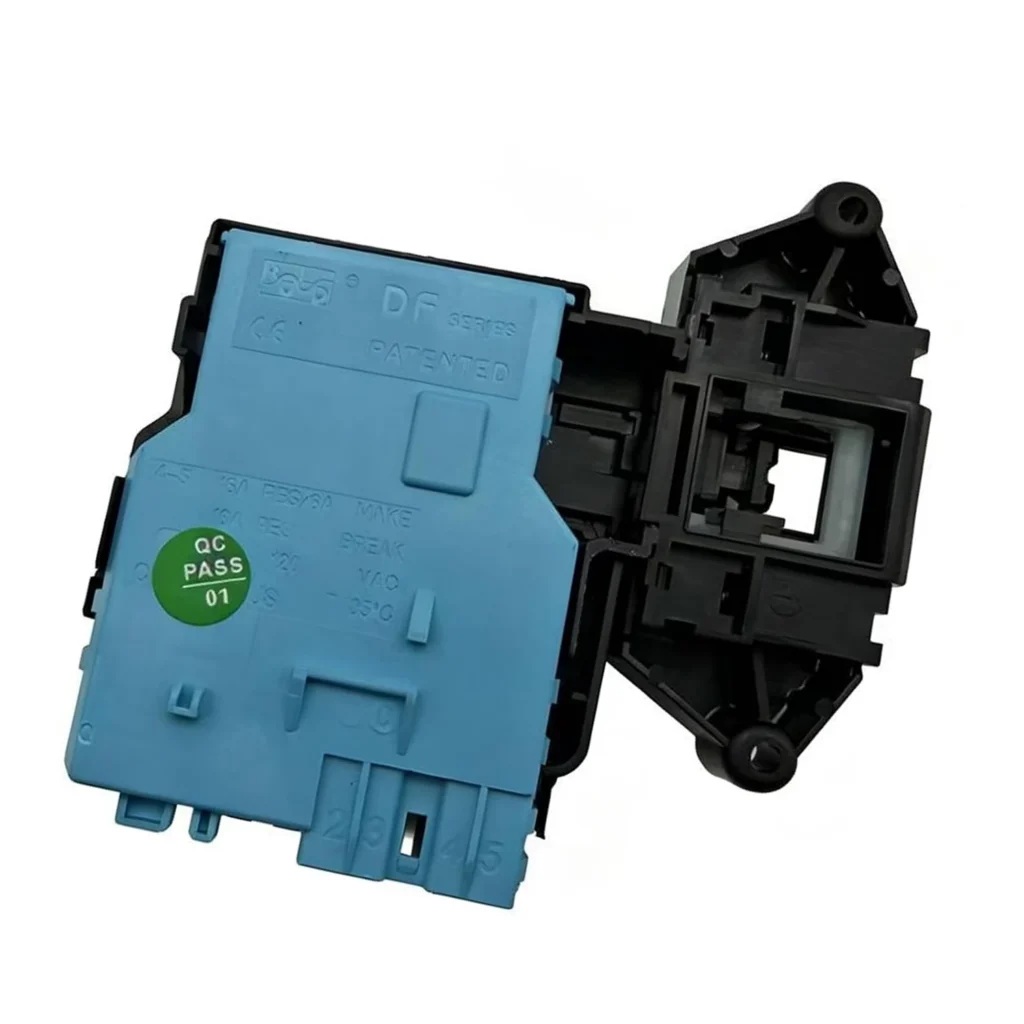
You load the washer, press start, and instead of that satisfying click and hum, you get three letters on the display: dE. The drum won't spin. The door won't lock. Your laundry sits there getting wrinkled while your LG front-load washer refuses to budge.
The dE error (sometimes shown as DE, DE1, or DE2 on different models) is LG's way of telling you the door isn't locking properly. Before you assume the worst, this actually ranks as one of the more straightforward washer errors to diagnose and fix.
What dE Actually Means
The dE code stands for "Door Error." Your LG washer has a door lock interlock assembly—essentially an electromechanical latch that secures the door and tells the control board it's safe to fill with water and start spinning. When the control board doesn't receive the "door locked" signal within about 6-7 seconds of you pressing start, it throws the dE error and shuts down the cycle.
Here's what's happening electrically: the door lock assembly contains a solenoid that physically moves a locking pin, plus a microswitch that confirms the lock engaged. If either component fails, or if something prevents the door from closing flush against the lock, the signal never reaches the control board.
On models like the WM1480FHD, F1447TD, and WD12316RD, this assembly mounts on the front panel behind the door opening. It's the same mechanism whether you've got a basic F1073ND or a newer F14A8FD—LG uses essentially the same door lock design across their front-loader lineup.
Most Likely Causes
1. Failed Door Lock Assembly — The solenoid coil burns out or the locking mechanism jams. This accounts for about 70% of dE errors on washers older than 3 years. You'll sometimes hear a faint clicking when you close the door, but no solid "thunk" of the lock engaging.
2. Misaligned Door Strike — The plastic striker on the door itself cracks, warps, or shifts position. The door closes but doesn't make proper contact with the lock sensor. Common on washers that've been moved recently or models like the F1248QDP1 and F1495KD where the door gets slammed frequently.
3. Wiring Harness Connection — The wire connector to the door lock assembly works loose or corrodes. You might get intermittent dE errors—works fine one load, fails the next. More common in humid laundry rooms or if you've had previous repairs that disturbed the wiring.
4. Control Board Communication Failure — Rare, but the main control board can lose the ability to send the lock signal. Usually accompanied by other erratic behavior like the display flickering or buttons not responding consistently.
Step-by-Step Fix
Diagnostic check first: Open and close the door firmly. Listen for any clicking or mechanical resistance. If you hear absolutely nothing, the lock assembly's likely dead. If you hear clicking but still get the error, the sensor portion has failed.
Step 1: Check the door striker — Open the door and examine the plastic piece on the door's edge that inserts into the lock assembly. Look for cracks, missing pieces, or anything preventing it from sitting flush. Close the door slowly and watch how the striker aligns with the lock opening. On models like the WM2240CW and WM2350HRC, these strikers are known to crack at the mounting screw holes.
Step 2: Test the door lock manually — Unplug the washer. Remove the top panel by unscrewing two screws at the back edge and sliding it backward. Reach down to the door lock assembly (front right corner of the tub opening). Locate the wire harness—usually a 6-pin connector. Unplug it and inspect for corrosion or pushed-back pins. Plug it back in firmly.
Step 3: Access and replace the door lock — You'll need to open the front panel. Pry up the detergent dispenser drawer, remove the screws behind it, then carefully pull the top of the front panel forward (it clips at the bottom). The door lock assembly is held by two or three screws. Disconnect the wire harness, remove the screws, and pull out the old assembly.
Step 4: Install the new door lock (EBF49827803) — This assembly replaces original LG part numbers 6601ER1004D, EBF49827805, AGF69478145, and 6601ER1004A. Position it so the locking mechanism aligns with the door striker opening. Secure with screws, reconnect the wire harness, and make sure no wires are pinched when you reassemble the front panel.
Step 5: Test the repair — Plug the washer back in. Close the door and start any cycle. You should hear a definitive mechanical click within 2-3 seconds, and the dE error shouldn't appear. Run a quick drain/spin cycle to confirm everything's working.
When the Fix Doesn't Work
If you've replaced the door lock assembly and you're still getting dE errors, check these secondary issues:
Door not closing flush: The door hinges may be loose or bent. With the door open, try lifting it slightly—if there's vertical play, the hinges need adjustment or replacement. Some models like the F1403RD and F1695RDH have adjustable hinge screws.
Persistent error after lock replacement: The main control board may have a failed relay that controls the door lock circuit. This requires a multimeter test—measure continuity between the control board's door lock terminals and ground. If you're seeing infinite resistance with the lock command active, the board's the problem, not the lock.
Error code variations: If you're seeing DE1 specifically, that's a door open error during the cycle—usually means the lock released mid-wash due to vibration or a weak locking mechanism. DE2 indicates the door won't unlock at cycle end, often caused by a jammed lock assembly or failed door release mechanism.
Frequently Asked Questions
Can I bypass the door lock to finish a load of laundry?
Technically no, and you shouldn't try. The door lock is a critical safety feature—it prevents the door from opening when the drum's spinning at 1,000+ RPM. Some online "hacks" suggest jumping wires to fool the control board, but this creates a serious injury risk and will void any remaining warranty. If you need that load finished, hand-wash it or take it to a laundromat while you wait for the replacement part.
How long does the door lock assembly typically last?
On LG front-loaders, you're looking at 5-8 years average lifespan for the door lock. Heavy use (multiple loads per day) or hard water areas see failures closer to 4-5 years. The F1248QDP1 and similar models from 2012-2015 had slightly higher failure rates due to a coil design issue that LG quietly revised. If your washer's under 3 years old and the lock failed, check if there's an extended warranty or recall that applies to your serial number.
Why does the dE error sometimes clear itself after unplugging the washer?
You're seeing a temporary wiring connection issue or the door lock mechanism freeing up from a jammed position. When you unplug the washer, any residual voltage drains from the control board's capacitors (takes about 2-3 minutes). When you plug back in, the control board resets and the door lock gets a fresh attempt at engaging. This works maybe 1 in 10 times—it means the lock assembly's on its way out but hasn't completely failed yet. Start looking for replacement parts because it'll fail permanently soon, probably mid-cycle when you least expect it.
Listen for the door lock click when you close the door and press start. No click usually means a dead solenoid. Clicking with no lock means the sensor microswitch has failed.
Need the control board or touchpad?
Genuine OEM & aftermarket options in stock