
How to Extend Your LG Dishwasher Drain Pump Life — Maintenance Guide
Disconnect power before accessing pump. Standing water may be present.
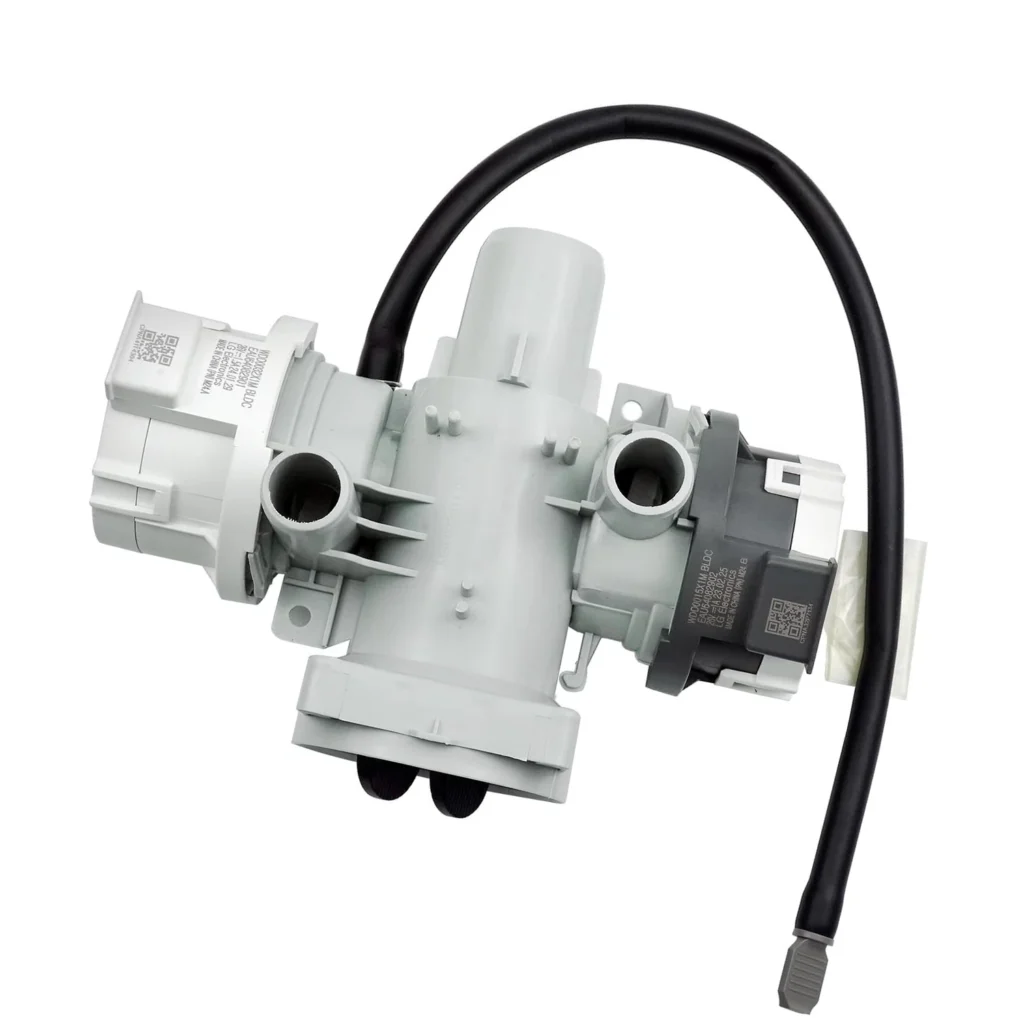
Here's something most people don't realize: the average dishwasher drain pump should last 8–10 years, but most homeowners replace theirs after just 4–6 years. The difference? Those extra years come down to how you treat what goes down the drain.
If you've got an LG dishwasher using the AHA75693423 drain pump assembly (replaces EAU64082902, EAU64082901), you're working with a solid component — but even the best pumps fail early when they're fighting food debris, grease buildup, and hard water deposits every single cycle.
How Long Should Your Drain Pump Last?
Under normal conditions, the AHA75693423 drain pump should give you 8–10 years of reliable service. That's roughly 3,000–4,000 wash cycles if you run your dishwasher once daily.
But here's what affects that lifespan:
- Water hardness — Hard water leaves mineral deposits that force the impeller to work harder
- Pre-rinsing habits — Large food particles damage seals and clog the pump housing
- Detergent type — Some formulas leave residue that gums up moving parts
- Cycle frequency — Running the dishwasher daily actually helps; sitting idle allows seals to dry and crack
With proper maintenance, you can push that lifespan to 12+ years. Without it, you'll be lucky to hit five.
Signs Your Drain Pump Is Wearing Out
Your drain pump will tell you when it's struggling — you just need to know what to listen and look for.
Water Pooling at the Bottom After Cycles
If you're opening the dishwasher to find standing water at the bottom, your pump isn't evacuating completely. This usually starts as just a little water around the filter area, then progresses to a full pool covering the bottom rack wheels. Early on, this might only happen on shorter cycles where the pump runs less frequently.
Grinding, Humming, or Buzzing Sounds During Drain
A healthy drain pump makes a steady whirring sound for about 60–90 seconds during the drain phase. When you hear grinding (like metal on plastic), it's usually debris caught in the impeller. Humming without water movement means the motor's running but the impeller isn't turning — often a seized bearing or broken impeller blade.
Error Codes: OE, 1E, or IE
LG dishwashers flash these codes when they detect drainage problems. OE means the unit tried to drain but water's still there after the timeout period. This happens when the pump's working but weakened, taking 5–6 minutes to do what should take 90 seconds.
Visible Debris or Discoloration Around the Pump Filter
Pull your filter assembly monthly and look at the sump area beneath it. Brown or orange staining indicates hard water buildup. Black slime is detergent residue mixed with grease. Both force your pump to work harder than designed.
Maintenance Schedule That Actually Works
After Each Use (15 Seconds)
Scrape plates before loading. You don't need to pre-rinse — modern detergents work better with some food present — but large chunks, bones, seeds, and fibrous materials don't belong in your dishwasher. Your drain pump isn't a garbage disposal.
Weekly (2 Minutes)
Check the bottom spray arm and drain area for visible debris. If you see food particles collecting around the filter, you're not scraping enough. Pull out anything that doesn't belong — twist ties, labels, toothpicks, and glass shards are common culprits that damage pump seals.
Monthly (10 Minutes)
Remove and rinse the filter assembly under running water. The cylindrical filter and the flat screen below it should both come out easily (twist counterclockwise on most LG models). Use an old toothbrush to scrub away buildup in the mesh. While you've got it out, shine a flashlight into the sump and look for debris you can remove by hand.
Run an empty cycle with two cups of white vinegar in a bowl on the top rack. This dissolves mineral deposits throughout the system, including inside the pump housing where you can't reach.
Every 6 Months (20 Minutes)
Deep clean the drain path. After removing the filter, use a wet/dry vac to suction out the sump area. You'd be surprised what collects down there — popcorn kernels, small plastic fragments, and hardened food debris that the pump can't move.
Check the drain hose connection at the back of the unit. Disconnect it and flush with hot water to clear any accumulated grease or soap buildup. A partially blocked drain hose forces your pump to run longer and work harder every cycle.
Annually (5 Minutes)
Inspect the pump itself if you're comfortable accessing the lower panel. You're looking for water stains, rust, or corrosion around the pump housing. A small amount of moisture is normal, but active dripping or white crusty buildup means seals are failing.
Test the drain pump in diagnostic mode (check your model's service manual for the specific button sequence). The pump should start immediately and run smoothly without fluctuation.
When to Replace vs. Maintain
Sometimes maintenance isn't enough. Replace your drain pump if:
- You hear grinding that doesn't stop after cleaning the filter
- The pump runs but no water drains, even with clear hoses
- You see water leaking from the pump housing onto your floor
- Error codes persist after you've cleaned everything thoroughly
- The pump's over 10 years old and showing multiple symptoms
The AHA75693423 assembly runs $63.99 and takes about an hour to swap out. Compare that to a service call at $150–200 plus parts, and DIY replacement makes sense when the pump's genuinely failed.
But if your pump's still working and you're just seeing early warning signs, maintenance can buy you years of additional life.
The Hard Water Factor
If you've got hard water (over 7 grains per gallon), your pump works significantly harder. Mineral deposits reduce the impeller's efficiency, making the motor run longer to move the same amount of water.
Consider a water softener for your whole house, or at minimum, use a rinse aid religiously. Rinse aid isn't just for spot-free dishes — it helps water sheet off surfaces instead of beading up, which means less mineral-laden water sits in your pump housing between cycles.
What About That Standing Water?
Some water at the bottom is actually normal — LG dishwashers deliberately leave about a cup in the sump to keep seals moist. If you're seeing more than that (enough to slosh when you slide the bottom rack), that's when you've got a drainage problem.
The test: run a rinse cycle and open the door immediately when it finishes. If there's more than an inch of water covering the sump area, your pump isn't keeping up.
Frequently Asked Questions
Can I Use Chemical Dishwasher Cleaners Instead of Vinegar?
You can, but read the label carefully. Some commercial cleaners are too aggressive for rubber seals and gaskets. Products specifically labeled "dishwasher safe" won't harm your pump, but they're also 10x the cost of vinegar for similar results. If you've got heavy buildup, a commercial cleaner once followed by monthly vinegar treatments is a solid approach.
How Do I Know If My Pump Motor Burned Out or Just Clogged?
Clear the filter completely, then start a rinse cycle. If you hear absolutely nothing from the pump area — no humming, no clicking, nothing — the motor's likely dead. If you hear humming or clicking but no water movement, it's usually mechanical (jammed impeller or broken blade) rather than electrical. A multimeter test across the pump terminals will confirm if the motor's getting power but not responding.
Does Running the Garbage Disposal Before the Dishwasher Really Help?
Yes, if they share a drain line. Most kitchens connect the dishwasher drain to the disposal's input. Running the disposal for 15 seconds before starting your dishwasher clears the shared drain path, which reduces backpressure on your pump. It's a 15-second habit that legitimately extends pump life.
Element showing wear?
AHA75693423 · Replace before it fully fails