
How to Extend Your Whirlpool Cold Control Thermostat Life — Maintenance Guide
Always unplug refrigerator before performing any maintenance or testing. Avoid touching wire terminals together except during controlled testing. Never force the thermostat dial — internal mechanism damage can occur.
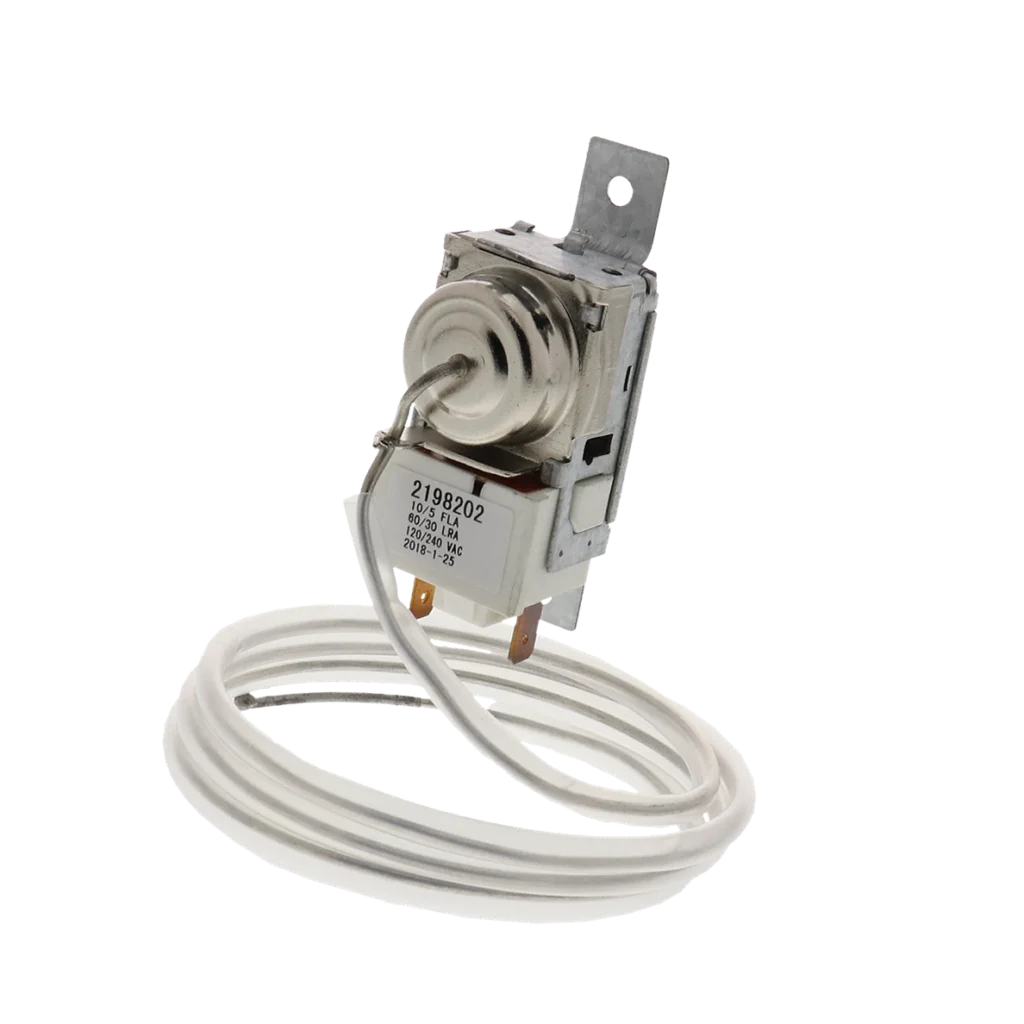
Most Whirlpool cold control thermostats (part 2198202) should last 8-12 years, but homeowners typically replace them after just 5-7 years. The difference? Knowing what slowly damages this critical component before it fails completely.
This thermostat controls the entire cooling cycle in refrigerators from Whirlpool, Kenmore, Maytag, and KitchenAid. When it starts wearing out, you'll notice temperature swings long before it stops working entirely. The good news: you can catch these issues early and extend its working life significantly.
How Long Should It Last?
Under normal conditions, the 2198202 cold control thermostat lasts 8-12 years. However, several factors accelerate wear:
- Frequent door openings — forces the thermostat to cycle more often, wearing the contact points
- Overstuffed fridge — blocks airflow, causing the thermostat to work harder maintaining temperature
- Temperature adjustments — constantly turning the dial stresses the internal mechanism
- Humid environments — moisture infiltration corrodes electrical contacts over time
- Power surges — can damage the internal switch mechanism prematurely
With proper maintenance and stable operating conditions, you can push that lifespan to 12-15 years. The key is catching problems before the thermostat fails completely, leaving you with a warm fridge and hundreds in spoiled groceries.
Signs It's Wearing Out
The 2198202 thermostat rarely fails without warning. It telegraphs problems through specific temperature behaviors that most people ignore until it's too late. Here's what to watch for:
Fridge Runs Too Long Between Cycles
Your refrigerator should cycle on and off roughly 4-8 times per hour under normal conditions. If you notice the compressor running continuously for 30+ minutes, or never shutting off at all, the thermostat's sensing bulb may be losing calibration. It's no longer accurately reading the internal temperature, so it keeps the compressor running trying to reach a setpoint it can't achieve.
Test this: Place a fridge thermometer on the middle shelf. If it reads 35-38°F but your fridge is still running constantly, the thermostat calibration is off. This wastes electricity and puts unnecessary strain on your compressor.
Temperature Swings Between Too Cold and Too Warm
Notice frozen lettuce one day and lukewarm milk the next? That's a classic sign of failing contact points inside the thermostat. The switch mechanism that turns the compressor on and off starts to stick or fail intermittently. You'll see your fridge alternate between being too cold (freezer section items forming frost) and too warm (butter getting soft, condensation on produce).
This happens because the internal contacts develop pitting or corrosion. Sometimes they make good electrical connection, sometimes they don't. The inconsistency is the key diagnostic clue.
Both Fridge and Freezer Too Warm
When both compartments start warming up simultaneously, the thermostat has likely stopped signaling the compressor to run at all. This is end-stage failure. The sensing bulb or control switch has failed in the "open" position, preventing the cooling cycle from initiating.
If you turn the thermostat dial all the way to coldest and nothing changes, the component is done. But you should never let it get this far — the earlier symptoms give you weeks or months of advance warning.
Fridge Too Cold Despite Proper Setting
Less common but equally problematic: the thermostat fails in the "closed" position, keeping the compressor running constantly. Your fridge becomes an icebox, freezing milk and produce despite the dial being set to a normal temperature. This indicates the switch contacts have welded together or the sensing bulb has lost its charge, preventing the thermostat from ever signaling "off."
Maintenance That Actually Matters
You can't oil this part or replace wear components — it's a sealed unit. But you can protect it from the conditions that cause premature failure:
Keep the area around the thermostat dry. The sensing bulb extends into the refrigerator compartment. If you're constantly wiping up spills near the thermostat mount point (usually upper right or left interior wall), moisture can wick into the connection area and corrode terminals. Dry it immediately.
Don't adjust the dial constantly. Every time you turn that control, you're cycling mechanical contacts and stressing the calibration mechanism. Set it once to the middle position (usually marked "recommended") and leave it unless you have a specific reason to adjust. Use a separate thermometer to verify temperature rather than guessing.
Maintain proper airflow. The thermostat's sensing bulb needs to accurately read air temperature. If you've got food pressed right up against where the bulb sits, it'll get false readings and cycle incorrectly. Keep at least 2-3 inches of clearance around the thermostat location.
Check door seals quarterly. Leaky door seals let humid air in, forcing the thermostat to cycle more frequently and potentially exposing it to moisture. The $5 "dollar bill test" works: close the door on a dollar bill. If you can pull it out easily, your seals need replacing. This simple check prevents thermostat overwork.
When to Replace vs Maintain
Here's the honest truth: if you're seeing multiple temperature symptoms from the list above, maintenance won't fix it. The 2198202 is a $42.99 part that either works or doesn't. There's no "tune up" option.
Replace immediately if:
- Fridge and freezer both too warm despite dial adjustment
- Temperatures swing wildly day to day
- Compressor never shuts off (and it's not a defrost issue)
- You hear clicking from the thermostat but compressor won't start
- The thermostat dial spins freely without resistance
Continue maintaining if:
- Temperatures stay consistent within 2-3°F
- Normal cycling behavior (8-15 minute runs, 20-40 minute off periods)
- No visible corrosion on the dial or mounting bracket
- Dial turns with normal resistance and clicks into positions
The maintenance approach is preventative — protecting a working thermostat from early failure. Once symptoms appear, replacement is almost always necessary. But those prevention steps can add 3-5 years to the part's life.
Models Using This Thermostat
The 2198202 thermostat appears in hundreds of Whirlpool-family refrigerators. Common models include 3ED22DQXBW03, ED5FVGXWS01, ED5KVEXVB07, 3VED23DQEW00, and ED25RFXFN01. It also replaces older part numbers WP2198202, AP6006166, PS11739232, 2161284, and 2198201. If you've got a side-by-side or top-freezer Whirlpool, Kenmore, Maytag, or KitchenAid from roughly 1995-2015, there's a good chance this is your cold control.
Frequently Asked Questions
Can I test if my cold control thermostat is working without removing it?
Yes. Unplug the fridge, then disconnect the two wires from the thermostat terminals. Touch the two wires together (not to anything metal, just to each other) and plug the fridge back in. If the compressor starts running, your thermostat was faulty — it wasn't completing the circuit to tell the compressor to run. If nothing happens, your problem is elsewhere (likely the compressor or relay). This "jumper test" works because you're bypassing the thermostat entirely.
How do I know if it's the thermostat or the defrost timer causing temperature problems?
Defrost timer issues typically affect just the freezer and involve frost buildup. You'll see ice accumulation on the evaporator coils and the freezer gradually warming up, but the fridge section often stays relatively normal. Thermostat failure affects the entire cooling system — both compartments too warm or both too cold. Also, defrost timer problems usually come with visible frost; thermostat problems don't.
Will a failing cold control thermostat damage my compressor?
Not directly, but it can shorten compressor life through overwork. A thermostat stuck in the "on" position forces the compressor to run continuously without rest cycles, building up heat and wearing internal components faster. Over months, this can cause premature compressor failure — a $400-800 repair instead of a $43 thermostat replacement. This is why you shouldn't ignore early temperature inconsistency symptoms.
Element showing wear?
2198202 · Replace before it fully fails