
How to Extend Your GE Refrigerator Condenser Fan Motor Life — Maintenance Guide
Always unplug the refrigerator before accessing the condenser fan area. The fan can start unexpectedly when powered, and the condenser coils may be hot.
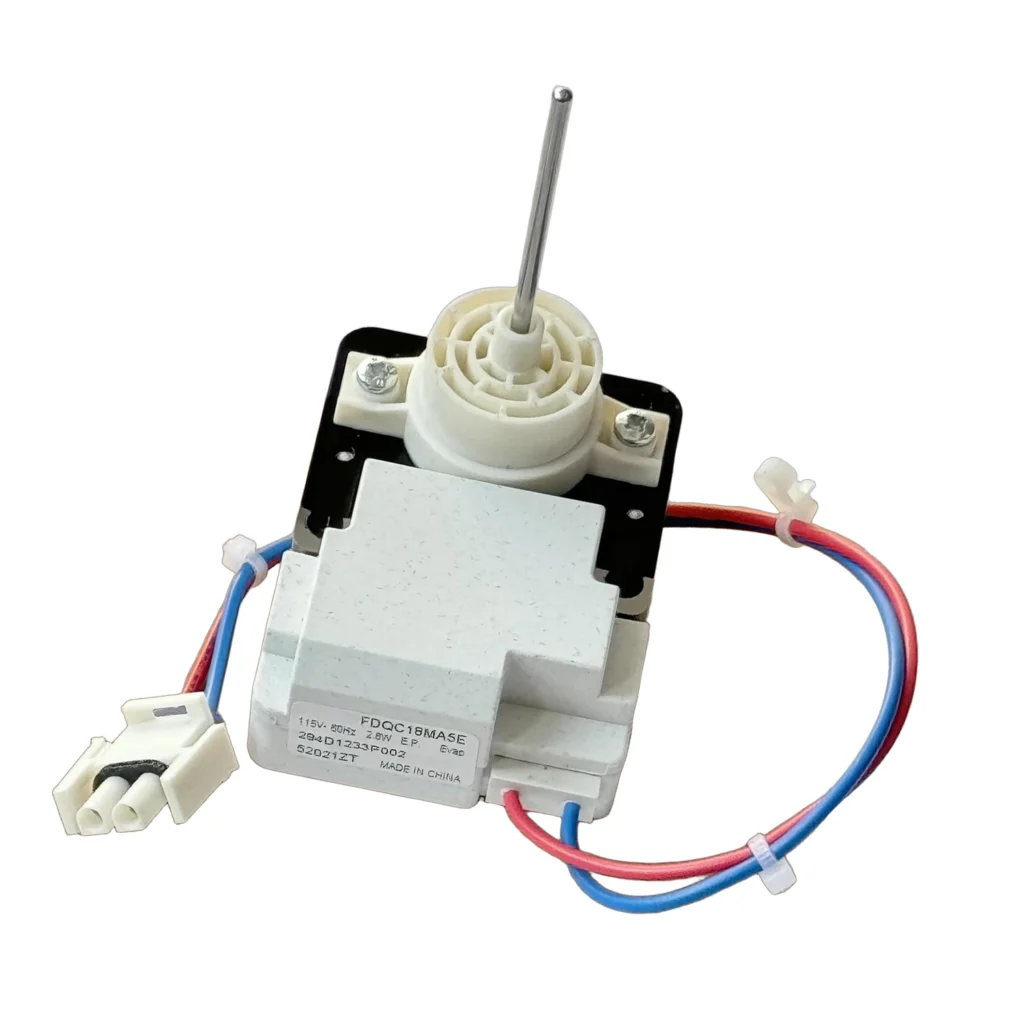
Most condenser fan motors in GE refrigerators should last 8–12 years, but I routinely see them fail at 5–6 years. The 294D1233P002 motor that fits models like the GTS18FBSARWW and HTR17BBSA isn't cheap to replace, and the failure pattern is almost always the same: aging bearings and dust buildup that you could've prevented.
How Long Should It Last?
The 294D1233P002 condenser fan motor has a typical lifespan of 8–12 years under normal conditions. But here's what affects that number:
- Dust accumulation: The single biggest killer. Condenser coils and fan blades collect dust, forcing the motor to work harder.
- Ambient temperature: If your fridge sits in a hot garage or against a sunny wall, you're cutting years off the motor's life.
- Runtime cycles: Opening the door constantly or keeping the fridge overstuffed means the motor runs longer, more often.
- Bearing wear: Even without external factors, the motor bearings gradually deteriorate — it's just physics.
With proper maintenance, you can push that lifespan to 12–15 years. Without it, you'll be shopping for a replacement at year 5.
Signs It's Wearing Out
The motor doesn't just quit without warning. Watch for these specific symptoms:
Fridge Running Warmer Than Usual
If your fridge is sitting at 42°F instead of the set 37°F, the condenser fan might be struggling. The compressor's doing its job, but without proper airflow across the condenser coils, heat doesn't dissipate efficiently. You'll notice the compressor running longer cycles trying to compensate.
Strange Noises from the Back
A healthy 294D1233P002 motor runs almost silently. If you're hearing grinding, squealing, or rattling from behind the fridge, the bearings are worn. That noise usually starts intermittent — maybe just when the motor first kicks on — then becomes constant as the bearings fully degrade.
Fan Not Running at All
This is the final stage: the motor won't turn on, or it hums but the blade doesn't spin. At this point, the motor's already failed. The compressor will run continuously trying to cool, your electric bill spikes, and food starts warming. This typically happens suddenly after months of subtle symptoms you might've ignored.
Visual Inspection Clues
Pull the lower back panel off your GTS18FBSARWW or CTX18BACGRWW and look at the fan blade. Can you spin it freely by hand when the fridge is unplugged? It should rotate smoothly with minimal resistance. If it's stiff, sticky, or wobbles noticeably, the bearings are shot.
Maintenance Schedule That Actually Works
Here's the routine I tell everyone, and the people who follow it aren't calling me back in 5 years:
Every 3 Months: Quick Clean
Unplug the fridge. Remove the lower back panel (usually just a couple screws on GE models). Use a vacuum with a brush attachment on the condenser coils and around the fan housing. Don't skip the fan blades themselves — dust buildup there creates imbalance that wears bearings faster. This takes 10 minutes.
Every 6 Months: Deep Clean and Inspection
After vacuuming, use a coil cleaning brush (the long skinny kind) to get between the condenser fins. Check the fan blade for cracks or warping — plastic blades on the 294D1233P002 can develop stress fractures. Spin the blade by hand and listen for grinding. Wipe down the motor housing.
Annually: Full System Check
Everything from the 6-month service, plus: Check all wire connections to the motor for corrosion or looseness. Verify the rubber grommets that mount the motor aren't cracked (vibration kills motors). Measure the gap between fan blade and housing — should be consistent all around. If you've got a multimeter, check the motor's resistance (should be 50–200 ohms depending on the model).
When to Replace vs Maintain
Be honest with yourself. If the motor's making noise and you catch it early, cleaning might buy you 6–12 months. But if you're hearing constant grinding or the motor won't start reliably, you're past the maintenance stage. Here's my decision framework:
Maintain if: The motor runs but seems louder than before, the fridge is slightly warmer but still cooling, or it's been more than 6 months since you cleaned the coils.
Replace if: The motor won't start or stops mid-cycle, you hear grinding even after cleaning, the fridge isn't cooling at all, or the motor is over 10 years old with increasing problems.
The 294D1233P002 motor runs about $40–60. Compare that to a $200 service call or a week of spoiled food. Don't throw good money at a dying motor.
The Real Cost of Neglect
I had a customer with an HTS18GBSARWW ignore a noisy fan for three months. The bearings finally seized, the compressor ran nonstop trying to compensate, and he ended up replacing both the fan motor AND the compressor — $400 in parts plus labor. The coils were so clogged you couldn't see through them. Twenty minutes of cleaning every few months would've prevented all of it.
Frequently Asked Questions
Can I oil the motor bearings to extend their life?
The 294D1233P002 uses sealed bearings — they're not designed to be serviced. Adding oil typically makes things worse by attracting more dust. If the bearings are noisy, plan on replacement. What you CAN do is keep dust away from the motor housing so the bearings don't overheat in the first place.
How do I know if it's the fan motor or the compressor failing?
Easy test: when the fridge is running, go to the back and listen. The compressor is the large cylinder that gets warm and makes a low humming sound. The fan is higher pitched and you should feel air movement. If the compressor's running but the fan isn't, you've found your problem. If neither is running and the fridge is dead silent, that's likely a control board or power issue.
Will a dirty fan motor increase my electric bill?
Absolutely. When the condenser fan can't move air efficiently, the compressor compensates by running longer cycles. I've seen electric bills drop $15–20 per month after a thorough coil and fan cleaning on older GE models. The compressor is the biggest power draw in your fridge, and anything that makes it work harder costs you money.
Element showing wear?
294D1233P002 · Replace before it fully fails