
How to Extend Your Whirlpool Dishwasher Circulation Pump Life — Maintenance Guide
Disconnect power at breaker before any maintenance involving pump inspection. Water and electricity are a dangerous combination.
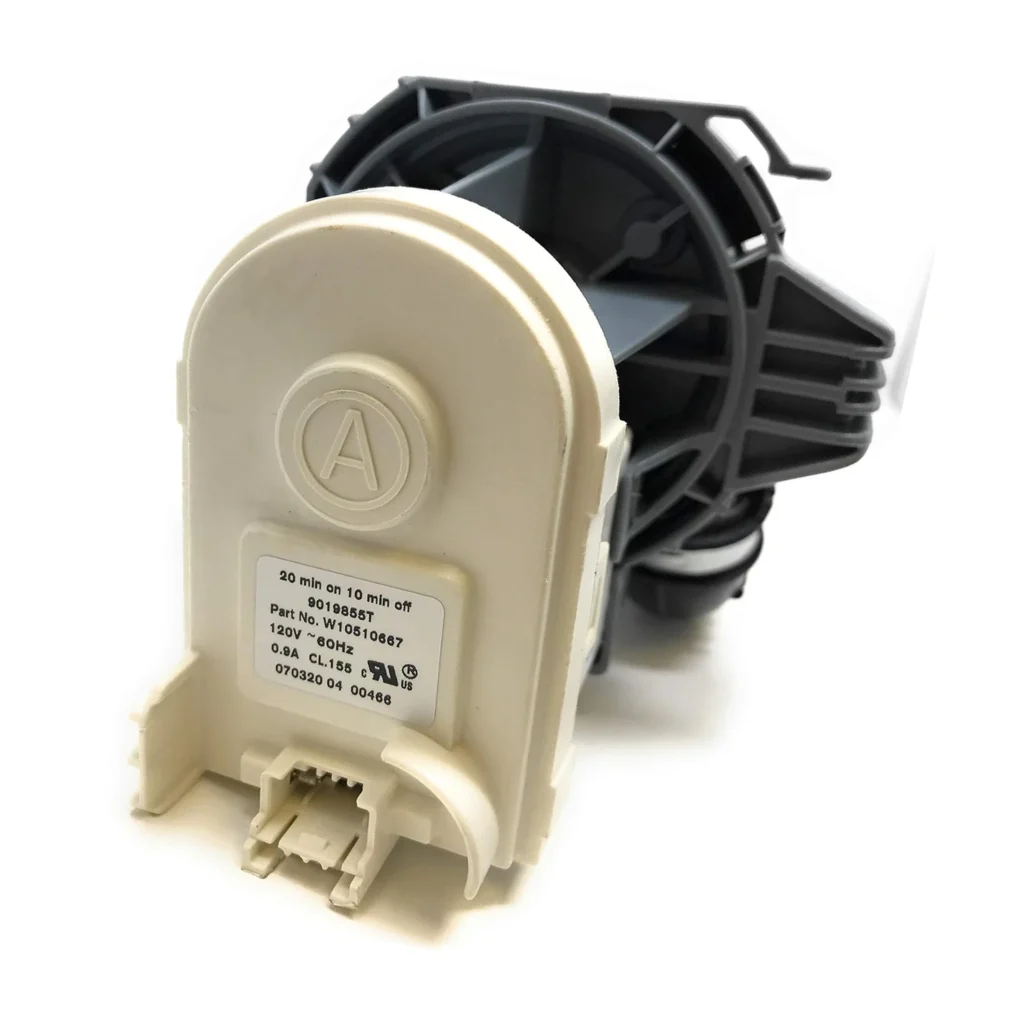
Most Whirlpool dishwasher circulation pumps should last 7-10 years, but the average homeowner replaces theirs around year 5. That three-year gap? It's usually avoidable. The W10510667 pump motor in your WDF560SAFB0 or WDT720PADM2 isn't fragile — it just needs you to stop treating your dishwasher like a garbage disposal with a rinse cycle.
I've replaced hundreds of these pumps, and honestly, about 60% of the failures I see could've been prevented. Let's talk about keeping yours running longer.
How Long Should It Last?
Under normal conditions, the W10510667 circulation pump should give you 8-10 years of service. It's a workhorse component — a permanent magnet motor spinning an impeller at several thousand RPM to spray water through your dish rack. The bearing assembly is sealed, the housing is reinforced plastic, and it's designed for thousands of cycles.
But here's what kills it early: hard water deposits locking up the impeller shaft, food debris jamming the pump chamber, and running the dishwasher when it's already showing symptoms of trouble. Every time you ignore that grinding noise and hit start anyway, you're shaving months off its lifespan.
With proper care — and I mean actual monthly maintenance, not just wishful thinking — you can push this pump to 12-15 years. I've seen it happen. The difference is always the same: those customers actually clean their filters.
Signs It's Wearing Out
The pump doesn't just quit one day. It tells you it's struggling, usually for weeks before complete failure. Here's what to watch for:
Not Cleaning Dishes Properly
When your pump starts losing pressure, dishes come out with stuck-on food — especially on the upper rack. You'll notice it on plastic containers first since they don't hold heat well. The pump is still running, but the impeller is either partially blocked or the seal is wearing, reducing water pressure. If you're running a second cycle to get things clean, your pump is already compromised.
Noisy Operation During Wash Cycle
A healthy circulation pump has a consistent hum. When bearings wear or debris gets caught in the impeller, you'll hear grinding, rattling, or a high-pitched whine. This is your 30-day warning. The noise happens because something is creating friction where there should be smooth rotation. Don't ignore it — the part is screaming at you.
Leaking from the Pump Area
Water pooling under your dishwasher often traces back to the circulation pump seal. As the shaft seal degrades from mineral buildup or simple wear, water escapes during the wash cycle. Small leaks become big leaks. Big leaks become kitchen floods and potential cabinet damage. If you see water, check the pump housing immediately.
Will Not Start or Stops Mid-Cycle
When a pump motor is on its last legs, it'll draw too much current trying to spin a seized impeller. Your dishwasher's control board will sense this and shut down to prevent electrical damage. If your machine starts then immediately stops, or won't start at all after selecting a cycle, the pump motor may be locked up.
Maintenance Schedule That Actually Works
After Each Use: Scrape plates before loading. I know the dishwasher is supposed to handle food, but it's designed for residue, not chunks. Bones, fruit pits, and chunks of anything put stress on the pump every single cycle.
Weekly: Pull and rinse the filter assembly at the bottom of your tub. Takes 30 seconds. The filter catches what your pre-rinse missed, and when it's clogged, your pump works twice as hard pushing water through restricted screens. On models like the WDT780SAEM2, the filter twists out counterclockwise — no tools needed.
Monthly: Run a cleaning cycle with dishwasher cleaner or white vinegar. Hard water leaves calcium deposits everywhere, including inside your pump housing. A monthly deep clean dissolves buildup before it becomes a problem. Use the hottest cycle available.
Every 6 Months: Check the spray arms for clogs and inspect the pump area for leaks. Remove the lower spray arm and look down into the sump. You're checking for standing water when the machine is off (there should be a small amount) and any obvious debris. Also check under the dishwasher with a flashlight for moisture.
When to Replace vs Maintain
Here's the honest decision framework: if your pump is making noise but still cleaning dishes, maintenance might buy you another year. Clean the filter, run descaling cycles, check for obstructions. But if dishes aren't getting clean AND it's noisy, you're past the maintenance window. The pump is already damaged.
Leaking is non-negotiable — replace it. You can't maintenance your way out of a failed shaft seal. And if the motor won't start at all, either the windings are fried or the impeller is completely seized. Neither is fixable with cleaning.
The W10510667 runs about $80-120 depending where you buy it. Compare that to the cost of water damage or a full dishwasher replacement. When the pump shows two or more symptoms, replace it.
What Actually Kills This Pump
Three things destroy circulation pumps prematurely: hard water, neglected filters, and foreign objects. The hard water forms scale on the impeller and shaft, creating friction. The dirty filter forces the pump to work harder, overheating the motor. And the foreign objects — usually broken glass, twist ties, or small utensils — jam the impeller.
I once pulled a pump from a WDF750SAYM3 that had a metal bottle cap wedged in the impeller. Customer swore they never put one in the dishwasher. Doesn't matter how it got there — it killed a $100 pump that was only three years old.
The fix for all three causes is the same: pay attention. Check what goes in, clean the filter regularly, and soften your water if it's hard.
Frequently Asked Questions
Can I Lubricate the Circulation Pump to Make It Last Longer?
No. The W10510667 uses a sealed bearing assembly — there's no way to add lubricant, and trying to do so usually causes more problems. If the pump is noisy because of bearing wear, it needs replacement, not lubrication. Any oil or grease you try to add will just contaminate the pump chamber and potentially affect wash performance.
How Do I Know If It's the Pump or Just a Clogged Filter?
Pull the filter first — it takes 30 seconds. If the filter is packed with debris, clean it thoroughly and run a test cycle. If performance improves, it was the filter. If dishes still don't get clean or the noise continues, it's likely the pump. A clogged filter causes weak spray; a failing pump causes weak spray plus noise and possible leaking.
Will Hard Water Really Damage My Circulation Pump?
Absolutely. Hard water leaves mineral deposits on every surface it touches, including inside your pump housing and on the impeller blades. Over time, these deposits build up enough to create drag on the motor shaft and impeller. This increases current draw, generates heat, and accelerates bearing wear. If you have hard water above 7 grains per gallon, either install a softener or plan on replacing pumps every 5-6 years instead of 10.
Element showing wear?
W10510667 · Replace before it fully fails