
How to Extend Your Whirlpool Washer Water Inlet Valve Life — W10599356 Maintenance Guide
Always shut off both hot and cold water supply valves before performing any maintenance on the inlet valve. Unplug washer from electrical outlet to prevent accidental starts.
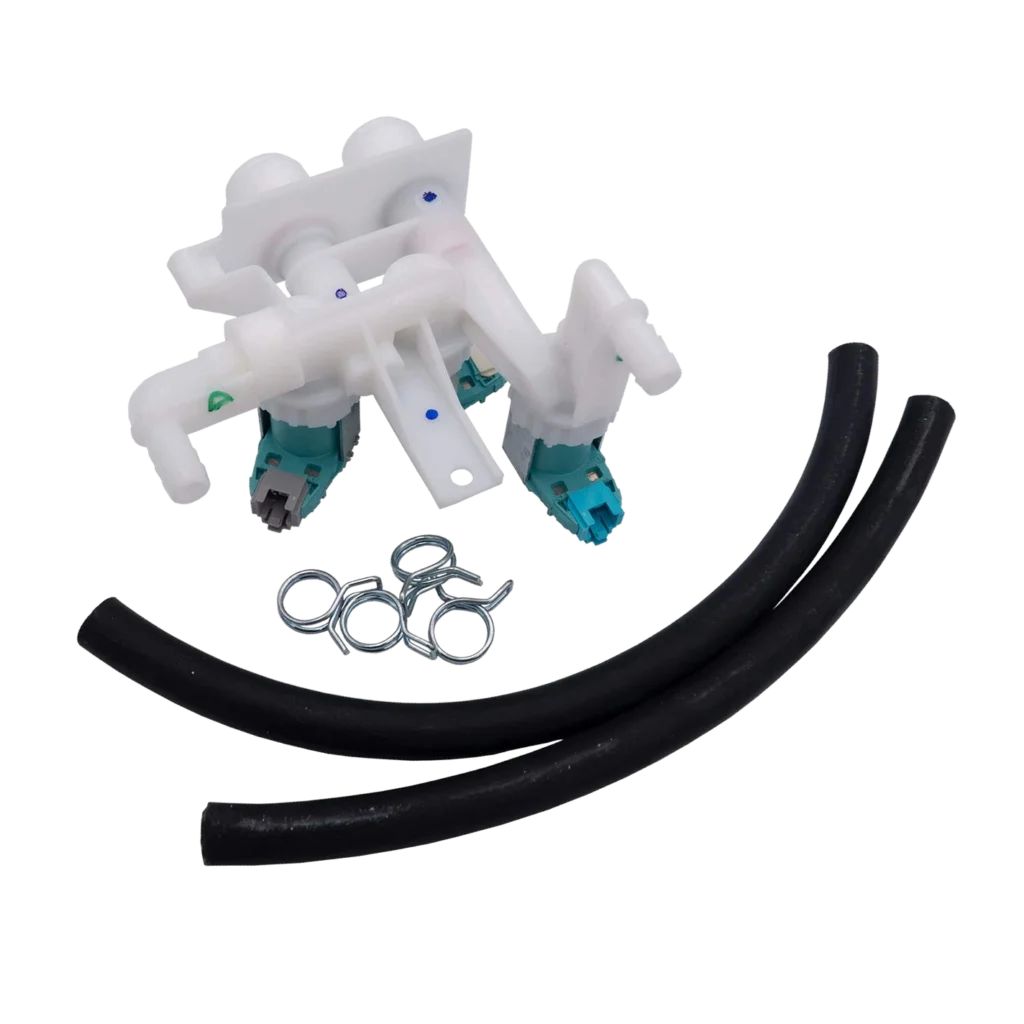
Most water inlet valves should last 8-12 years. But in my two decades fixing washers, I see them fail around year 5 or 6 — usually because of something completely preventable. A guy called me last month about his WFW80HEBW1 throwing F8 E1 error codes constantly. Turned out mineral buildup had locked the valve partially open. Cost him $147.99 for the W10599356 replacement when a $2 filter screen could've saved it.
Here's how to keep yours working until it actually reaches end-of-life, not just premature failure from neglect.
How Long Should It Last?
The W10599356 inlet valve is built for 10-15 years under ideal conditions. That's roughly 3,000-4,000 wash cycles. Reality's different though. Hard water areas? You're looking at 5-8 years max. High-efficiency models like the WFW7590FW0 and WFW85HEFW1 cycle water constantly during sensing, which puts more stress on the solenoids inside.
Three things kill these valves early:
- Sediment buildup — the tiny screen filters get clogged, forcing the valve to work harder
- Mineral deposits — hard water calcium locks the valve open or shut
- Pressure surges — water hammer from quick-closing valves upstream damages the internal diaphragm
I've seen valves last 18 years in homes with whole-house water softeners. And I've replaced them after 3 years in homes with well water full of iron and sediment.
Signs It's Wearing Out
The valve doesn't just suddenly die. It gives you weeks or months of warning signs. Most people ignore them until they're dealing with water all over the laundry room floor.
Washer Overfilling or Continuous Filling
This is the classic failure. You start a load and walk away. Come back to find water overflowing the tub or your washer stuck in an endless fill cycle. What's happening: the solenoid that closes the valve is failing. It gets weak, can't fully shut, and water keeps trickling in.
On models like the WFW72HEDW0 and WFW81HEDW0, you'll first notice the water level getting slightly higher than normal. Then it progresses to full overflow.
Water Entering Tub When Washer Is Off
Open your washer door between loads and find standing water that wasn't there before? That's a valve that won't close completely. One customer told me: "Water leaking past door back into tub when washer is off." That's gravity feeding water through a stuck-open valve.
This one's sneaky because you might not notice until you smell mildew from water sitting in the drum for days.
F8 E1 Error Codes
Your WFW70HEBW0 or WFW80HEBC2 flashing F8 E1? That's the control board detecting a fill problem. Either water's coming in too fast (valve stuck open) or too slow (valve screen clogged or solenoid weak). The machine's smart enough to know something's wrong — listen to it.
Don't ignore this code. I've seen people run their washers for weeks with this error, then act surprised when their utility room floods during the spin cycle.
When to Replace vs Maintain
Here's the honest truth: if your valve is actually failing — solenoid burned out, diaphragm cracked, housing cracked — you're replacing it. This isn't a rebuild-it-yourself part. The W10599356 costs $147.99 and takes 30-60 minutes to swap.
But most "failed" valves aren't failed. They're just dirty.
Replace if you see:
- Visible cracks in the plastic housing
- Water leaking from the valve body itself (not the hose connections)
- Burnt smell from the solenoid coils
- Valve makes loud buzzing but no water flows
Try maintenance first if:
- Flow is weak but steady
- Occasional overfilling that corrects itself
- F8 E1 errors that come and go
- Valve is less than 5 years old
One customer "started troubleshooting issues and doing some online research. Discovered possible inlet valve malfunction." Smart guy. He cleaned the screens first, saved himself $150 because that fixed it.
Frequently Asked Questions
Can I clean the inlet valve without removing it?
Sort of. You can clean the external screen filters at each hose connection without pulling the valve. Turn off water, disconnect hoses, pull out the small mesh screens with needle-nose pliers, rinse under tap water. Takes 5 minutes. But the internal screens and valve chamber? You need to remove it. With the nut drivers and socket set, it's a 30-45 minute job for most people.
How do I know if hard water is damaging my valve?
Look at your faucet aerators and showerheads. See white crusty buildup? That's what's coating your inlet valve too. If you're in a hard water area and don't have a softener, plan on replacing inlet valves every 5-7 years regardless of maintenance. The calcium eventually wins. Some folks install an inline filter just for the washer — $30 investment that can double valve life.
Why does my valve leak after I replace the hoses?
Those rubber washers inside the hose connections compress and take a set over time. When you remove old hoses, you disturb that seal. Either reuse the exact same hoses in the same ports, or replace the rubber washers. And don't overtighten — hand-tight plus a quarter turn with pliers is enough. One user noted: "As with all hoses that have been connected for a long time not easy to remove them from water inlet." Yeah, they stick. Use two adjustable wrenches so you're not torquing the valve body itself.
Element showing wear?
W10599356 · Replace before it fully fails