
How to Extend Your Whirlpool Washer Motor Run Capacitor Life — W11395618 Maintenance Guide
ALWAYS discharge capacitor before handling — even unplugged, it stores electrical charge that can shock you. Short terminals with insulated screwdriver first.
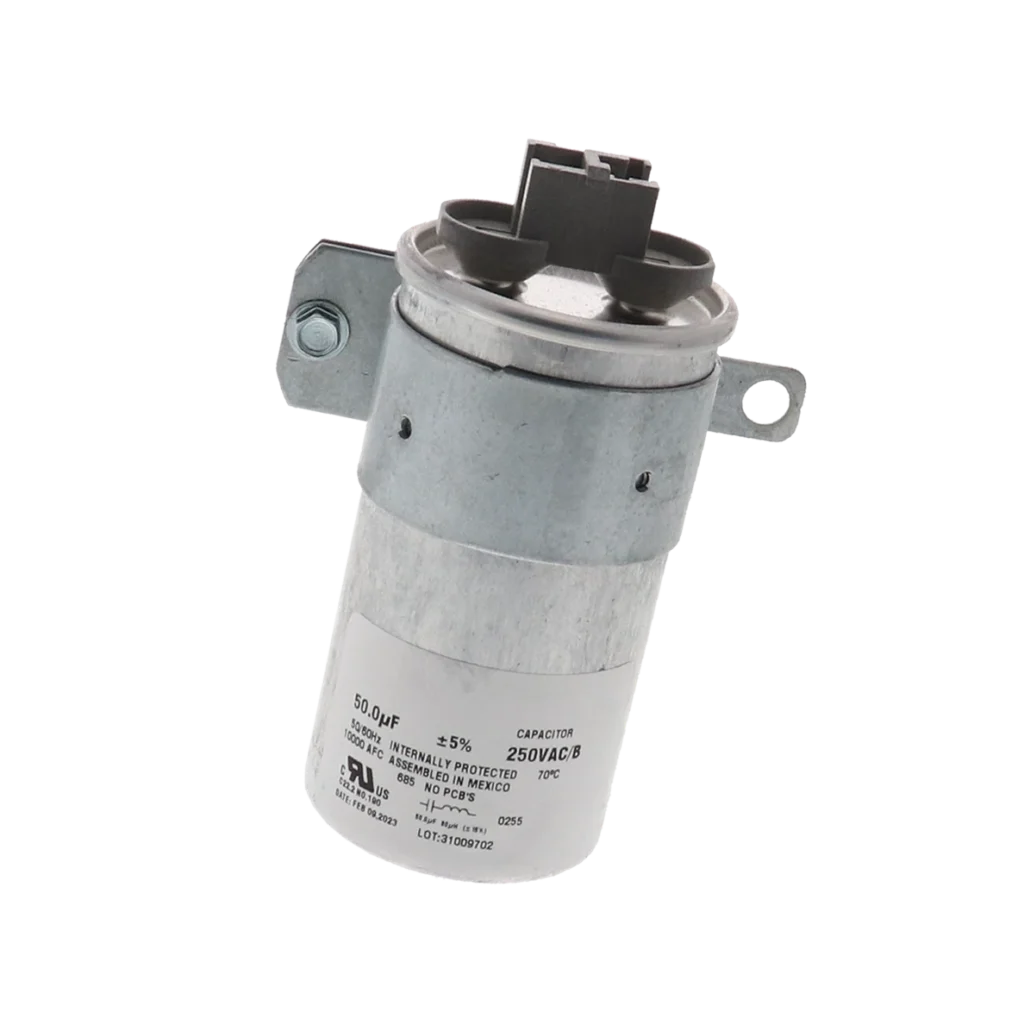
Most washer motor run capacitors like the W11395618 should last 8-10 years, but I see them fail at 4-5 years all the time. The difference? Usually it's voltage spikes, heat exposure, and nobody checking them until the washer won't spin.
This capacitor works in Whirlpool, Maytag, and Kenmore top-loaders including the WTW5000DW series, WTW4915EW models, and WTW5800BW machines. It's the component that gives your motor the electrical boost it needs to start spinning the drum — and when it goes, your washer just hums or doesn't spin at all.
How Long Should It Last?
A properly maintained motor run capacitor typically lasts 8-10 years in normal conditions. But "normal" is doing a lot of work there.
What actually affects lifespan:
- Heat buildup — Capacitors hate temperatures above 105°F. If your washer's in a hot garage or laundry closet with no ventilation, you're cutting years off its life.
- Voltage fluctuations — Power surges from lightning, grid switching, or even your AC compressor kicking on can stress the dielectric inside the capacitor.
- Humidity — Moisture can corrode terminals and degrade the internal components over time.
- Duty cycle — Running 2-3 loads daily puts more strain on it than 3-4 loads weekly.
With proper care — stable voltage, good ventilation, and annual inspections — you can push that lifespan to 12-15 years. Without it, you'll be lucky to get 5.
Signs It's Wearing Out
Capacitors don't usually give you much warning before they fail completely, but there are a few indicators if you know what to look for.
Washer Hums But Won't Start Spinning
This is the classic sign. You hear the motor trying to engage — a low humming or buzzing sound — but the drum doesn't move. The capacitor isn't providing enough starting torque to get the motor going.
Sometimes it'll work on one cycle and fail on the next. That intermittent behavior usually means the capacitor's on its last legs.
Bulging or Leaking Capacitor Body
If you pull the capacitor out and see the metal casing is bulged, domed, or has any oily residue around the terminals, it's done. That's the dielectric fluid breaking down and escaping. Don't even try to use it — replace it immediately.
Burning Smell During Spin Cycle
A failing capacitor can overheat and produce a distinctive electrical burning smell — not rubber, not plastic, but a sharp acrid odor. If you smell this during the spin cycle, unplug the washer and check the capacitor before running it again.
Inconsistent Spin Speeds
The drum spins slower than usual or speeds up and slows down during the cycle. This happens when the capacitor's capacitance value has drifted outside spec — it's still working, just not well enough to maintain consistent motor speed.
When to Replace vs Maintain
Here's the honest truth: you can't really "maintain" a capacitor in the traditional sense. There's no cleaning, lubricating, or adjusting. You can only create better operating conditions and catch problems early.
Replace immediately if:
- The capacitor shows any physical damage — bulging, leaking, corrosion
- The washer won't spin and the motor hums
- You measure the capacitance and it's more than 10% off spec (the W11395618 should measure close to its rated value, typically around 16-20 µF)
- The capacitor is over 10 years old, even if it's still working
Focus on prevention if:
- The washer's working normally and the capacitor is under 8 years old
- You want to maximize the lifespan of a new replacement
- You're addressing other washer issues and want to check all electrical components
Testing capacitance requires a multimeter with capacitance measurement capability. If you don't have one, just inspect visually during annual maintenance and replace based on age and symptoms.
Frequently Asked Questions
Can I test the W11395618 capacitor without removing it?
Not accurately. You need to disconnect at least one terminal to isolate the capacitor from the circuit, otherwise you're measuring the capacitor plus whatever else is connected to it. The reading will be meaningless. Takes 5 minutes to pull it out — just unplug the washer, discharge the capacitor with an insulated screwdriver across the terminals, and disconnect the wire terminals.
Will a surge protector actually protect my washer capacitor?
A good quality surge protector will handle most power spikes from lightning strikes and grid switching, but it won't help with voltage sag or brownout conditions. For complete protection, you'd need a voltage regulator or UPS, which isn't practical for a washer. I'd focus on making sure your home's electrical panel is properly grounded and consider a whole-house surge protector if you're in an area with frequent storms.
Does the capacitor brand matter for the W11395618 replacement?
The W11395618 is a Whirlpool OEM part that replaces WPW10625046, W11162560, W10866250, and W10843769. Stick with OEM or quality aftermarket brands rated for motor applications. Cheap capacitors use inferior dielectric materials and will fail early. Check that the voltage rating matches or exceeds the original (usually 370VAC for washer applications) and the capacitance value is exact. Don't substitute a different µF value thinking "close enough" — it'll cause motor problems.
Element showing wear?
W11395618 · Replace before it fully fails