
How to Extend Your Samsung Dishwasher Water Inlet Valve Life — Maintenance Guide
Always disconnect power at the breaker and shut off the water supply before removing or servicing the inlet valve. Water pressure remains in the line even when the dishwasher is off.
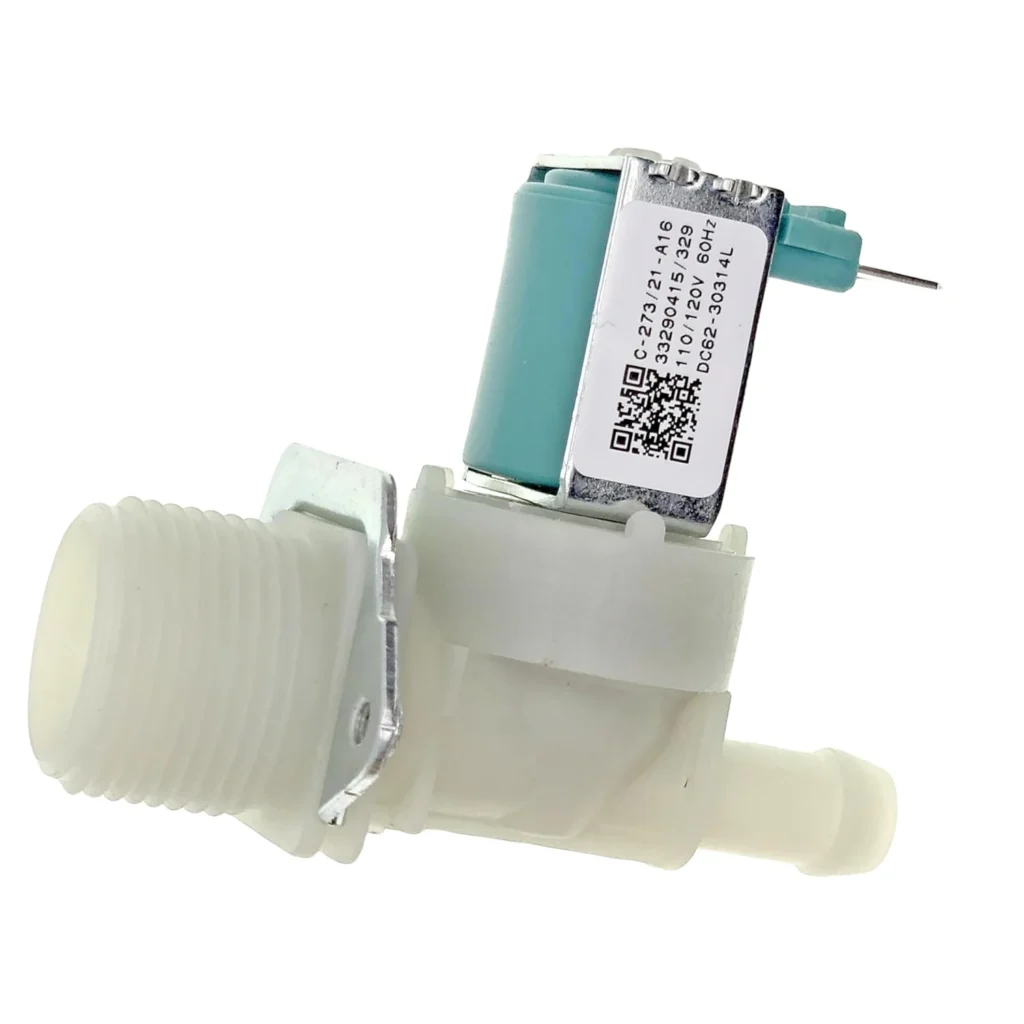
Most Samsung dishwasher water inlet valves like the DC62-30314L fail between years 4 and 7—but they're designed to last 10-12 years. The difference? Water quality and a few simple maintenance habits that most people skip.
This valve controls water flow into your dishwasher. It opens when signaled by the control board and closes when the tub reaches the right water level. Mineral buildup, sediment, and water pressure issues are what usually kill it early.
How Long Should It Last?
A properly maintained water inlet valve should give you 10-12 years of service. In reality, most replacements happen around the 5-6 year mark. Here's what shortens its life:
- Hard water — Calcium and magnesium deposits restrict flow and damage the solenoid
- High water pressure — Anything over 120 PSI stresses the valve body and seals
- Sediment — Rust, sand, and debris from old pipes get trapped in the screen
- Voltage fluctuations — Power surges can fry the solenoid coils
If you've got hard water (over 7 grains per gallon), you're looking at the lower end of that range unless you take preventive steps.
Signs It's Wearing Out
Water inlet valves don't fail instantly—they give warnings. Catch these early and you might extend its life or at least avoid a flooded kitchen.
Dishwasher Fills Too Slowly or Not at All
When mineral deposits clog the inlet screen or buildup narrows the valve opening, water trickles in or stops completely. Your dishwasher will run its cycle without enough water, leaving dishes dirty. Sometimes it'll throw an error code, sometimes it just won't clean worth a damn.
Pull the valve and check the small mesh screen where the water line connects—if it's coated in white or rust-colored crud, that's your problem.
Water Keeps Running After Fill Cycle
A valve that won't fully close means water continues flowing even after the tub is full. You'll hear it running constantly, and you might find water on the floor if it overflows. This happens when the solenoid weakens or when sediment prevents the valve from seating properly.
This is the failure mode that floods kitchens at 2 AM, so don't ignore it.
Humming or Buzzing from Behind the Kickplate
The valve solenoid makes an electrical hum when it energizes—that's normal. But if you hear loud buzzing or humming and no water flows, the solenoid is trying to open a stuck valve. The coil is pulling power but the mechanical parts aren't moving.
This usually means the valve body is scaled up with minerals. Less commonly, it's a failing solenoid coil that's drawing current but not generating enough magnetic force.
Maintenance Schedule That Actually Works
Every 6 months: Disconnect power and water supply. Remove the inlet valve (two screws, one hose clamp). Pull out the small mesh screen and soak it in white vinegar for 30 minutes, then scrub with an old toothbrush. Rinse thoroughly. Check the valve body opening for any visible scale—if you see buildup, soak the whole valve in vinegar.
Annually: Test your home water pressure with a gauge at the washing machine hookup. If it's over 100 PSI, install a pressure regulator on the line feeding your dishwasher. High pressure is hard on all appliance valves.
If you have hard water: Install an inline sediment filter before the dishwasher valve. Replace the filter cartridge every 6-12 months. A whole-house water softener is even better, but a $15 inline filter catches most of what'll damage the valve.
When to Replace vs Maintain
Here's the honest truth: if your valve is already failing (won't open, won't close, or leaking from the body), maintenance won't save it. Replace it.
But if your dishwasher still works fine and you're just doing preventive care, cleaning the screen and descaling every 6 months can double the valve's lifespan. That's the difference between a $115 part at year 5 versus year 10.
Replace immediately if you see:
- Water leaking from the valve body itself (not the connections)
- Cracks in the plastic housing
- Solenoid coil that's hot to the touch during normal operation
- Resistance reading outside 500-1500 ohms when tested with a multimeter
The DC62-30314L fits dozens of Samsung models including the DW80K7050UG, DW80K5050US, DW80J7550UG, and DW80H9970US series. If you're replacing, verify your model number—Samsung uses different valves across their lines and they're not interchangeable.
Frequently Asked Questions
Can I clean a water inlet valve that's already failed?
If it won't open or won't close, cleaning rarely fixes it. The solenoid coil or internal seals are shot. But if it's just slow-filling, cleaning the screen and descaling the body works about 60% of the time. Try it before spending $115 on a new valve—you've got nothing to lose except 20 minutes.
How do I know if I have hard water?
Buy a water hardness test strip from any hardware store—they're $10 for a pack. Dip it in your tap water and compare the color. Anything over 7 grains per gallon is considered hard. Above 10.5 is very hard, and that's when you'll see rapid mineral buildup on appliance valves. Your local water utility also publishes hardness data if you're on city water.
Will a water softener prevent valve problems?
Yes, dramatically. A properly maintained water softener removes the calcium and magnesium that cause scale buildup. Your inlet valve will last significantly longer, and so will your water heater, faucets, and washing machine valves. But softeners cost $500-$2000 installed. An inline sediment filter before the dishwasher is the budget option—it catches particles but doesn't remove hardness minerals.
Element showing wear?
DC62-30314L · Replace before it fully fails