
Samsung Refrigerator Not Dispensing Water or Ice — 5 Causes & How to Fix
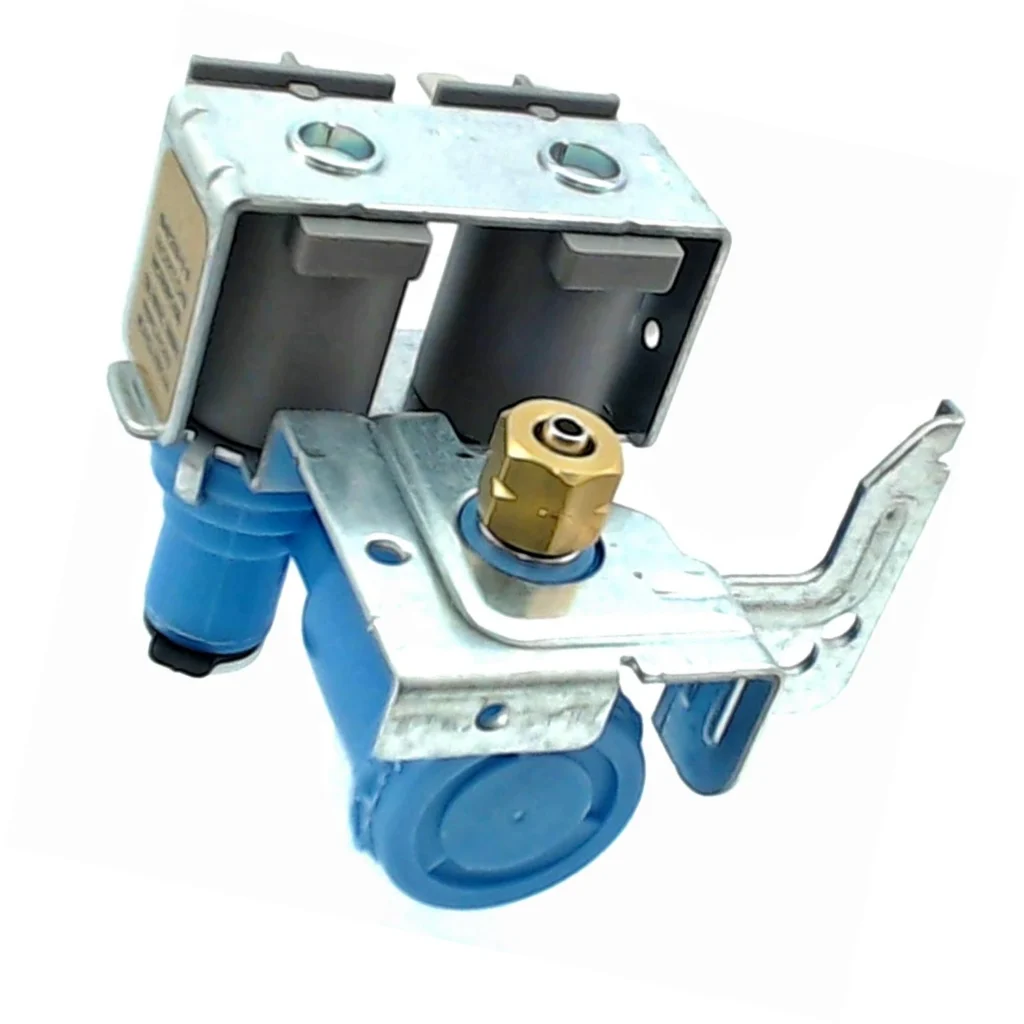
You press the water dispenser paddle on your Samsung RF26DBUS1 and... nothing. Maybe a weak trickle, or complete silence. Then you try the ice maker — same story. Before you assume the whole refrigerator needs replacing, know this: in most cases, it's the dual water inlet valve (part DA62-00914A) that's failed, and it's a straightforward fix most homeowners can handle.
This valve controls water flow to both your dispenser and ice maker. When it fails, you'll typically lose both functions simultaneously — though sometimes one works while the other doesn't, which confuses a lot of people.
Quick Symptom Check
Before diagnosing the inlet valve, verify you're experiencing these symptoms:
- No water from dispenser when paddle is pressed (compressor still runs)
- Ice maker stopped producing ice or makes hollow/small cubes
- Weak water flow that's noticeably slower than normal
- Humming or buzzing sound when you press the dispenser (valve trying to open but can't)
- Water line is connected and house water pressure is normal (check other faucets)
If you're getting no symptoms at all — no sounds, no lights — you've got an electrical issue upstream, not the valve itself.
Cause #1: Valve Solenoid Coil Failure (Most Common — 60% of Cases)
The DA62-00914A has two solenoid coils that open gates to let water through. Over time, these coils burn out or develop internal shorts. It's basic electromagnet physics — they're energized thousands of times, and eventually the wire winding fails.
How to diagnose:
- Unplug the refrigerator (always start here)
- Locate the valve — it's where the water line enters the fridge, usually behind the lower rear panel
- Disconnect the wire harness from the valve
- Use a multimeter set to ohms
- Test each solenoid terminal pair — you should read 200-500 ohms
- If you get infinite resistance (OL) or zero ohms, the coil is dead
The fix: Replace the entire valve assembly. The solenoids aren't serviceable separately. Part DA62-00914A runs about $55.99 and takes 20 minutes to swap out. It's a direct plug-and-play replacement — same mounting holes, same electrical connector.
Cause #2: Mineral Deposit Blockage (25% of Cases)
If you've got hard water, calcium and lime gradually clog the valve's tiny internal passages. The solenoids might work perfectly, but water can't flow through the blocked ports. This happens more in the South and Southwest where water hardness exceeds 10 grains per gallon.
How to diagnose:
Remove the valve and shine a flashlight through the inlet and outlet ports. If you see white crusty buildup or the passages look narrower than a pencil lead, that's your problem. You can also test by blowing through the valve (when it's disconnected) — airflow should be easy when you manually push the solenoid plunger.
The fix: Theoretically you could soak it in vinegar overnight, but honestly? At $55.99 for a new valve versus hours of soaking and uncertain results, just replace it. While you're at it, consider adding an inline water filter if you don't have one — it'll extend the life of the new valve.
Cause #3: Frozen Water Supply Line (15% of Cases, Seasonal)
The valve isn't defective — the water line feeding it is frozen solid. This typically happens when your freezer temperature is set too cold (below 0°F) or there's a defrost system issue causing the supply tube to ice over.
How to diagnose:
Locate the water supply tube running from the valve up to the ice maker and dispenser. On models like the RS21HDUBP1 and RF26DEUS2, this tube runs along the back wall inside the refrigerator compartment. Feel along it — if any section is rock-hard or covered in frost, it's frozen.
The fix: Unplug the fridge and let it thaw for 4-6 hours. Use a hair dryer on low to speed it up (keep it 6 inches away, never on high heat). Once thawed, adjust your freezer temp to 0-5°F. If it re-freezes within a week, you've got a defrost system problem — likely a failed defrost heater or timer.
Cause #4: Low Water Pressure from House Supply (8% of Cases)
Samsung inlet valves need at least 20 PSI to open properly. If your home water pressure is marginal — common in rural areas or homes with old galvanized pipes — the valve gets power but can't physically open against the weak pressure.
How to diagnose:
Disconnect the water line at the fridge. Hold it over a bucket and turn on the house valve. You should get a strong flow, filling a gallon jug in under 30 seconds. If it's a weak dribble, that's your issue. For a precise test, install a pressure gauge on an outdoor spigot — you want 40-60 PSI.
The fix: This isn't a valve problem. You'll need a plumber to diagnose why your home pressure is low — could be a partially closed main valve, a failing pressure regulator, or corroded pipes. Some folks install a small booster pump just for the refrigerator line, but that's treating the symptom, not the cause.
Cause #5: Control Board Not Sending Voltage (2% of Cases)
Rare but frustrating — the valve is perfect, but the main control board isn't sending the 120V AC signal to open it. This usually follows a power surge or happens in fridges over 10 years old where capacitors on the board are failing.
How to diagnose:
With the fridge plugged in (careful!), press the water dispenser paddle while measuring voltage at the valve's wire connector. You should see 120V AC when the paddle is pressed. No voltage? The control board is faulty. If you're not comfortable working with live voltage, skip this test and call a tech.
The fix: Main control board replacement runs $200-350 in parts alone, plus it requires transferring multiple wire harnesses. This is where you calculate whether repair makes sense versus replacement, especially if the fridge is 12+ years old.
When to Call a Pro
DIY the inlet valve replacement if you're comfortable unplugging appliances and using basic hand tools. It's seriously just four screws, two water lines (with quarter-turn fittings), and one electrical connector.
Call a professional if:
- You've replaced the valve and still have no water (points to control board or wiring)
- There's active water leaking when you remove panels — could indicate cracked tubing
- Your fridge has a through-the-door ice dispenser and you're seeing ice blockages in the chute (separate issue)
- You're in an apartment where you can't access the water shut-off valve
A service call typically runs $150-200 for diagnosis plus parts. If they quote over $300 total and your fridge is ancient, start shopping.
Frequently Asked Questions
Can I install the DA62-00914A valve in any Samsung fridge?
Not quite. This valve fits specific models including the RF26DBUS1, RS21DANS1, RS21HDUBP1, RS23DASV1, and dozens of others in the RF and RS series from roughly 2010-2018. Check the compatibility list or your fridge's model number (on the left wall inside the fridge section). If your current valve looks physically identical and has the same connector style, you're golden.
Why does my ice maker work but the water dispenser doesn't?
The DA62-00914A is a dual valve — it has two separate solenoids, one for the ice maker and one for the dispenser. They can fail independently. If only one works, test each solenoid separately with your multimeter. You'll likely find one reading normal (300 ohms) and the other open (infinite resistance). Still replace the whole valve — you can't fix just one coil.
How long should a water inlet valve last?
Depends entirely on your water quality and usage. With soft water and moderate use, 8-12 years is typical. Hard water areas? I've seen them fail in 4-5 years. If you're on well water with sediment, add a whole-house filter or at minimum an inline filter before the fridge — it'll save you from replacing this valve every few years.
Diagnosed the problem?
DA62-00914A · In Stock · Fast shipping