
Whirlpool Washer Detergent Dispenser Not Working — 5 Causes & How to Fix
You toss in a load, pour detergent into the dispenser drawer, start the cycle—and twenty minutes later, you pop it open to find a puddle of unused soap sitting right where you left it. Your Whirlpool front-load washer isn't dispensing detergent, fabric softener, or bleach. The clothes come out barely rinsed, still smelling like whatever they smelled like going in.
This is one of the most frustrating washer failures because it's not obvious. The machine runs. It fills. It spins. But nothing actually gets clean. And if you've got a model like the WFW9200SQ or WFW9400SW, you're probably staring at that electronic dispenser system wondering what just broke.
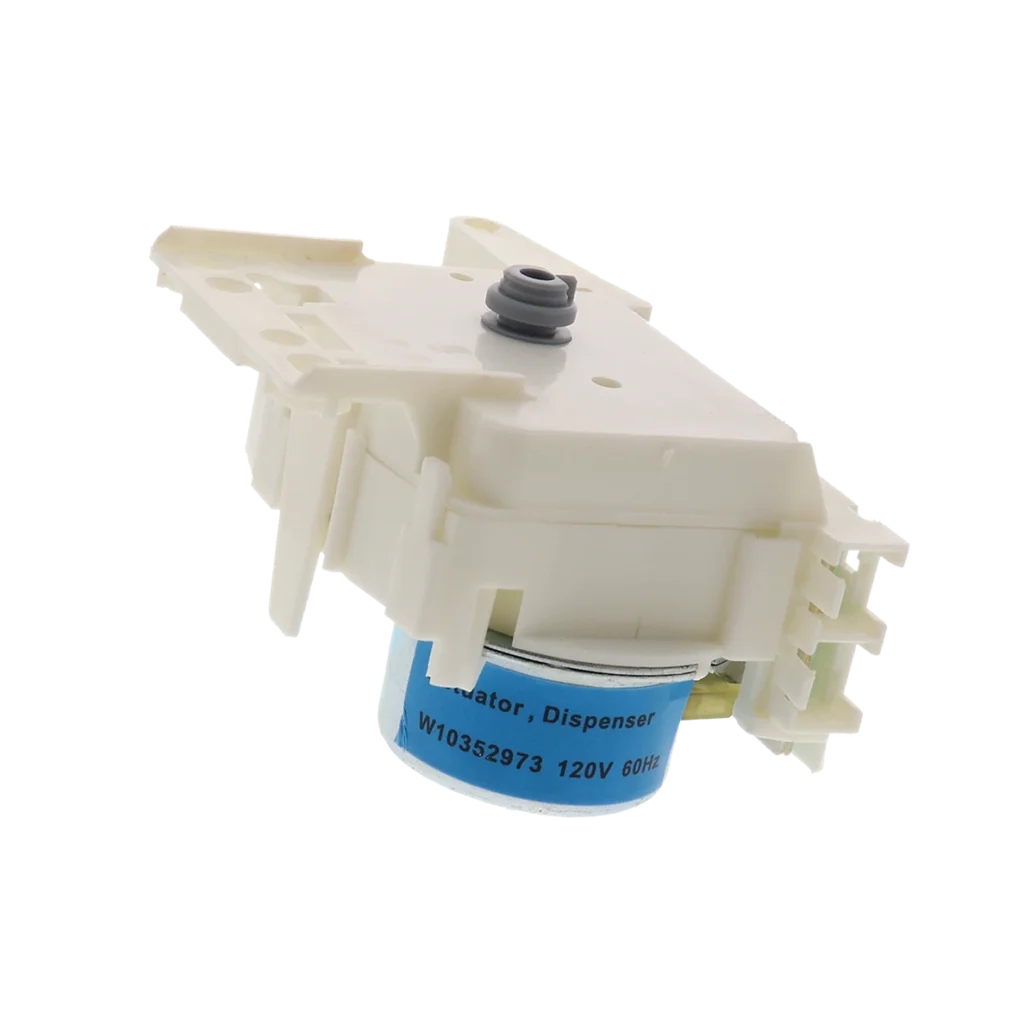
The dispenser actuator switch—part number W10352973—controls when and how your washer releases detergent, bleach, and fabric softener during the cycle. When it fails, you'll see soap left behind, clothes that smell musty, or error codes on the display. Let's walk through what's actually going wrong and how to fix it.
Quick Symptom Check
Before you start pulling parts, confirm what you're dealing with:
- Detergent left in drawer after cycle completes — liquid soap or powder sitting untouched
- Fabric softener not dispensing — drawer cup still full at end of wash
- Bleach not releasing — bleach compartment full after cycle
- Error code F8E1 or similar dispenser fault — electronic control detecting actuator failure
- Clicking or buzzing from dispenser area — actuator trying to engage but failing
- Clothes smell unchanged — no detergent scent, same odor as before wash
If you're seeing two or more of these, you're likely dealing with a failed dispenser actuator switch. This part replacement runs about $92 and takes 30–45 minutes if you're moderately handy.
Cause #1: Failed Dispenser Actuator Switch (W10352973)
Probability: 70%
The actuator switch is an electromechanical component that physically opens valves to release detergent, bleach, and fabric softener at the right time during the wash cycle. It's mounted behind the dispenser drawer housing and connects to the control board.
Here's what fails: the internal motor or gears strip out from repeated use, or the electronic switch contacts corrode from moisture exposure. When this happens, the control board sends the signal to dispense—but nothing moves. You'll often hear a faint click or buzz as the switch tries to engage, then... nothing.
How to diagnose:
- Remove the dispenser drawer completely (pull out and lift up to release)
- Shine a flashlight into the dispenser housing—look for the actuator assembly behind the drawer opening
- Start a wash cycle and listen closely—you should hear the actuator motor engage with a distinct mechanical sound
- If you hear clicking but no movement, or no sound at all, the actuator is likely dead
- Check for error codes on the display—F8E1 specifically points to dispenser system failure
Fix: Replace the W10352973 dispenser actuator switch. You'll need to unplug the washer, remove the top panel (two screws at the back), disconnect the wire harness from the old actuator, unbolt it from the housing, and install the new one. The replacement part costs $91.99 and is a direct fit for models like WFW9200SQ00, WFW9400ST01, and dozens of other Whirlpool, Maytag, and Kenmore front-loaders.
Cause #2: Clogged or Blocked Dispenser Tubes
Probability: 15%
Sometimes the actuator is working fine—but detergent residue, fabric softener buildup, or hard water deposits have clogged the tubes that carry product from the drawer to the tub. This is especially common if you use thick liquid detergent or fabric softener without diluting it.
How to diagnose:
- Remove the dispenser drawer and rinse it thoroughly under hot water
- Look into the dispenser housing with a flashlight—check the tubes and channels for white crusty buildup or gummy residue
- Run a rinse cycle with the drawer removed—watch to see if water flows freely through all dispenser ports
- If water backs up or drains slowly, you've got a blockage
Fix: Use a small bottle brush or pipe cleaner to scrub out the dispenser tubes. Mix equal parts white vinegar and hot water, pour it into each dispenser compartment, and let it sit for 15 minutes. Run an empty hot wash cycle with two cups of white vinegar in the tub to flush the system. If buildup is severe, you may need to remove the entire dispenser housing to access the tubes from behind.
Cause #3: Faulty Wiring Harness or Loose Connection
Probability: 8%
The actuator switch connects to the main control board via a wire harness. If that connection is loose, corroded, or damaged, the actuator won't receive the signal to operate—even if the part itself is fine.
How to diagnose:
- Unplug the washer and remove the top panel
- Locate the wire harness plug on the back of the dispenser actuator
- Inspect the plug and pins for corrosion, moisture, or visible damage
- Wiggle the connection—if it feels loose, that's your problem
- Use a multimeter to test for continuity from the actuator plug to the control board connector
Fix: Disconnect and reconnect the harness firmly. If pins are corroded, clean them with electrical contact cleaner. If the harness itself is damaged, you'll need to replace it—Whirlpool sells harness repair kits for about $25. Make sure all connections are fully seated and secured with locking clips.
Cause #4: Control Board Not Sending Dispenser Signal
Probability: 5%
In rare cases, the main control board fails to send the dispense signal at the right time during the cycle. This is usually a software glitch or a failed relay on the board itself.
How to diagnose:
- Run a diagnostic cycle (hold down specific button combinations—check your model's service manual)
- Watch for error codes that indicate control board issues
- If the actuator tests good and wiring is intact, but the dispenser still doesn't work, suspect the board
Fix: Try a hard reset first—unplug the washer for 5 minutes, then plug it back in. If that doesn't work, you'll need a new control board. This is a $200–$400 repair depending on the model, and honestly, if the washer is more than 8 years old, you're approaching replacement territory.
Cause #5: Mechanical Damage to Dispenser Housing
Probability: 2%
Physical cracks in the dispenser housing, broken actuator mounting tabs, or damaged dispenser drawer rails can prevent the actuator from engaging properly—even if the electrical components are fine.
How to diagnose:
- Inspect the dispenser drawer and housing for visible cracks or broken plastic
- Check if the drawer slides in and out smoothly—any binding or misalignment?
- Look at the actuator mounting points—are the tabs intact?
Fix: If the housing is cracked, you'll need to replace the entire dispenser assembly (about $150). If it's just the drawer itself, replacement drawers run $30–$50. Make sure to match your model number—different Whirlpool series use slightly different drawer designs.
When to Call a Pro
This repair is DIY-friendly if you're comfortable removing a washer top panel and working with wire harnesses. But call a tech if:
- You're seeing multiple error codes beyond F8E1
- The washer won't run at all after you've tested the actuator
- You've replaced the actuator and it still doesn't work (points to control board or wiring)
- You don't have a multimeter or basic hand tools
Labor for this repair typically runs $150–$200 plus the part. If a tech quotes you over $300 total and your washer is older than 7 years, seriously consider replacement.
Frequently Asked Questions
Will my Whirlpool washer still run if the dispenser actuator is broken?
Yes—the washer will complete cycles normally. It'll fill, agitate, drain, and spin just fine. You just won't get any detergent, bleach, or fabric softener dispensed automatically. You can work around it temporarily by pouring detergent directly into the tub before starting the cycle, but that's not ideal for cleaning performance.
Can I replace the W10352973 actuator myself, or do I need a technician?
This is a straightforward DIY repair if you're comfortable with basic tools. You'll need a Phillips screwdriver, a 1/4-inch nut driver, and about 30 minutes. Unplug the washer, remove the top panel (two screws at the back), disconnect the wire harness, unbolt the old actuator, and install the new one. No special skills required—just take a photo of the wire connections before you disconnect anything.
How long does the W10352973 dispenser actuator typically last?
On average, 5–8 years depending on use frequency. If you're running 10+ loads a week, you'll see failure closer to the 5-year mark. Hard water and thick detergents can accelerate wear. The actuator has moving parts and electrical contacts that eventually wear out—it's a consumable component, not a lifetime part.
Diagnosed the problem?
W10352973 · In Stock · Fast shipping