
How to Extend Your Whirlpool Dryer Idler Pulley Life — Maintenance Guide
Always unplug the dryer before accessing internal components. The drum can rotate unexpectedly even when powered off if tension is released improperly.
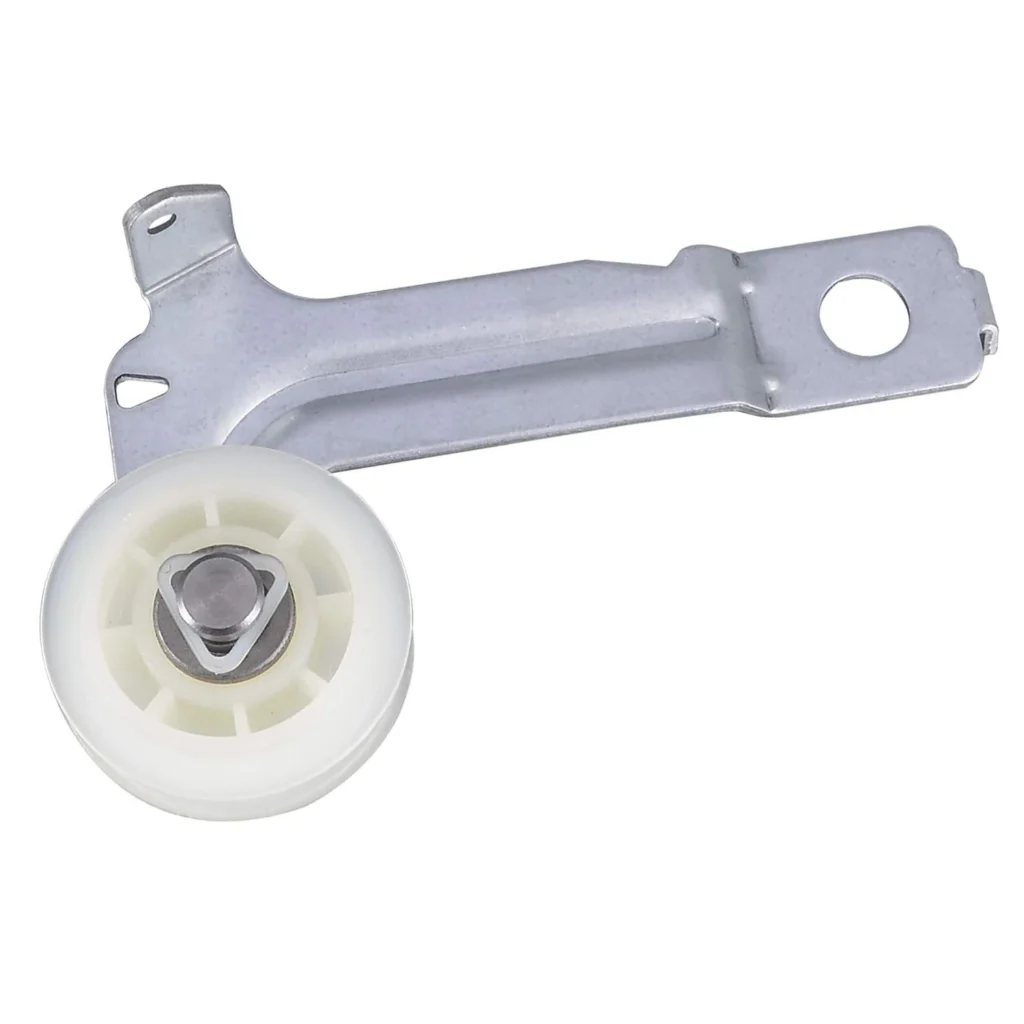
The average dryer idler pulley lasts 8–12 years, but most replacements happen around the 6-year mark. The difference? Usually just five minutes of maintenance every few months. This small spring-loaded component keeps proper tension on your dryer belt, and when it wears out prematurely, you're looking at a $29 part plus labor — or an afternoon of DIY work pulling apart your Whirlpool, Maytag, or Kenmore dryer.
How Long Should It Last?
The W10547292 idler pulley assembly is designed for 10–15 years of normal use. That's roughly 2,500–3,750 drying cycles. But here's what actually affects its lifespan:
Lint accumulation is the silent killer. The pulley wheel rotates at high speed, and even a thin layer of lint creates friction that generates heat and accelerates wear on the bearing.
Dryer overloading puts excessive tension on the spring-loaded arm. When you stuff 20 pounds of wet towels into a dryer rated for 12 pounds, that idler pulley works overtime to maintain belt tension.
Belt condition matters. A worn or fraying belt with uneven surfaces creates irregular pressure points on the pulley wheel, causing premature groove wear.
Installation quality from the previous repair. If the mounting bracket isn't seated properly or the spring tension is incorrect, the pulley won't track the belt smoothly.
Models like the WED7300XW0, MEDB850WR0, and WGD8900BC0 all use this same pulley design, which means the maintenance approach is identical across the entire compatible range.
Signs It's Wearing Out
Your dryer will tell you when the idler pulley needs attention — if you know what to listen for. These aren't catastrophic failures that happen overnight; they're progressive symptoms that give you weeks of warning.
Squealing During the Dry Cycle
A high-pitched squeal that starts when you press the start button and continues throughout the cycle points directly to the idler pulley bearing. It'll be loudest during the first five minutes when everything's cold, then might quiet down slightly as components warm up. This is metal-on-metal contact where the bearing has lost its lubrication or developed scoring.
Thumping or Rhythmic Knocking
If you hear a regular thump-thump-thump that matches the drum rotation, the pulley wheel has likely developed a flat spot or the bearing has excessive play. Count the thumps — they should match the belt rotation, not the drum. This means the issue is in the belt path, and the idler pulley is the most common culprit.
Belt Riding Off Center
Open your dryer door and manually rotate the drum. Watch the belt through the opening. If it's not centered on the drum or if it's riding toward one edge, the idler pulley may have shifted position or the wheel has worn unevenly. A properly functioning pulley keeps consistent tension and centering.
Visible Groove Wear on the Wheel
The pulley wheel should have a smooth, rounded groove where the belt rides. If you can see a deep channel or sharp edges, or if the belt has worn into the plastic, you're past the maintenance window and into replacement territory.
The 5-Minute Quarterly Check
You don't need to disassemble anything for basic maintenance. Here's what actually works:
Every three months: Unplug the dryer. Remove the lint filter and use a vacuum attachment to clean around the pulley area. On most Whirlpool and Maytag dryers, you can access the pulley by removing the lower front panel (usually two screws at the bottom). Use a flashlight and look for lint buildup around the pulley wheel and spring arm.
Use compressed air carefully. A quick blast can dislodge packed lint from the bearing area, but don't go crazy — you'll just blow lint deeper into the machine. One or two short bursts from 6 inches away is enough.
Check belt condition while you're there. Run your finger along the belt surface. It should feel smooth, not rough or frayed. If the belt is glazed or cracked, replace it when you do the pulley — they wear together.
Listen for bearing noise. With the dryer unplugged, spin the pulley wheel by hand. It should rotate smoothly and quietly. Any grinding, clicking, or resistance means the bearing is failing and maintenance won't help — you need replacement.
When to Replace vs Maintain
Here's the honest decision framework: If you hear squealing that stops after you clean and lubricate, you bought yourself another year or two. If the squealing persists after cleaning, or if you see visible damage to the wheel or spring, order the W10547292 replacement now.
Don't try to lubricate the bearing with oil or grease — these pulleys use sealed bearings that aren't designed for field lubrication. Adding oil just attracts more lint and accelerates failure.
The spring arm should have visible tension — it should pull back firmly when you push it. If it feels loose or stretched, that's a mechanical failure that maintenance can't fix.
For models like the WED8100BW0, WED8500BC0, or 7MWGD7800XW0, replacement is straightforward: unplug, remove panels, release spring tension, swap the assembly, and reinstall. Most people complete it in 20–30 minutes. The part costs $28.99, which is considerably less than a service call.
What Actually Causes Premature Failure
After two decades of appliance repair, I've seen the same patterns: dryers in basements with high humidity have more pulley failures because moisture affects the bearing seals. Homes with pets see accelerated lint buildup. And dryers that run multiple loads back-to-back without cooldown time develop heat-related bearing wear.
The fix? Clean your lint filter before and after each load. Run the vacuum around the lint filter housing monthly. And if you're doing five loads in a row on laundry day, let the dryer cool for 15 minutes between loads three and four.
Frequently Asked Questions
Can I replace just the wheel without the arm assembly?
Technically yes, but it's not worth it. The W10547292 includes both the wheel and spring arm as a complete assembly for $28.99. Trying to source just the wheel separately won't save you money, and you risk mismatching components that'll fail faster. Always replace the complete assembly.
How do I know if it's the idler pulley or the motor bearings making noise?
Unplug the dryer and manually rotate the drum. If the noise happens when you spin the drum by hand, it's in the belt path — likely the idler pulley or drum rollers. If the drum spins silently by hand but makes noise only when powered on, that's the motor or blower wheel.
Should I replace the belt at the same time as the pulley?
If your dryer is over 6 years old and you're already pulling it apart, yes. The belt and pulley wear together, and a new pulley with an old glazed belt won't give you optimal performance. If the belt looks good with no cracks, fraying, or glazing, you can leave it. But at $15 for a belt and the machine already disassembled, it's cheap insurance.
Element showing wear?
W10547292 · Replace before it fully fails