
Frigidaire Oven Not Heating — 5 Causes & How to Fix Element 318255002
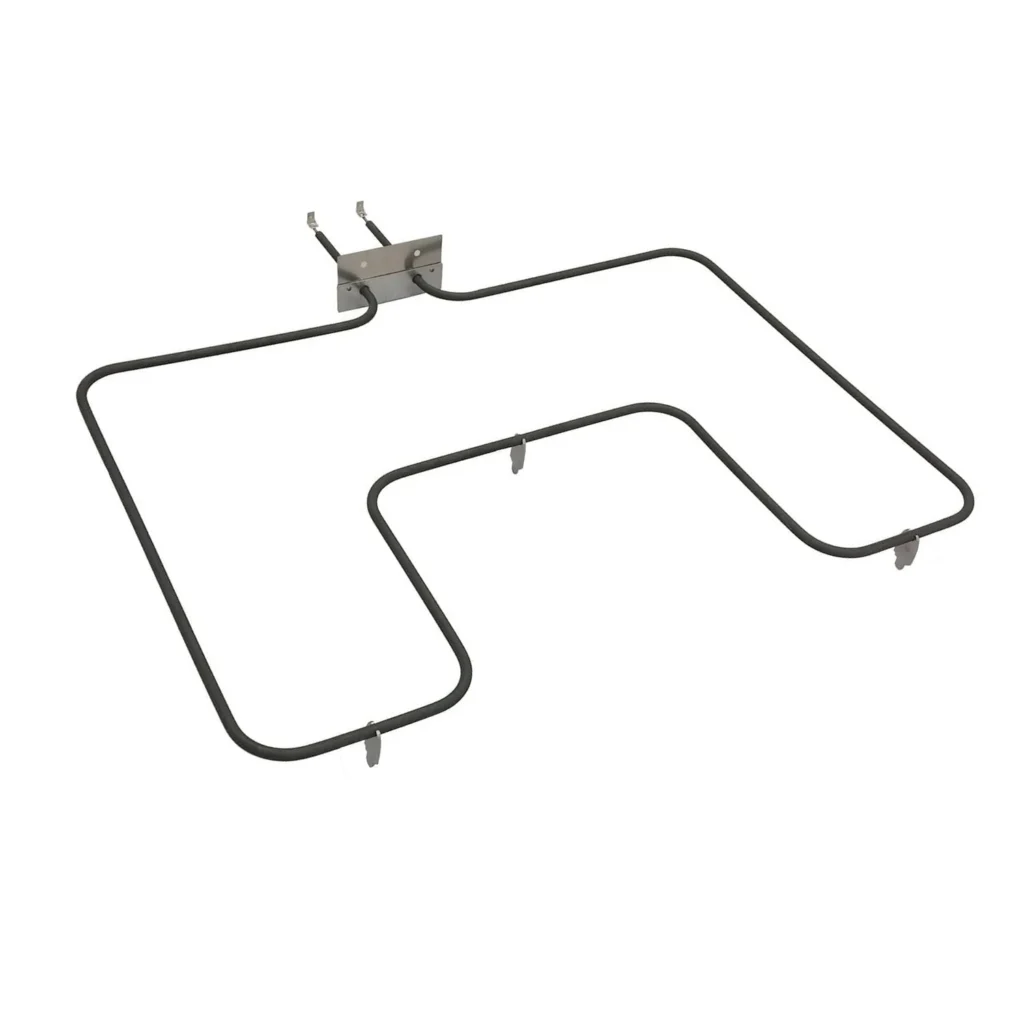
You slide a casserole into your Frigidaire oven, set it to 375°F, and walk away. Thirty minutes later, you check on dinner and the dish is barely warm. The oven light's on, the timer's counting down, but there's zero heat coming from below. You crank it to 450°F hoping that'll help — still nothing.
This is the classic signature of a dead bake element, and it's one of the most common failures in Frigidaire, Electrolux, and Kenmore electric ranges. The 318255002 bake element sits at the bottom of your oven cavity and does about 80% of the heavy lifting during normal baking. When it fails, you'll know immediately.
Quick Symptom Check
Before you start troubleshooting, confirm what you're seeing. Check off the symptoms that match your situation:
- Element will not heat: The bake element stays completely cold even after 10-15 minutes at temperature
- Little to no heat when baking: Oven reaches maybe 150-200°F instead of your set temperature
- Oven not heating evenly: Top browns fine (broiler works), but bottom stays pale or undercooked
- Will not start: Control panel lights up but oven never begins heating cycle
- Oven is too hot: Overshoots temperature because element can't regulate properly due to internal short
If you've got the first three symptoms, you're looking at a bake element problem 95% of the time. The last two can involve the element, but might also point to control board or thermostat issues.
Cause #1: Burned-Out Bake Element (Most Likely — 75% of Cases)
What it looks like: The element might show visible damage — blistering, holes, or separated coils. But here's the tricky part: sometimes a dead element looks perfectly fine. The break happens inside the metal sheath where you can't see it.
How to diagnose:
- Turn off the breaker to your oven — not just the front controls, kill the power completely
- Pull the oven racks out so you can access the bake element
- Look for obvious damage: burn marks, bubbling, or breaks in the element coil
- If it looks okay externally, grab a multimeter and test for continuity
- Remove the two screws holding the element to the back wall (they're usually 1/4" hex head)
- Gently pull the element forward to expose the wire terminals
- Disconnect the wires and test across the element terminals — you should read 15-40 ohms
- If you get infinite resistance (no continuity), the element's dead
This is the issue in about three out of four "oven won't heat" calls. Elements fail from normal thermal stress — they heat up to 500°F and cool down thousands of times over their lifespan. Eventually the internal resistance wire breaks.
The fix: Replace the bake element with part 318255002. This element is compatible with dozens of Frigidaire models including CFEF310ES1, CFEF312EB1, CFEF317ES2, CFEF357GS3, and most Electrolux, Gibson, Kenmore, Westinghouse, and Kelvinator electric ranges built in the last 15 years. Cost runs around $143, and it's a 20-minute DIY repair if you're comfortable with basic tools.
Cause #2: Loose or Corroded Wire Connections (15% of Cases)
Sometimes the element is fine, but the power isn't reaching it. The wire terminals that connect to the back of the bake element can work loose from vibration, or they corrode from moisture and heat cycling.
How to diagnose:
- Power off the oven at the breaker
- Remove the bake element as described above
- Inspect the wire connectors (they're usually spade terminals) for discoloration, green crusty buildup, or burn marks
- Wiggle the connectors — if they're loose or pull off easily, that's your problem
- Check the element prongs for pitting or corrosion
If you catch this early, you might just need to clean the connections with fine sandpaper and reconnect firmly. If the terminals are badly burned, you'll need to replace the wire harness (which means calling a tech unless you're experienced with electrical work).
Cause #3: Tripped Thermal Fuse or Limit Switch (5% of Cases)
Most modern Frigidaire ovens have a thermal cutoff fuse that kills power to the bake element if the oven overheats. It's a safety feature, but it can trip even during normal use if the thermostat miscalibrates or airflow gets blocked.
How to diagnose:
- The thermal fuse is usually located on the back wall of the oven, behind the back panel
- You'll need to remove the back service panel (exterior of the range) to access it
- Test the fuse with a multimeter — it should show continuity
- If it's blown (no continuity), it's a one-time fuse and must be replaced
Important: if the thermal fuse blew, something caused it to blow. Don't just replace the fuse and call it done. Check your oven thermostat and temperature sensor, or you'll be replacing the fuse again in a month.
Cause #4: Failed Control Board or Relay (3% of Cases)
If the element tests good, connections are solid, and the thermal fuse is fine, the problem might be upstream in the control board. The relay that sends power to the bake element can fail, even though the control panel still lights up and accepts commands.
Clues you've got a control issue:
- The broil element works fine, but bake doesn't heat
- Oven display works normally, accepts temperature settings, but never sends power to element
- You hear a clicking sound when you start a bake cycle, but element stays cold
Control boards for these models run $200-400 and require more involved disassembly. This is usually when it makes sense to call a pro, unless you're confident working with control electronics.
Cause #5: Faulty Temperature Sensor (2% of Cases)
The oven temperature sensor is a probe that sticks into the oven cavity and tells the control board what the internal temp is. If the sensor fails or reads incorrectly, the control board might not send power to the element — or it might shut it off prematurely thinking the oven's already hot.
How to diagnose:
- Locate the temperature sensor (it's a thin metal probe, usually on the upper left back wall)
- With the oven at room temperature, disconnect it and test resistance — should read around 1,100 ohms at 70°F
- If it reads way off or shows no continuity, replace the sensor
Sensors are cheap ($20-40) and easy to swap, but sensor failure rarely causes a complete no-heat situation. It's more likely to cause erratic heating or temperature swings.
When to Call a Pro
Replacing the bake element is straightforward — you're just swapping one component for another. But call a tech if:
- You're not comfortable working around 240V power (this is a big oven with serious voltage)
- Testing reveals a control board or wiring harness issue
- The thermal fuse keeps blowing after replacement
- You've replaced the element but still have no heat (points to multiple failures)
Labor for element replacement typically runs $120-180 plus the part, so you're looking at $260-320 total. If you DIY with part 318255002, you're at $143 and 30 minutes of your time.
Frequently Asked Questions
Can I still use my oven if the bake element is broken?
Technically yes, but only on broil. The broil element at the top of the oven operates independently. You won't be able to bake anything, though — broiling from above only doesn't work for casseroles, cakes, or anything that needs bottom heat. And running the oven with a damaged element that's shorting out can trip breakers or damage the control board, so don't ignore it.
How long should a bake element last?
Average lifespan is 5-8 years with normal use. If you bake daily or run high-temperature self-clean cycles frequently (which hit 900°F), you might see failures closer to 3-4 years. Elements are wear items — they're designed to be replaced, not to last the lifetime of the appliance.
Will the 318255002 element fit my Kenmore oven?
If your Kenmore is a rebadged Frigidaire or Electrolux (most are), then yes. Check your model number against the compatibility list. The 318255002 replaces part numbers 318255006, 318255000, 5303310512, AP5590131, and PS3633414, and fits models like CFEF310ES1, CFEF312EB1, CFEF317ES1, CFEF357GS2, and dozens more across Frigidaire, Electrolux, Gibson, Westinghouse, and Kelvinator brands. If you're unsure, plug your model number into the heima.com parts lookup tool before ordering.
Diagnosed the problem?
318255002 · In Stock · Fast shipping