
GE Washer Won't Spin or Agitate — 5 Drive Belt Problems & Fixes
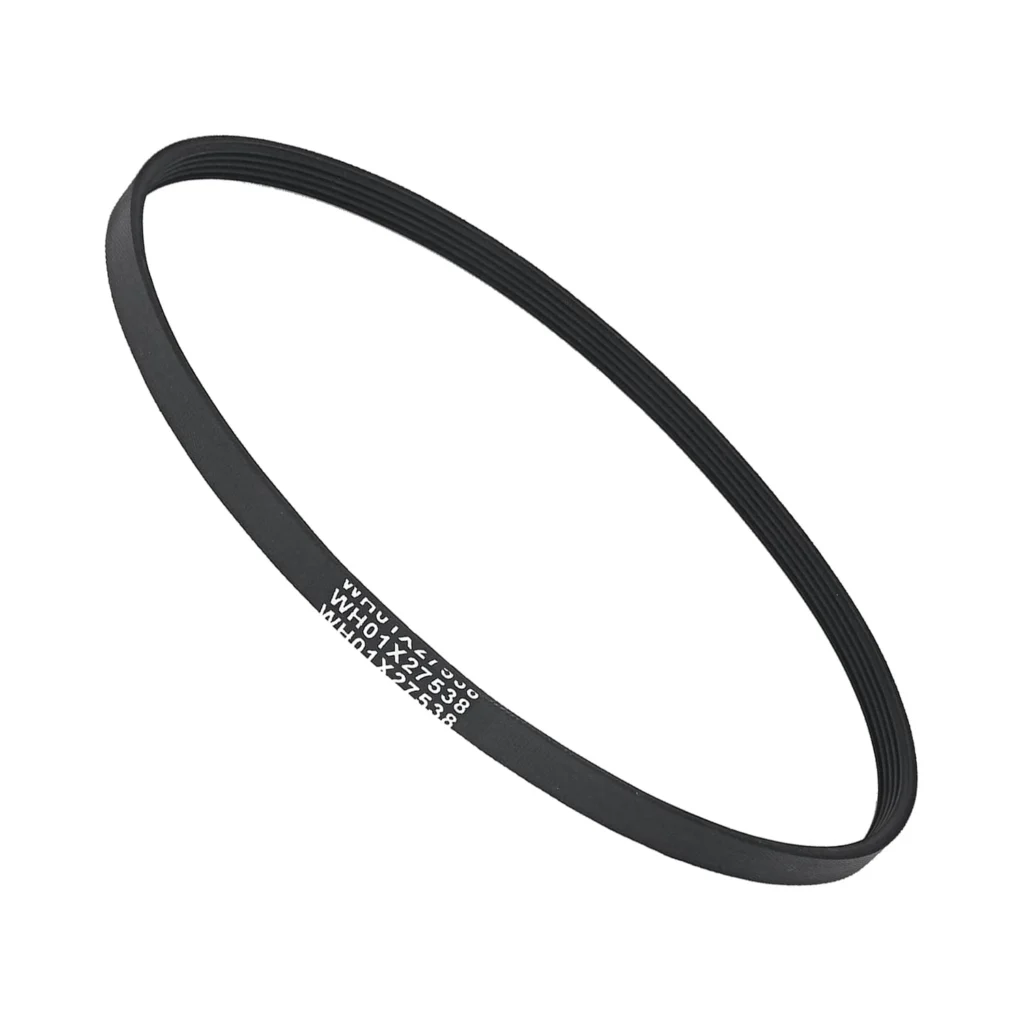
You load your GE washer, hit start, and... nothing. The tub sits there full of soapy water while the machine hums halfheartedly. Or maybe it agitates fine but won't spin out the water, leaving your clothes dripping wet. Before you assume the worst, there's a good chance your washer drive belt (part WH01X27538) is the culprit.
This belt connects your motor to the transmission system. When it stretches, cracks, or snaps completely, your washer loses its ability to agitate or spin properly. The good news? It's one of the more straightforward fixes if you've got basic tools and an hour to spare.
Quick Symptom Check
Your drive belt might be failing if you notice:
- Washer won't spin — tub remains full of water after cycle
- Won't agitate — clothes don't move during wash cycle, motor runs
- Spins slowly — takes forever to drain, clothes stay soaked
- Burning rubber smell — belt slipping against pulley under load
- Loud thumping or squealing — worn belt causing erratic movement
- Black marks on clothes — deteriorating belt leaving rubber residue
Models like the GTW220ACK4WW, GTW465ASN1WW, and GTW585BSV0WS commonly use this belt design, which handles significant rotational stress every single load.
Cause #1: Stretched or Worn Belt (70% Probability)
Drive belts don't last forever. Repeated heating and cooling cycles, combined with the constant tension from starting and stopping, cause the rubber to lose elasticity. A stretched belt can't grip the pulleys properly.
How to diagnose: Unplug the washer and tip it back against the wall (have someone help). Remove the front access panel. The belt wraps around the motor pulley and drive pulley. Press on it — if you can push it more than half an inch with moderate pressure, it's too loose. Look for glazing (shiny, smooth surface) or cracks along the inner ridges.
The fix: Replace with WH01X27538. Release tension by moving the motor slightly, slip off the old belt, route the new one following the same path. Cost: around $14 for the part, 45-60 minutes of work. This is a wear item — expect to replace it every 5-8 years depending on usage.
Cause #2: Broken Belt (20% Probability)
If you hear the motor running but absolutely nothing moves, your belt might've snapped completely. This typically happens after prolonged stretching weakens the rubber to the breaking point, or if something jammed the tub suddenly.
How to diagnose: Same access method as above. You'll immediately see the belt either dangling loose or completely missing from the pulleys. Sometimes you'll find pieces of it wrapped around the motor shaft.
The fix: Straightforward replacement. Clear any debris, install the new WH01X27538 belt. The tricky part is getting the tension right — the belt should have about 1/2 inch of give when you press the longest span between pulleys.
Cause #3: Misaligned Belt (5% Probability)
If someone replaced the belt before and didn't seat it properly in the pulley grooves, it'll slip off partially or wear unevenly. You'll hear squealing and notice the washer works intermittently.
How to diagnose: Check if the belt sits centered in all pulley grooves. It should track smoothly without riding up on the edges. Spin the pulleys by hand — the belt shouldn't wobble or shift sideways.
The fix: Loosen motor mounts slightly, reseat the belt properly in all grooves, then re-tighten while checking alignment. Sometimes a worn pulley causes this — inspect for groove wear or damage.
Cause #4: Slipping Due to Overloading (3% Probability)
Consistently stuffing your washer beyond capacity puts extra strain on the belt. It can't grip well enough to turn a massively overloaded tub, especially during the spin cycle transition.
How to diagnose: Does the problem happen more with heavy loads like towels or jeans? Can you hear the motor speeding up but the tub barely moving? The belt might look okay but is slipping under load.
The fix: Replace the belt (it's already damaged from slipping) and adjust your loading habits. A top-loader shouldn't be packed tighter than about 3/4 full. Overloading also strains the motor and transmission, causing bigger problems down the road.
Cause #5: Belt Contamination (2% Probability)
If detergent, fabric softener, or water leaks onto the belt, it becomes slippery and can't maintain proper friction. You'll notice intermittent spinning problems and possibly a soapy smell from the back of the washer.
How to diagnose: Feel the belt — is it sticky, soapy, or oily? Check for leaks from the tub seal or detergent dispenser that might be dripping down. Look at the motor area for fluid accumulation.
The fix: Clean won't help a contaminated belt — the rubber absorbs the chemicals. Replace with WH01X27538 and fix whatever's leaking. Otherwise you'll be replacing belts every few months.
When to Call a Pro
Belt replacement is genuinely DIY-friendly if you're comfortable tipping the washer and working with basic hand tools. Call a tech if:
- The new belt keeps breaking within weeks (suggests transmission or bearing problems)
- Motor runs but makes grinding noises even with new belt (transmission failure)
- You find metal shavings or excessive grease around pulleys (bearing damage)
- Belt seems fine but washer still won't spin (likely motor coupler, clutch, or lid switch)
Labor for this repair typically runs $150-200 plus parts. Doing it yourself saves about $140.
Frequently Asked Questions
How long should a GE washer drive belt last?
Typically 5-8 years with normal use, but overloading or running extremely large loads frequently can shorten that to 3-4 years. The belt experiences thousands of start/stop cycles and gradual stretching is inevitable. If you're replacing it before 3 years, look for underlying issues like a binding transmission or seized bearing that's putting extra stress on the belt.
Can I use a generic belt instead of WH01X27538?
Not recommended. Generic belts might be close in length but often use different rubber compounds that don't handle the heat and tension as well. This specific GE belt (also replaces AP6328256, PS12299369, and 4587903) is designed for the torque and speed characteristics of these models. A $3 savings isn't worth having it fail mid-cycle six months later.
Why does my washer smell like burning rubber?
That's your drive belt slipping against the pulleys, generating friction heat. It means the belt is either too loose (stretched), contaminated with detergent or softener, or the motor/transmission isn't turning smoothly. Don't ignore it — a slipping belt will break soon, and the heat can damage the motor pulley. Unplug the washer immediately and inspect the belt before running another load.
Diagnosed the problem?
WH01X27538 · In Stock · Fast shipping