
How to Extend Your GE Condenser Fan Motor Life — Maintenance Guide
Always unplug the refrigerator before accessing the condenser fan motor. Condenser area contains both electrical and refrigerant lines — do not puncture any lines.
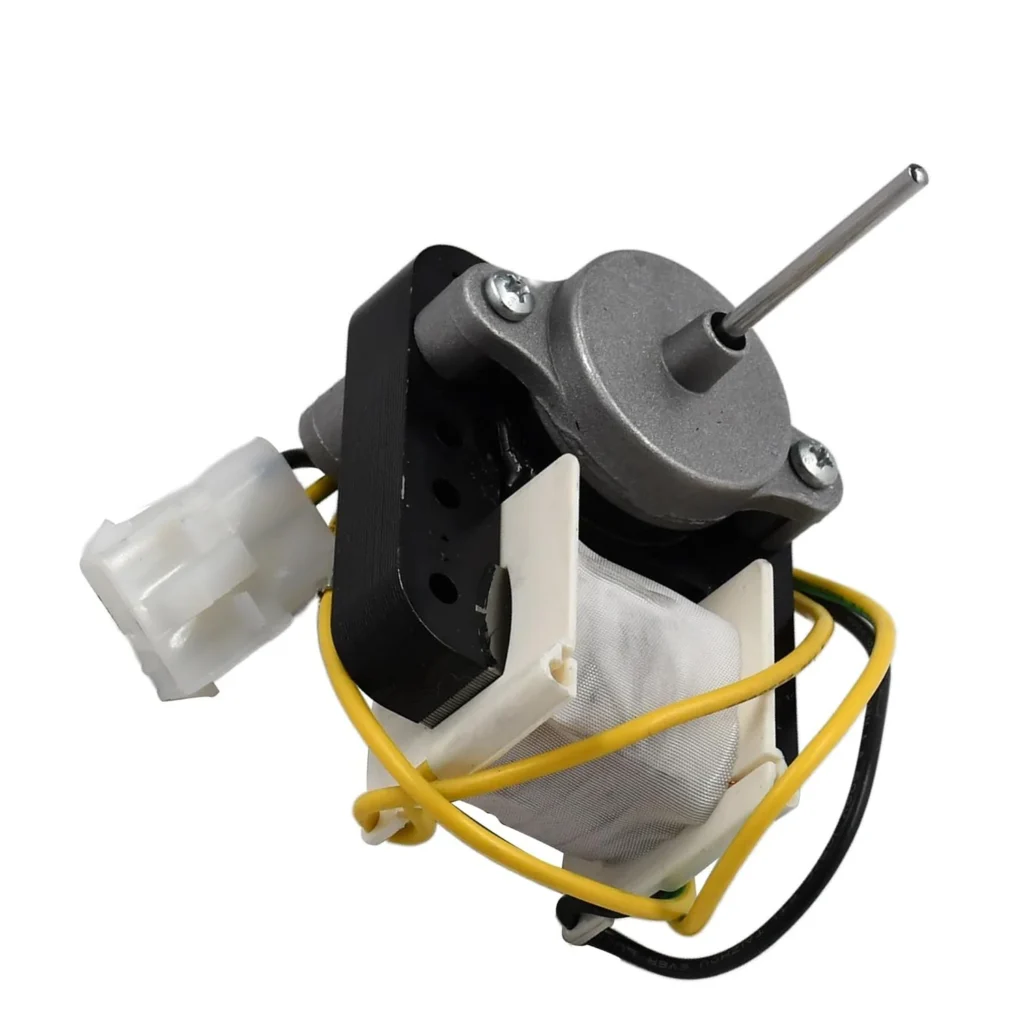
Most GE condenser fan motors fail between years 5 and 8, but here's the thing — about 40% of those failures could've been prevented. I've pulled countless WR60X10220 motors that died early from something simple: dust buildup blocking airflow, making the motor work three times harder than it should.
If your BSS25GFPCWW or HSS25GFPNWW suddenly sounds like it's grinding rocks, or your fridge runs constantly but never gets cold enough, you're probably looking at a condenser fan issue. Let's talk about catching these problems before you're stuck with a $400 service call.
How Long Should It Last?
Under normal conditions, the WR60X10220 should give you 8-12 years. That's what GE designed it for. But I rarely see them make it past 7 years in real-world kitchens.
Why the gap? Three things kill these motors early:
- Dust accumulation — Every week, pet hair and kitchen grease coat the condenser coils. The fan has to push harder to move air through that mess.
- Voltage fluctuations — If your lights dim when the AC kicks on, your fridge motor is taking a beating too.
- Overheating from placement — Shoving your fridge tight against a wall blocks the exhaust vent. The motor runs hotter, dies faster.
Here's what actually affects lifespan: refrigerators in homes with pets, in garages, or near heat sources (like next to your oven) typically lose 2-3 years off motor life. Models like the GSS25GFPB or PSS25MGNACC that see heavy daily use — big families opening the door 50+ times a day — also wear out faster.
Signs It's Wearing Out
The motor doesn't just die overnight. It tells you it's struggling, if you know what to listen for.
Noisy Operation — Grinding, Squealing, or Rattling
A healthy condenser fan makes a low hum you barely notice. When bearings start wearing out, you'll hear grinding — like metal scraping metal. Sometimes it's a high-pitched squeal when the motor first starts, then quiets down. That's the bearings dry and struggling.
If you hear clicking that repeats every few seconds, the motor's trying to start but can't get going. That clicking is the start relay cycling on and off. This happens when the motor windings are partially burned out.
Temperature Problems — Fridge and Freezer Both Too Warm
When your fresh food section hits 45°F and your freezer's at 20°F instead of 0°F, that's often the condenser fan. Without proper airflow across the condenser coils, the refrigerant can't release heat. The compressor runs constantly trying to compensate, but it's like trying to cool your house with the AC condenser fan broken — it just can't do it.
Check this: put your hand near the bottom front grille while the compressor's running. You should feel warm air being pushed out. Nothing? Fan's not spinning.
Runs Constantly But Never Gets Cold Enough
This one fools people. They think the compressor's bad because the fridge runs 24/7. But if the condenser fan isn't moving air, the compressor can't shut off — it's always trying to catch up. Your electric bill jumps $30-40 a month, and the compressor is getting cooked from overwork.
I've seen this pattern dozens of times on models like the HSS25IFMEWW and GSS25WGPHWW. The fan motor bearings seize up, the compressor tries to compensate, and six months later you're replacing both parts instead of just one.
Won't Start After Power Outage
Motors on their last legs sometimes work fine until you lose power. When electricity comes back, a worn motor can't generate enough torque to start spinning. The compressor runs, but no fan means no cooling.
When to Replace vs Maintain
Here's my honest take: condenser fan motors aren't rebuildable. Once bearings start failing, you're done. But — and this is important — most motors fail because nobody maintained them, not because they wore out naturally.
Replace immediately if:
- Motor won't spin at all when powered
- Grinding noise is constant, not just on startup
- You smell burning plastic near the compressor area
- Motor housing is hot to touch even when not running
Maintain and monitor if:
- Slight noise on startup that goes away within 30 seconds
- Motor's running but you've never cleaned the condenser
- Fridge is cooling fine, just running a bit more than usual
- Any intermittent clicking that stops when you tap the fan blade
The WR60X10220 costs $40-60 for the part. Installation takes 20 minutes if you're handy. Compare that to a service call ($150-200 minimum) plus markup on the part. If you catch it early with maintenance, you'll get your full 10+ years.
Monthly Maintenance Checklist
First week of every month (takes 10 minutes):
Pull the fridge out from the wall. You'll need about 3 feet of clearance. Remove the lower back panel — usually 4-6 screws. The condenser fan is the smaller fan next to the compressor.
Use a vacuum with a brush attachment on the condenser coils. Don't blow compressed air — that just pushes dust deeper into the fins. Vacuum pulls it out. Get between the coils if you can reach.
Check the fan blade. Spin it by hand. It should rotate freely with no resistance. If it wobbles or drags, bearings are going. Any buildup on the blade throws it out of balance, making the motor work harder.
Look at the wire connections. Loose or corroded connections cause voltage drops, which overheat the motor. Wiggle each connector — should be snug.
Every 6 months:
Check the rubber grommets that mount the motor. They absorb vibration. When they crack (heat and age), the motor vibrates itself to death. Replacement grommets are cheap — like $5 for a set.
Measure the gap between the fridge and wall. You need minimum 2 inches for proper airflow. I see so many motors fail because someone pushed the fridge tight against the wall to save kitchen space. That trapped heat kills motors.
Annually:
Clean the fan blade with degreaser. Kitchen grease combines with dust to create a tar-like coating that's hard to vacuum off. This adds weight to the blade, throws it out of balance, and wears out bearings faster.
Test the motor draw with a multimeter if you have one. The WR60X10220 should pull around 0.4-0.6 amps when running. Higher than that means increased resistance — bearings wearing out or windings degrading. Catch it early, plan the replacement on your schedule instead of at 11pm on a Sunday.
Frequently Asked Questions
Can I Lubricate the Bearings to Make It Last Longer?
No. These are sealed bearing motors — there's no oil port. Adding oil externally just attracts more dust. If bearings are dry enough to squeal, they're already damaged. Budget for replacement in the next 3-6 months.
Why Does My Motor Stop and Start Throughout the Day?
That's normal operation on models with adaptive defrost. The fan cycles with the compressor. But if it's stopping mid-cycle and you hear clicking, that's the overload protector tripping — motor's pulling too many amps. Usually means it's overheating from blocked airflow or failing bearings.
Do I Really Need to Pull the Fridge Out Every Month?
If you have pets or your kitchen gets greasy, yes. No pets, tidy kitchen, maybe every 2-3 months. But here's the thing — I've done this work for 20 years, and every single person who says "I'll do it quarterly" actually does it never. Set a phone reminder. Ten minutes a month saves $200 later.
Element showing wear?
WR60X10220 · Replace before it fully fails