
How to Extend Your GE Ice Box Fan Motor Life — WR60X31997 Maintenance Guide
Always unplug refrigerator before accessing internal components. Ice box fan motors operate on 115V AC — contact with live wiring can cause serious injury.
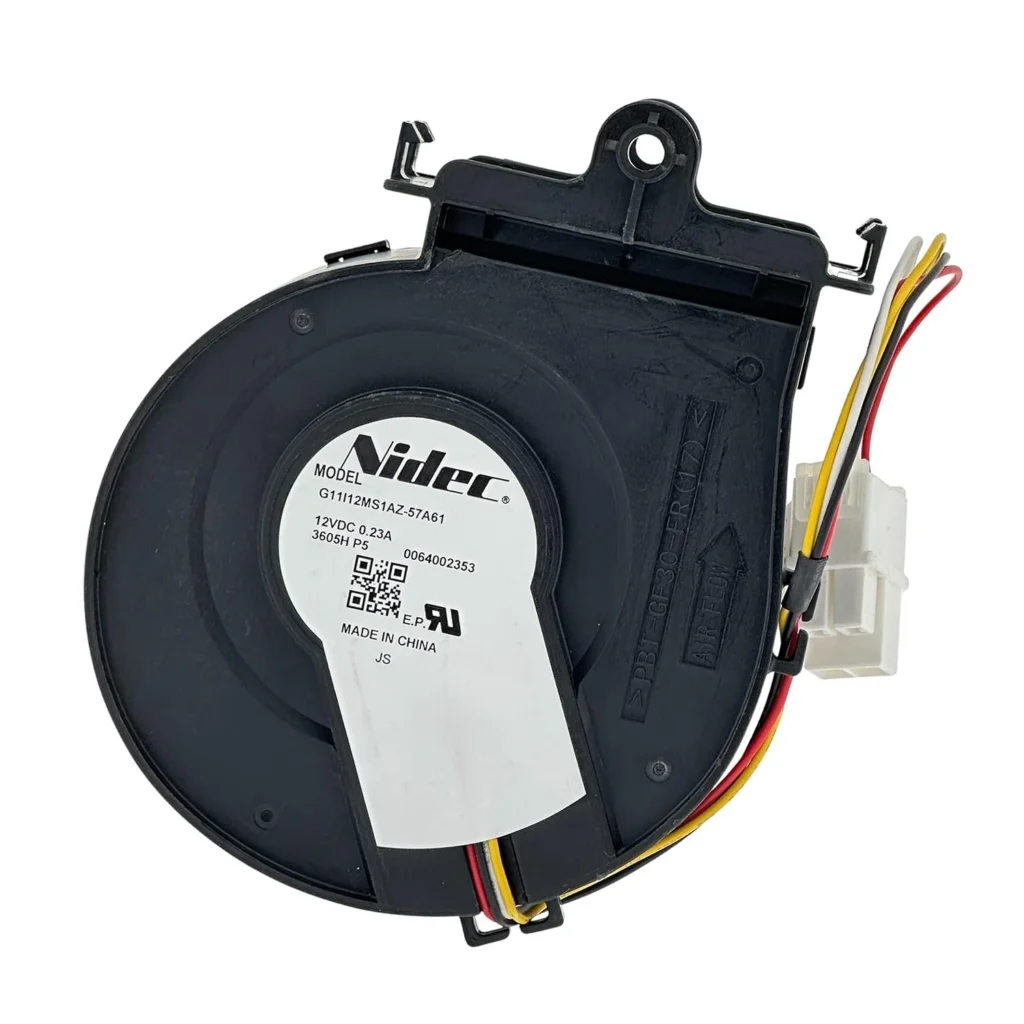
Most ice box fan motors in GE Cafe and Monogram refrigerators should run quietly for 8-10 years, but we regularly see failures at the 4-5 year mark. The WR60X31997 fan motor circulates cold air throughout your refrigerator compartment — when it starts struggling, you'll notice warm spots and inconsistent temperatures before it dies completely.
This motor runs continuously, spinning thousands of times per day in sub-freezing temperatures with constant humidity. That's a brutal environment. The good news? Most premature failures come from preventable causes: ice buildup restricting airflow, dust accumulation on the motor housing, and damaged wiring from door slams.
How Long Should It Last?
Under normal conditions, the WR60X31997 motor should deliver 8-12 years of service. That's based on average household use — opening the fridge 20-30 times daily. But several factors accelerate wear:
High-humidity environments cause more frequent defrost cycles, which stress the motor bearings during temperature swings. If you're in a coastal area or run a humidifier nearby, expect shorter lifespan.
Frequent door openings force the motor to work harder maintaining temperature. Large families or commercial settings (like office break rooms) can cut lifespan by 30-40%.
Ice buildup is the silent killer. When frost accumulates around the fan blade, the motor draws more current trying to spin through resistance. This overheats the windings and destroys the motor prematurely.
We've seen well-maintained units on models like the CVE28DP2NBS1 and CQE28DM5NBS5 hit 15 years. We've also seen neglected ones fail at 3 years. The difference? Consistent attention to airflow and cleanliness.
Signs It's Wearing Out
Your refrigerator will tell you when this motor's struggling — you just need to know what to listen and look for. Don't wait for complete failure, because by then you've probably lost food to temperature fluctuations.
Unusual Noise That Wasn't There Before
A healthy fan motor is nearly silent — you might hear a gentle whoosh of air movement, but nothing mechanical. When bearings start wearing out, you'll hear grinding, squealing, or a rhythmic clicking that matches the fan blade rotation.
The noise usually starts intermittently (maybe you hear it once or twice a week), then becomes constant. If you hear scraping sounds, that's often the fan blade hitting accumulated ice — which means the motor's already working harder than it should.
Temperature Inconsistencies in the Fresh Food Section
The ice box fan circulates cold air from the freezer through vents into the refrigerator compartment. When the motor slows down or runs intermittently, you'll notice warm spots — typically in the back corners or top shelves.
Put a thermometer in different sections. The fresh food compartment should stay between 35-38°F throughout. If you're seeing 42-45°F in some areas while others are fine, the fan isn't circulating properly. This happens when the motor's struggling but hasn't completely failed yet.
Frost Buildup Around the Evaporator Fan Area
This one's tricky because frost can be both a cause and symptom of motor problems. Excessive frost restricts airflow, making the motor work harder. A failing motor doesn't move enough air to prevent frost accumulation. It's a vicious cycle.
Check behind the back panel in your freezer (with the fridge unplugged and emptied). If you see more than a thin layer of frost coating the evaporator coils and fan housing, something's wrong with the defrost system or airflow.
Maintenance Schedule That Actually Works
Here's what extends motor life in real-world conditions. This isn't about perfection — it's about preventing the three main failure modes: ice damage, bearing wear, and electrical issues.
Every 3 Months: Quick Visual Inspection
Pull out the freezer contents and remove the back panel (usually 4-6 screws). You're checking for:
- Ice buildup around the fan blade or housing
- Frost accumulation on evaporator coils
- Any visible damage to wiring or connectors
- Unusual debris or obstructions
This takes 10 minutes. If everything looks clean with just a light frost coating, you're good. If you see heavy ice, it's time for a manual defrost.
Every 6 Months: Deep Clean and Defrost
Unplug the refrigerator and let it defrost naturally overnight. Don't use heat guns or picks to speed this up — you'll damage components. Once defrosted:
Vacuum the area around the fan motor and evaporator coils. Dust and debris accumulate even in closed systems. Wipe down the fan blade with a damp cloth — buildup here unbalances the blade and stresses bearings.
Check that the fan blade spins freely by hand. It should rotate smoothly with no grinding or resistance. If it feels rough or catches, the bearings are wearing out.
Inspect wiring connections at the motor. Look for any signs of heat damage (discolored insulation), corrosion at terminals, or loose connectors. Movement from door slams can work connectors loose over time.
Annually: Test Defrost System Performance
The defrost system keeps ice from killing your fan motor. If it's not working right, you'll get runaway frost buildup between maintenance sessions.
Run a manual defrost cycle (most GE Cafe models have a diagnostic mode — check your manual). The defrost heater should warm the coils enough to melt accumulated frost. Time this cycle. It should complete in 20-30 minutes.
If defrost takes longer or doesn't fully clear frost, you've got a problem with the defrost heater, thermostat, or control board. Fix that before it takes out your fan motor.
When to Replace vs Maintain
Here's the honest truth: some motors are worth babying along with maintenance, others need replacement regardless of what you do.
Replace immediately if:
- The motor won't spin at all when you apply power directly
- You smell burning plastic or see melted insulation on wiring
- The motor housing is cracked or visibly damaged
- Bearings are so worn the shaft wobbles when you try to spin the blade
No amount of maintenance fixes mechanical failure. Order the WR60X31997 replacement and move on.
Maintain and monitor if:
- Noise is recent (under 2 weeks) and you found ice buildup as the cause
- Temperature issues started after you cleared a major frost accumulation
- The motor runs quietly and smoothly but you're doing preventive maintenance
If you catch problems early — like hearing the first signs of noise and immediately clearing ice buildup — you can often extend motor life by years. But once bearings are shot, they don't heal.
Age matters too. If your fridge is 8+ years old and the original motor is showing any symptoms, replace it preemptively. You're on borrowed time anyway, and you don't want to lose food when it fails at 2 AM on a holiday weekend.
The Real Cost of Neglect
We see this pattern constantly: someone ignores subtle symptoms (slight noise, minor temperature variations) for 6-12 months. The motor finally seizes completely. By then, they've already experienced months of inefficient operation — higher electric bills, food spoilage they didn't connect to the fridge, and compressor strain from trying to compensate for poor circulation.
A $63.99 replacement motor installed at the first sign of problems costs less than the food you'll lose to one major temperature failure. It's definitely cheaper than replacing a compressor that burned out working overtime to compensate for a dead fan motor.
Models like the CVE28DM5NCS5, CVE28DP2NES1, and the entire Cafe line use this same motor design. If you've got multiple units or run a commercial kitchen, keeping one spare motor in inventory makes sense. The replacement takes 30 minutes when you're prepared.
Frequently Asked Questions
How Often Should I Manually Defrost My GE Cafe Refrigerator?
Most GE Cafe models have automatic defrost that should handle normal frost accumulation. But if you notice frost building up faster than the defrost cycle can clear it, manual defrost every 6 months prevents ice damage to the fan motor. In high-humidity environments, you might need quarterly manual defrosts.
Can I Lubricate the WR60X31997 Fan Motor Bearings?
No. This motor uses sealed bearings that can't be serviced. Adding lubricant externally won't reach the bearing surfaces and might attract dust that damages the motor. When bearings wear out, replace the entire motor assembly — trying to service sealed bearings always makes things worse.
Why Does My Ice Box Fan Motor Run Constantly?
The motor should run continuously when the compressor's running — that's normal operation. It only stops during defrost cycles or when the compressor is off. If you're concerned about constant operation, verify the refrigerator is maintaining proper temperature (35-38°F fresh food, 0-5°F freezer). Constant running with poor cooling suggests a different problem, like a failed compressor or refrigerant leak.
Element showing wear?
WR60X31997 · Replace before it fully fails