
Whirlpool Refrigerator Won't Start — 5 Compressor Relay Failures & Fixes
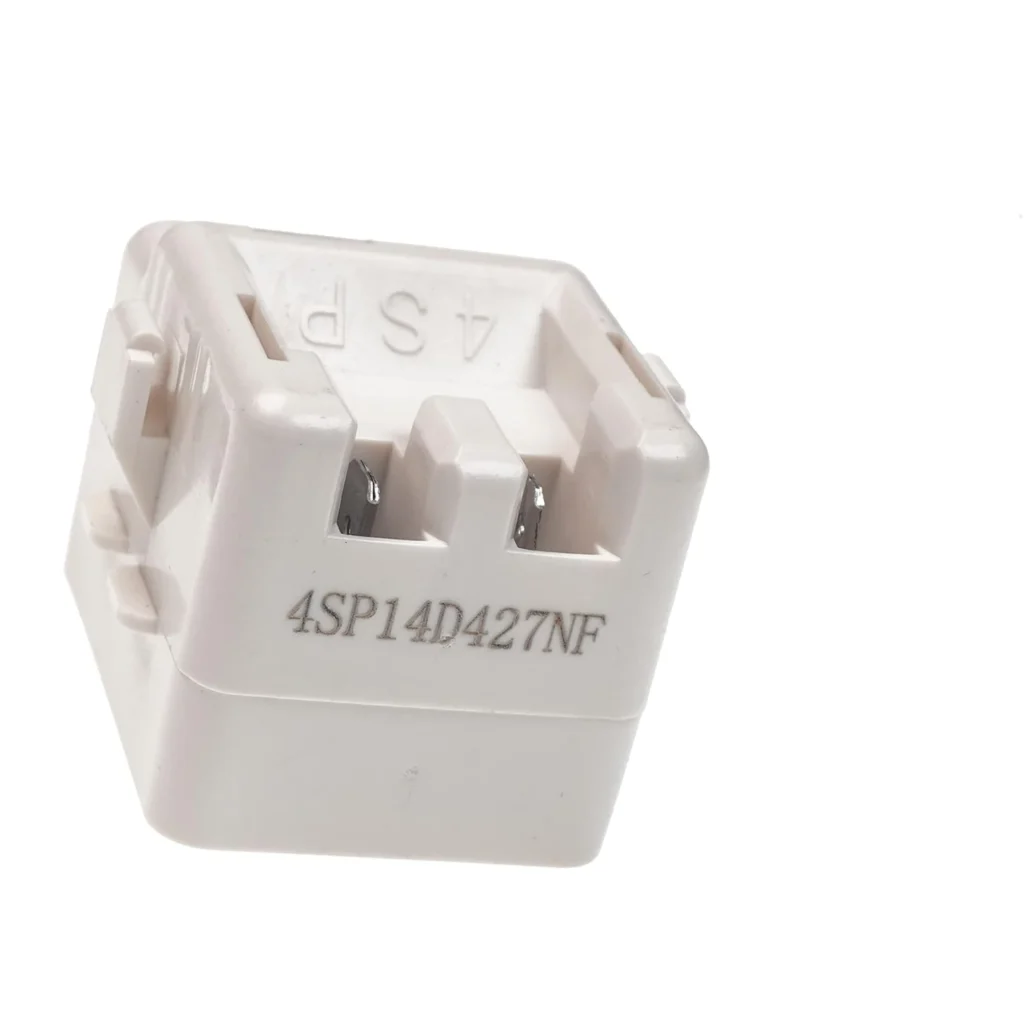
You walk into the kitchen and notice it's uncomfortably warm. The fridge is silent — no familiar hum, no compressor kick. You open the door and the light works, but everything inside feels room temperature. Your Whirlpool, Maytag, or Kenmore refrigerator won't start, and you're looking at potentially hundreds in spoiled food.
Before you panic and call for service, there's one component that fails more than any other in this scenario: the compressor relay and overload protector. It's a $15 part that stops working and takes your entire cooling system down with it.
Quick Symptom Check
Your refrigerator shows these signs when the compressor relay (part 61005518) has failed:
- Compressor won't start — complete silence from the back of the fridge
- Clicking sound every few minutes — relay trying and failing to engage
- Fridge and freezer warming up — no cooling happening at all
- Lights work fine — power is reaching the unit
- Compressor feels cool to touch — it's not running or overheating
Cause #1: Burned Out Start Relay (65% of Cases)
The start relay is a small plastic box mounted on the side of your compressor. It uses either a coil or a PTC (positive temperature coefficient) thermistor to give the compressor the electrical boost it needs to start. When this component burns out — and they all eventually do — your compressor gets power but can't overcome the initial starting resistance.
How to diagnose: Unplug the fridge and locate the relay on the compressor (lower back of unit). Remove it by pulling straight off. Shake it gently. If you hear rattling, the internal contacts have broken loose — it's failed. On models using this 61005518 relay, you can also check for a burnt smell or visible scorch marks on the terminals.
Fix difficulty: Easy. This is a 10-minute repair once you have the part.
Part needed: 61005518 relay and overload kit (replaces 12002782, AP4009659, PS2004057)
Cause #2: Tripped Overload Protector (20% of Cases)
The overload protector is the second half of this part — it's designed to cut power if the compressor draws too many amps. Sometimes it trips due to a power surge or brief mechanical resistance, then won't reset properly.
How to diagnose: The overload is the small round or rectangular component attached to the relay. Let your fridge sit unplugged for 30 minutes to allow a thermal overload to cool completely. Plug it back in. If the compressor starts briefly then stops within seconds, the overload is cutting it off — likely due to internal wear rather than an actual overcurrent condition.
Fix: The overload isn't sold separately for most models. You'll replace the entire relay/overload assembly with part 61005518, which includes both components as a matched set.
Cause #3: Corroded Relay Terminals (10% of Cases)
Even if the relay mechanism still works, the electrical connection points can corrode — especially in humid environments or if you've had a leak near the compressor compartment. Poor electrical contact creates resistance, preventing the relay from delivering full voltage to the compressor start winding.
How to diagnose: Remove the relay and inspect the three metal pins that plug into the compressor. Look for green corrosion, pitting, or discoloration. Also check the female terminals inside the relay body. If you see any corrosion, the relay needs replacement even if it technically still functions.
Why you can't just clean it: Corrosion indicates moisture intrusion. The internal contacts are likely compromised too. Clean terminals might work for a day or week, then fail again.
Cause #4: Weak Start Capacitor on Relay (3% of Cases)
Some relay designs include a small start capacitor to provide extra starting torque. On units using the 61005518 configuration, this capacitor can weaken over time, providing insufficient boost for the compressor to overcome initial resistance.
How to diagnose: This one's tough without a multimeter. The compressor will attempt to start — you'll hear a low humming sound — but it can't quite get going and the overload trips it after 2-3 seconds. This hum-click-hum-click pattern repeating every few minutes is the signature symptom.
Fix: Replacing the relay assembly solves this since the capacitor (if present in your model's design) is integrated into the part.
Cause #5: Mechanical Compressor Seizure (2% of Cases — Serious)
Sometimes the problem isn't the relay at all. If your compressor has mechanically seized due to lack of lubrication or internal damage, no relay will make it start. This is the expensive scenario you're hoping to avoid.
How to diagnose: Install a new relay. If the compressor still won't start and feels extremely hot after attempting to run (give it 5 minutes, then carefully touch the compressor body — it should be warm but not painful to touch), you likely have a seized compressor. A definitive test requires a technician with an ohmmeter to check compressor winding resistance and a hard-start kit attempt.
Reality check: Compressor replacement costs $400-$800 including labor. At that point, you're evaluating whether to repair or replace the entire refrigerator based on its age and condition.
Replacing the Relay — Step by Step
For the 95% of cases where it's actually the relay:
- Unplug the refrigerator — not just turning off the breaker, physically unplug it
- Access the compressor compartment — remove the lower back panel
- Locate the relay — it's a small plastic box plugged onto the side of the cylindrical compressor
- Disconnect the wire harness — usually a single connector, squeeze the tab and pull
- Pull the relay straight off — it friction-fits onto three compressor pins
- Install the new 61005518 relay — align the three holes with the pins and push firmly until fully seated
- Reconnect the wire harness — you'll hear it click into place
- Plug in and test — the compressor should start within seconds
If your compressor doesn't start immediately, give it 5 minutes. Some units have a built-in delay after power loss.
Compatible Models Using This Relay
This 61005518 relay assembly works across multiple brands because Whirlpool manufactured refrigerators for several companies. Confirmed compatible models include:
Amana: ATB1935HRQ, ATB1935HRW, ATB2135HRQ, ATB2135HRW
Crosley: CT15G4Q, CT15G4W, CT19G4Q, CT19G4W, CT19G6Q, CT19G6W, CT21G6Q, CT21G6W
Magic Chef: CTB1521GRQ, CTB1521GRW, CTB1722GRQ, CTB1722GRW, CTB1922GRQ
This part replaces older numbers 12002782, AP4009659, PS2004057, and 1194680, so if you're cross-referencing your original part, any of those numbers confirm compatibility.
When to Call a Professional
Handle this repair yourself if you're comfortable with basic appliance work and can safely access the compressor. Call for service if:
- You've replaced the relay and the compressor still won't start after 30 minutes
- The compressor runs but trips off on overload within seconds (repeatedly)
- You hear grinding or rattling from inside the compressor itself
- The compressor body is extremely hot even with a new relay installed
- You're not comfortable working with the electrical components
A diagnostic service call typically runs $100-$150, but at least you'll know definitively whether you're looking at a relay issue or compressor replacement.
Frequently Asked Questions
How long does a refrigerator compressor relay last?
Typically 8-15 years depending on usage patterns. Units that cycle on and off frequently (like fridges in hot garages or ones that are opened constantly) wear out relays faster because each start cycle stresses the component. The relay is considered a wear item, not a lifetime part.
Can I use a universal relay instead of the 61005518?
Not recommended. Universal relays exist, but they're not properly matched to your specific compressor's starting requirements. An incorrectly sized relay will either fail to start the compressor reliably or allow it to draw excessive current, potentially damaging the compressor windings. The 61005518 is engineered specifically for the compressor models in compatible Whirlpool, Maytag, Kenmore, and related brand refrigerators.
Why does my fridge work sometimes but not others after the relay fails?
Intermittent operation happens when the relay contacts are degraded but not completely failed. Temperature affects electrical resistance — the relay might make contact when cool (allowing the compressor to start) but fail when it heats up during operation. This is a clear sign the relay is at end-of-life and needs replacement before it fails completely.
Diagnosed the problem?
61005518 · In Stock · Fast shipping