
How to Extend Your Frigidaire Dishwasher Spray Arm Life — Maintenance Guide
Always disconnect power at the breaker before removing the spray arm to inspect. Some models have exposed heating elements that remain hot for 20+ minutes after cycle ends.
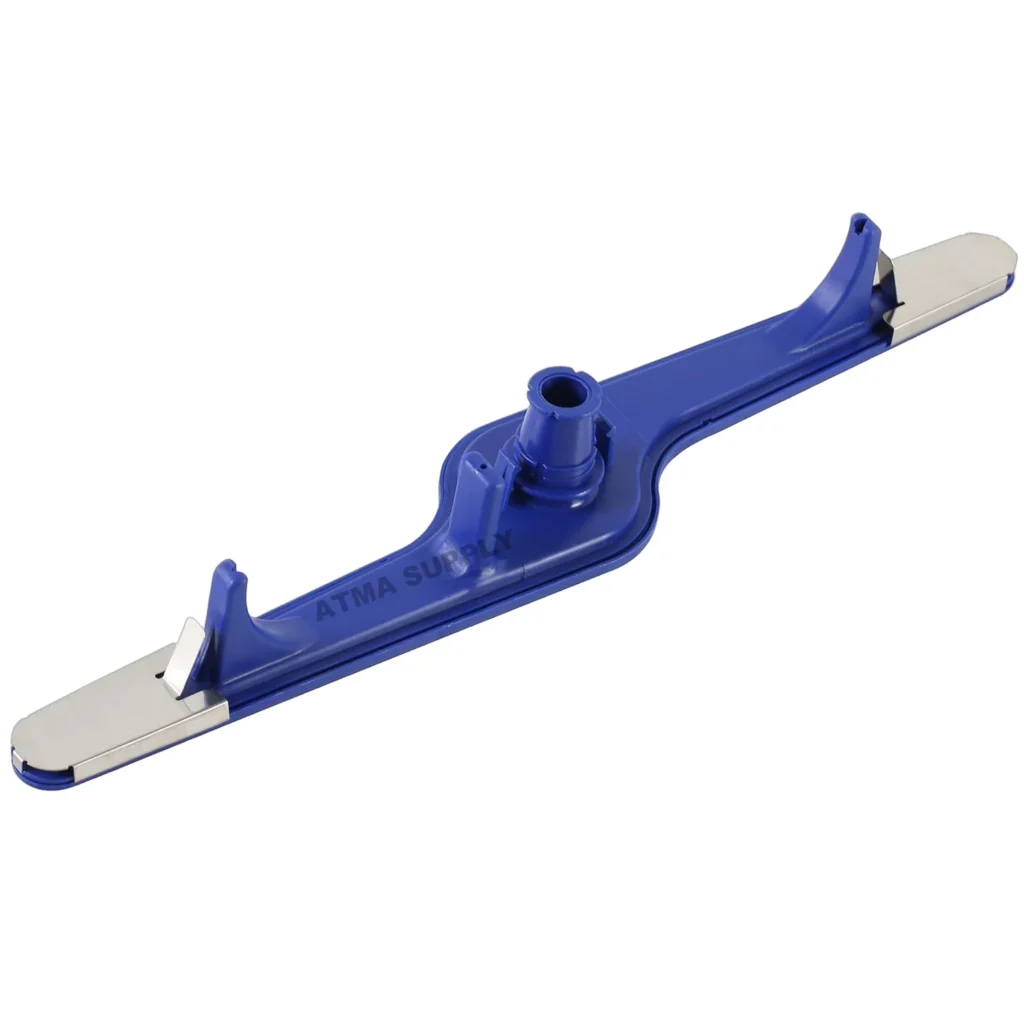
Most Frigidaire dishwasher spray arms should last 7-10 years, but I see homeowners replacing them every 3-4 years because of mineral buildup and broken nozzles. That's money you don't need to spend. The 154568001 lower spray arm is one of the most durable parts in models like the FFBD2405KW1B and FFCD2413UB0A — if you actually take care of it.
Here's what kills spray arms early: hard water deposits blocking the spray holes, food particles jamming the rotation, and heat warping from running empty cycles at high temps. The heat shield on this part helps, but it's not magic.
How Long Should It Last?
Under normal conditions with moderately hard water (5-10 grains per gallon), you're looking at 8-12 years for the 154568001. I've seen them go 15+ years in homes with water softeners. The plastic is thick ABS, and the nozzle design resists clogging better than older models.
What shortens lifespan:
- Hard water over 15 grains per gallon — cuts life in half, sometimes worse
- Running with broken dishes — glass shards score the plastic and crack spray holes
- Cheap detergent with fillers — leaves residue that bakes onto the arm during heated dry
- Overloading the bottom rack — blocks rotation, wears the center hub faster
The heat shield is your friend here. It protects the spray arm from direct heating element contact, which prevents warping. Don't remove it thinking it's optional.
Signs It's Wearing Out
You'll know something's wrong before it completely fails. Dishwashers don't suddenly stop cleaning — they decline gradually.
Not Cleaning Dishes Properly
The classic sign. If your FGBD2435NF0A or FFBD2411NQ4A is leaving food on the bottom rack but the top looks fine, it's usually the lower spray arm. Check if it's spinning freely when you run a cycle. Pull out the bottom rack mid-cycle (carefully) and watch it. Should rotate smoothly, not jerky or stuck.
White crusty buildup around the spray holes means mineral deposits are restricting water flow. Even if some holes are clear, blocked ones create uneven spray patterns.
Noisy Operation
A worn center hub makes a clicking or grinding sound as the arm rotates. It's trying to spin but catching on something. Sometimes it's debris in the hub, sometimes the plastic has worn down and there's too much play. Either way, it gets louder over time.
If you hear a high-pitched whistle during the wash cycle, that's water forcing through partially clogged spray holes at high pressure. Physics problem you can fix with a toothpick.
Leaking
Less obvious connection: a clogged spray arm can contribute to leaks. When water can't spray properly through the arm, pressure builds up elsewhere in the system. I've seen this push water past door seals on models like the FDPC4221AS3A. Not the only cause of leaks, but it's a factor.
When to Replace vs Maintain
Be honest about this. Maintenance works until it doesn't.
Maintain if: The plastic is solid with no cracks, holes are just clogged (not eroded or enlarged), and the center hub spins without wobble. A good cleaning and descaling will bring it back to 90% function.
Replace if: You see cracks anywhere on the arm (they'll grow), spray holes are worn larger than original (you'll see smooth edges instead of crisp ones), the center hub is loose and wobbly, or the heat shield is warped or missing. At $24.99 for the 154568001, trying to nurse a damaged one along isn't worth it.
Pro tip from the user feedback: "Lower spray support should be ordered if replacing the lower spray arm." That's the hub assembly underneath. If you're replacing a 10-year-old arm, replace the support too. They wear together.
Daily and Monthly Care
After each load, take 5 seconds to remove any large food particles from the bottom of the tub before they get into the spray arm. That's it. No scrubbing, just grab the obvious stuff.
Monthly (or every 30 loads): Remove the spray arm and rinse it under hot tap water. Use a toothpick or straightened paperclip to clear each spray hole. They're about 2mm diameter on the 154568001 — small enough that a rice grain can block them.
Every 3 months in hard water areas: Run an empty cycle with 2 cups of white vinegar on the bottom rack (no detergent). This descales the spray arm without removing it. The vinegar breaks down mineral deposits throughout the system.
Removing the arm is simple on Frigidaire and Kenmore models: lift the bottom rack out, pull up on the spray arm (it might take a firm tug), check the center for debris, rinse, reinstall. Users say it "exactly fit where it was supposed to" — just push down until it clicks.
Frequently Asked Questions
Can I use CLR or other chemical descalers on the spray arm?
Yes, but diluted only. Full-strength CLR can etch the plastic over time. Mix 1 part CLR to 4 parts water, soak the arm for 10 minutes, rinse thoroughly. Vinegar is gentler for regular use. Save the CLR for serious buildup you can't clear mechanically.
Why does my spray arm work better with less detergent?
Excess detergent creates foam that reduces water pressure and leaves residue in the spray holes. Modern dishwashers (including the FFCD2418UB0A and FDB635RFS3) use less water than old models — they don't need much detergent. If you see suds during the cycle, you're using too much. Cut it in half.
How do I know if the heat shield needs replacing too?
The heat shield on the 154568001 is integrated with the spray arm — it's the gray plastic guard on top. If it's cracked, melted, or missing pieces, you're replacing the whole assembly anyway. Don't try to separate them. When users say "part was correct and easy to install," they're talking about the complete arm with shield attached.
Element showing wear?
154568001 · Replace before it fully fails