
Whirlpool Washer Won't Fill with Water — 5 Causes & How to Fix
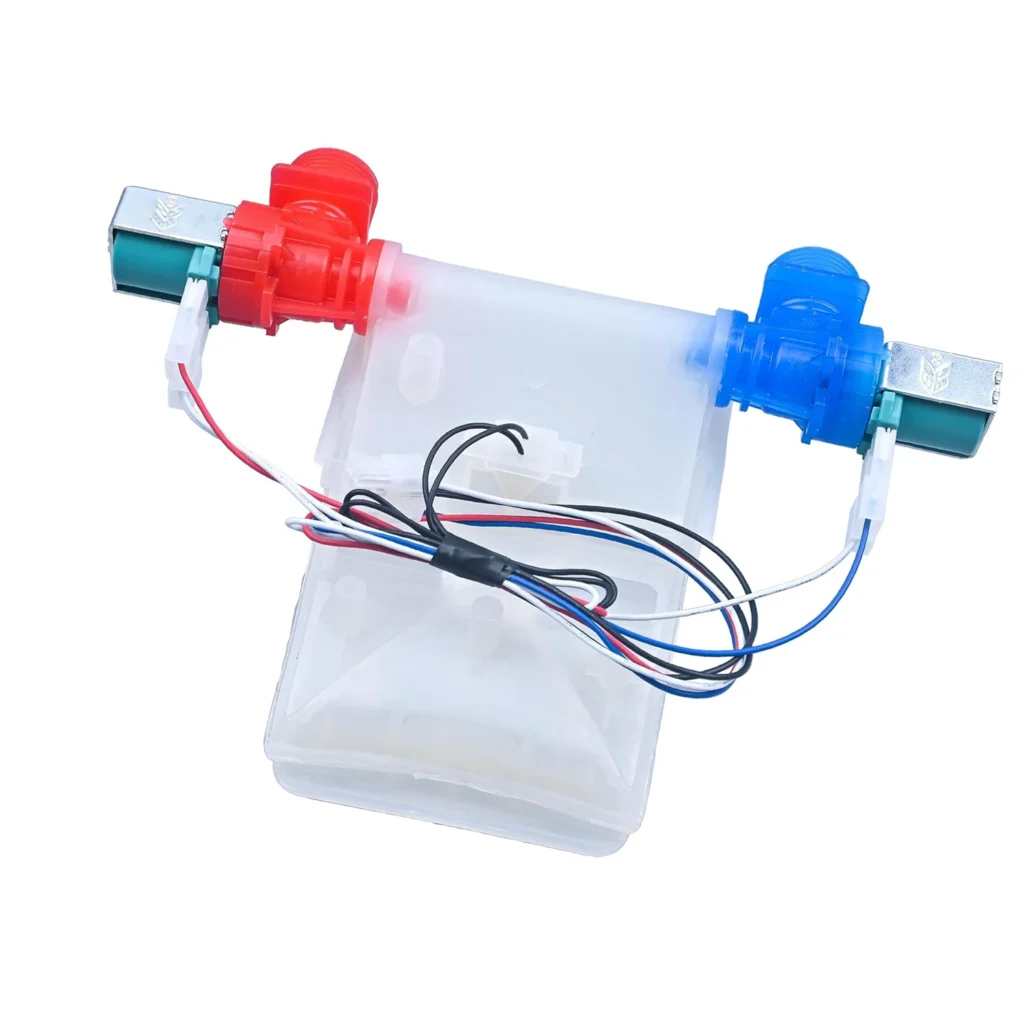
You toss a load of laundry in your Whirlpool WTW4850HW2, hit start, and... nothing. The drum stays bone dry. Or maybe you're getting cold water when you selected hot, or there's a steady drip behind the machine that's starting to pool on your laundry room floor.
Water filling problems are among the most common issues with Whirlpool, Maytag, and Kenmore top-load washers — and 8 times out of 10, the culprit is the water inlet valve. This small component controls both hot and cold water flow into your washer drum. When it fails, you'll know immediately.
Before you call a repair tech, let's walk through the five most common causes. Most of these you can diagnose in under 15 minutes with basic tools.
Quick Symptom Check
Your washer is likely experiencing inlet valve issues if you notice:
- No water entering the drum — washer runs through cycle dry
- Only hot OR cold water fills — but not both temperatures
- Extremely slow fill times — takes 10+ minutes to reach normal water level
- Water leaking from inlet connections — visible drips at back of washer
- Humming or buzzing sound — valve trying to open but failing
- Error codes F8E1 or F8E2 — water flow sensor detecting issues
Cause #1: Failed Water Inlet Valve Solenoids
Probability: 75% | Average Cost: $70.99 | Difficulty: Moderate
The inlet valve contains two solenoid coils — one for hot, one for cold. These electromagnetic coils open small plastic gates to allow water flow. After years of operation (typically 5-8 years), these solenoids burn out or the internal diaphragm seals deteriorate.
How to diagnose: Unplug the washer and shut off both water supply valves behind the machine. Remove the top panel (usually two screws at the back). Locate the inlet valve where the hoses connect. Using a multimeter set to ohms, test each solenoid terminal. You should read 500-1500 ohms. If you get infinite resistance or zero ohms, the solenoid is dead.
Models like the WTW4950HW1, WTW5000DW3, and MVWC465HW3 are particularly prone to this failure after heavy use. If only hot or cold water works, one solenoid has failed while the other still functions.
The fix: Replace the entire inlet valve assembly (W10869800). The solenoids aren't serviceable separately. This repair typically takes 30-45 minutes and requires only a screwdriver and needle-nose pliers.
Cause #2: Clogged Inlet Valve Screens
Probability: 60% | Average Cost: $0 | Difficulty: Easy
Inside each inlet port, there's a small mesh screen that filters sediment from your home's water supply. If you have hard water or old galvanized pipes, these screens gradually clog with mineral deposits, rust particles, and debris.
How to diagnose: Turn off water supply and disconnect both inlet hoses from the valve. You'll see small plastic screens inside each port. If they're brown, crusty, or you can't see through the mesh, they're restricting flow.
Even partial clogging reduces water pressure enough to trigger slow-fill conditions or cause the washer to time out during the fill cycle.
The fix: Carefully remove the screens with needle-nose pliers. Soak them in white vinegar for 30 minutes, then scrub with an old toothbrush. If they're badly deteriorated or won't come clean, replace the entire valve — the screens are molded into the valve body and can't be replaced separately. This is often discovered during valve replacement anyway.
Cause #3: Defective Water Level Pressure Switch
Probability: 15% | Average Cost: $45-$85 | Difficulty: Moderate
The pressure switch tells your washer's control board when the drum has filled to the correct level. It connects to a small air tube running to the bottom of the tub. When water fills the tub, air pressure increases in this tube and triggers the switch to close the inlet valve.
How to diagnose: If your washer fills continuously and overflows, or never fills at all despite the inlet valve clicking, suspect the pressure switch. It's usually located near the control panel. Disconnect the air tube and blow through it — you should hear a click from the switch. If not, it's stuck or failed.
Check the air tube itself for cracks, holes, or detachment from the tub. A compromised air tube creates the same symptoms as a bad switch.
The fix: Replace the pressure switch or repair/replace the air tube. Sometimes just cleaning soap residue from the air tube connection solves the issue.
Cause #4: Control Board Not Sending Power to Valve
Probability: 8% | Average Cost: $150-$300 | Difficulty: Advanced
The main control board sends electrical signals to energize the inlet valve solenoids. If the board has failed transistors or relay contacts, it won't send power even though the valve itself is fine.
How to diagnose: This requires testing voltage at the valve connector while the washer tries to fill. You should see 120V AC at the appropriate terminals. No voltage means the control board isn't commanding the valve to open. This is more common after power surges or if the washer is plugged into a circuit with motor loads that cause voltage spikes.
Models WTW4655JW0, WTW4855HW2, and 8TWTW4955JW0 have control boards known for premature relay failures.
The fix: Control board replacement. This is where repair costs start exceeding the value of older machines. Get a firm diagnostic before committing to this repair.
Cause #5: Low Home Water Pressure
Probability: 5% | Average Cost: $0-$500 | Difficulty: Varies
Whirlpool washers need at least 20 PSI to fill properly. If your home pressure is below this — common with well systems or old pressure regulators — the washer will fill slowly or not at all.
How to diagnose: Test water pressure at an outdoor spigot with a pressure gauge (available at any hardware store for $10). Normal household pressure runs 40-60 PSI. Below 30 PSI, you'll have appliance issues.
Also check if someone recently closed the main shutoff valve partially or if there's a crimped supply line behind the washer.
The fix: For well systems, adjust the pressure switch or replace the pressure tank. For city water, the pressure regulator at your main line may need replacement. Sometimes it's as simple as fully opening a partially-closed valve.
When to Call a Pro
Replace the inlet valve yourself if you're comfortable working with basic hand tools and following step-by-step instructions. It's one of the more straightforward washer repairs.
Call a professional if:
- You've replaced the valve but still have no water flow (likely control board)
- You're getting error codes beyond F8E1/F8E2
- The washer is leaking from areas other than the inlet valve
- You don't feel comfortable working around electrical connections
- Your washer is still under warranty
Expect to pay $150-$250 for professional inlet valve replacement including parts and labor.
Frequently Asked Questions
How long does a washer inlet valve typically last?
Most inlet valves last 7-10 years with normal use. If you have hard water or run multiple loads daily (families, daycares), expect 5-7 years. The constant opening and closing eventually wears out the solenoid coils and rubber diaphragm seals. Models like the Maytag MVWC565FW0 and Whirlpool WTW5005KW0 tend to hit this failure point around the 6-year mark based on service data.
Can I clean the inlet valve instead of replacing it?
You can clean the screens, but you can't repair failed solenoids or torn diaphragm seals inside the valve body. If cleaning the screens doesn't restore proper operation, replacement is your only option. The valve assembly is sealed and not designed for disassembly. Save yourself the frustration and replace it if testing confirms solenoid failure.
Will a bad inlet valve cause other washer problems?
Yes. Insufficient water flow affects wash quality, causes error codes, and can stress the control board as it repeatedly tries to complete fill cycles. Some washers will pause indefinitely waiting for proper water level. Over time, this can lead to control board damage from extended relay activation. Replace a failing inlet valve promptly to prevent cascading failures.
Diagnosed the problem?
W10869800 · In Stock · Fast shipping