
How to Extend Your Honeywell SmartValve Gas Valve Life — Maintenance Guide
DANGER: Working with gas valves requires proper training and tools. Natural gas and propane are explosive. Always shut off gas supply and electrical power before any inspection. If you smell gas, evacuate immediately and call your gas company. Carbon monoxide from improper furnace operation is deadly and odorless. Never bypass safety switches or adjust factory-sealed valve settings.
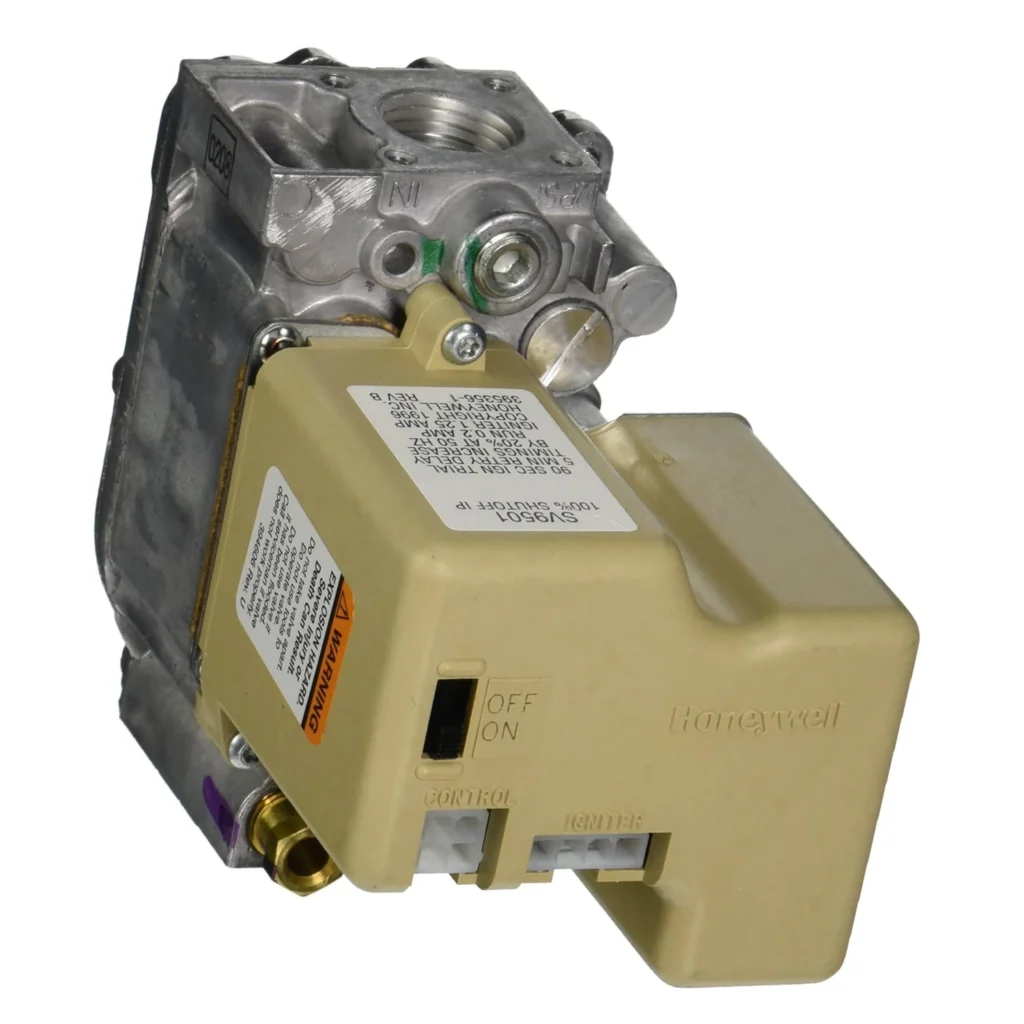
Your Honeywell SmartValve gas valve should last 15-20 years, but most fail around year 10. The difference? Proper maintenance and understanding what kills these valves early.
The SV9501M2528 is a critical safety component in your furnace. It controls gas flow, monitors ignition, and shuts everything down if something goes wrong. When it fails, you're left without heat — usually on the coldest night of the year.
How Long Should It Last?
Honeywell rates these SmartValve assemblies for 20+ years under ideal conditions. But here's what actually happens in the field:
- Average lifespan: 10-15 years in residential furnaces
- With proper maintenance: 15-20 years
- In harsh conditions: 7-10 years (dirty air, frequent cycling, voltage issues)
What affects lifespan? Voltage fluctuations kill these valves faster than anything else. Every brownout, every surge, every loose wire connection stresses the internal solenoids. Dust and debris on the valve body create hot spots. Improper gas pressure causes the valve to work harder than designed.
The SV9501M2528 is compatible with York models like 1SS04701, 1SP0452, and 1LD0470, plus Honeywell's D1NA series furnaces. If you've got one of these units, this maintenance schedule applies directly to you.
Signs It's Wearing Out
SmartValve assemblies don't usually fail suddenly. They give you warnings — if you know what to listen and look for.
Intermittent Ignition Failures
Your furnace tries to light, clicks several times, then shuts down. Maybe it works on the second or third attempt. This is often the first sign that the valve's internal components are degrading. The solenoid coils develop weak spots, and the valve doesn't open reliably every time.
Strange Clicking or Buzzing From the Valve
A healthy gas valve makes a single crisp click when it opens. If you're hearing repeated clicking, buzzing, or humming, the solenoid is struggling. This means voltage issues, internal coil problems, or mechanical binding inside the valve body.
Furnace Lockout Codes
Your thermostat shows an error code, and the furnace won't attempt ignition. Modern Honeywell controls track ignition attempts. After three failed tries, they lock out the system. If this happens repeatedly, the gas valve is usually the culprit — especially on furnaces over 8 years old.
Delayed Ignition or 'Boom' Sounds
Gas builds up in the combustion chamber before igniting. You hear a small boom or see a flash of flame. This is dangerous. It means the valve is opening too slowly, allowing gas to accumulate before the igniter lights it. Don't ignore this one.
What Actually Kills These Valves
After working on hundreds of furnaces, I've seen these patterns:
- Electrical issues: Loose connections at the valve create resistance, which generates heat and damages the coils. Check those wire nuts every year.
- Dirty flame sensor: When the sensor can't detect flame, the valve cycles on and off rapidly. This wears out the solenoids fast.
- Incorrect gas pressure: Too high stresses the valve mechanism. Too low makes it work harder to open. Should be 3.5" water column on natural gas.
- Dust accumulation: Dust on the valve body acts as insulation, trapping heat from the solenoids and accelerating failure.
Maintenance That Actually Extends Life
Here's what works, based on valves that make it to 20 years versus ones that fail at 10:
Annual Electrical Connection Check
Turn off power at the breaker. Remove the furnace door. Locate the wire connections to the gas valve — usually two or three wire nuts. Disconnect each one, inspect the copper for corrosion or discoloration, and reconnect firmly. This single step prevents 30% of premature failures.
Keep It Clean
Use a soft brush and vacuum to remove dust from the valve body every fall before heating season. Don't use compressed air — you'll blow dust into places it shouldn't go. Don't spray anything on the valve. Just brush and vacuum.
Monitor Gas Pressure
If your furnace is short-cycling or you notice performance changes, have a tech check inlet and outlet gas pressure. It's a 10-minute test that catches problems before they damage the valve. Natural gas should be 3.5" WC, propane should be 10" WC.
Replace the Flame Sensor Regularly
A failing flame sensor forces unnecessary valve cycling. For $20 and 5 minutes of work, replace it every 5 years as preventive maintenance. This protects your $467 gas valve.
When to Replace vs Maintain
Here's the honest truth: gas valves aren't really repairable. You can maintain the connections and environment around them, but once the internal solenoids fail, you're replacing the whole assembly.
Maintain if: Your furnace is under 8 years old, works reliably, and you're just doing preventive care. Keep up with the annual checks and it'll likely last another 10+ years.
Replace if: You're experiencing repeated ignition failures, lockout codes, or the furnace is over 12 years old with original parts. At that age, even if you fix this valve, you're looking at heat exchanger and blower motor replacements soon anyway.
The SV9501M2528 costs $466.99, plus 1-2 hours of labor. If your furnace is relatively new and this is the only issue, it's worth replacing. If it's old and you've had multiple repairs, consider a new furnace instead.
What You Shouldn't Do
Don't try to adjust the valve yourself. Those adjustment screws are factory-set and sealed for a reason. Tampering voids warranties and creates dangerous gas flow conditions.
Don't ignore ignition problems. Every delayed ignition or failed attempt damages the valve further and risks carbon monoxide production or combustion chamber damage.
Don't assume it's the thermostat or control board first. Techs love selling circuit boards because they're easier to diagnose and replace. But if your furnace is over 8 years old and having ignition issues, insist they test the gas valve first.
The Bottom Line
This valve is expensive, but it's also the one component you absolutely cannot skip maintaining. A furnace without a working gas valve is just an expensive air handler. Check those electrical connections annually, keep it clean, and pay attention to how your furnace sounds during ignition. Those simple habits will get you 5-10 extra years from this part.
Frequently Asked Questions
Can I test the gas valve myself to see if it's failing?
Not safely without proper tools. You need a multimeter to check coil resistance (should be 10-20 ohms depending on the coil) and a manometer to verify gas pressure. More importantly, you're working with natural gas — if you don't know what you're doing, call a professional. The cost of a service call is cheaper than a house fire or explosion.
Will a power surge damage the SV9501M2528?
Absolutely. These SmartValve assemblies contain sensitive electronics and solenoid coils. A direct lightning strike will fry them instantly. Even smaller surges from the power company or internal issues degrade the coils over time. If you live in an area with frequent storms or brownouts, install a whole-house surge protector. It'll protect your furnace, AC, and everything else.
Why does my furnace work sometimes but not others if the valve is failing?
Temperature affects resistance in electrical components. A valve with failing solenoids might work fine when it's warm (lower resistance, easier current flow) but fail when it's cold (higher resistance, insufficient current to open the valve). This is why furnaces often fail on the coldest nights — the valve itself is cold, making marginal components completely non-functional.
Element showing wear?
SV9501M2528 · Replace before it fully fails