
How to Extend Your LG High Limit Thermostat Life — Maintenance Guide
Never bypass the high limit thermostat. It's your dryer's primary fire prevention device. Operating without it creates serious fire risk.
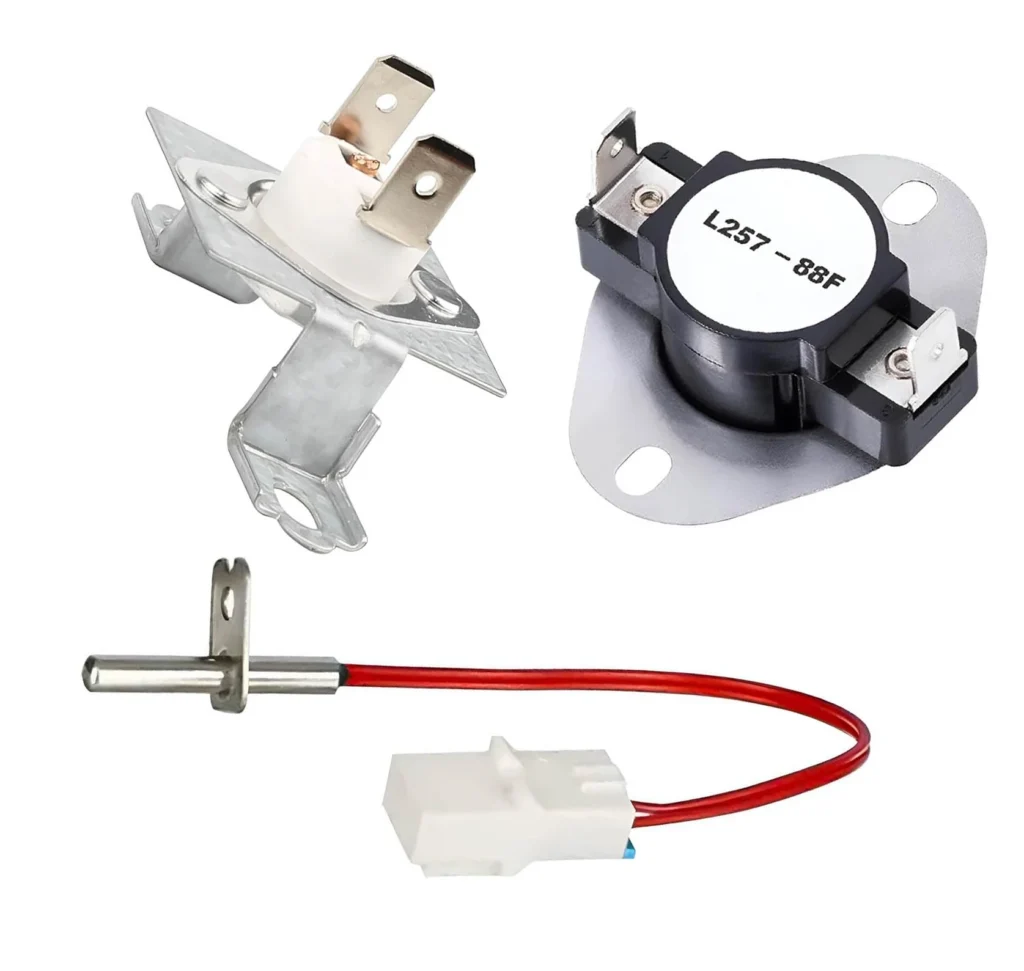
Most LG dryer high limit thermostats should last 10-15 years, but I've seen them blow out in under three years when owners ignore one simple thing: the lint trap. When you pull a 6931EL3001E out of a dead dryer, you'll almost always find a clogged vent system behind the failure. The thermostat did exactly what it was designed to do — it sacrificed itself to prevent a fire.
How Long Should It Last?
The 6931EL3001E high limit thermostat is rated to cycle thousands of times across its lifespan. In normal conditions with proper airflow, you're looking at 12-15 years of service. I've replaced original thermostats in 20-year-old dryers that were still testing fine.
But here's the catch: this part's lifespan is directly tied to how hard your dryer works. If your dryer runs at 140°F like it should, the high limit thermostat barely activates. But when a blocked vent pushes temps to 180°F or higher, that thermostat trips constantly. Each cycle wears the internal contacts. Do this enough times, and the contacts eventually weld open or fail completely.
Three things kill these thermostats early:
- Restricted airflow — crushed vent hoses, lint buildup, bird nests in exterior vents
- Cycling blower wheel — lint wrapped around the blower reduces air volume
- Failed operating thermostat — if the main thermostat sticks, temps spike and the high limit takes the hit
Signs It's Wearing Out
The 6931EL3001E doesn't give you much warning before it fails. It's a safety device, not a gradual-wear component. But there are telltale signs your dryer's working too hard and putting stress on this thermostat.
Dryer Won't Heat
This is the classic failure mode. You start a cycle, hear the motor running, but clothes stay cold and damp after an hour. What happened? The high limit thermostat detected dangerous temps during the last cycle and opened its circuit. It won't close again until you replace it.
Before you order the part, check your vent system. I've seen people replace this thermostat three times without fixing the actual problem — a kinked 4-inch vent hose behind the dryer. Test it with a multimeter first. You should get zero ohms across the terminals when it's cold. Infinite resistance means it's blown.
Dryer Overheats
If clothes come out scorching hot, or you smell burning when you open the door, your high limit thermostat is failing at its job — or it's cycling so often it can't keep up. This is dangerous territory. The thermostat is rated to open at 250°F on models like the DLE5932W and DLEX7177WM, but if the operating thermostat has already failed, you're relying entirely on this safety device.
Check the exterior vent while the dryer runs. You should feel strong, warm (not hot) airflow. Weak airflow means restriction somewhere in the system, and that restriction is forcing your high limit thermostat to work overtime.
Cycle Takes Forever to Complete
When the high limit thermostat trips during a cycle, it cuts heat but the dryer keeps running. Moisture sensor thinks clothes are still wet (because they are), so the cycle extends. If your normal 45-minute cycle now takes 90 minutes, the thermostat is probably cycling on and off throughout the run.
This intermittent behavior tells you the thermostat still works, but something's making your dryer run hot. Address that root cause now, or you'll be replacing the 6931EL3001E in a few months.
When to Replace vs Maintain
Here's the truth about high limit thermostats: you can't really maintain them. They're sealed components. No moving parts to clean, no adjustments to make. Your maintenance effort goes into the dryer itself — keeping temps in the normal range so the thermostat never has to activate.
Replace immediately if:
- Multimeter shows infinite resistance (open circuit) when cold
- Dryer won't heat and you've confirmed 240V at the outlet
- Visible burn marks on the thermostat body or terminals
- You've replaced it before without fixing the vent system (fix the vent first this time)
Maintain the system to protect it:
- Clean the lint trap before every single load — no exceptions
- Vacuum the lint trap housing monthly to catch what falls through
- Clean the entire vent run annually, from dryer to exterior cap
- Check that exterior vent flap opens freely when dryer runs
- Replace plastic or foil accordion-style ducts with rigid metal vent pipe
I'll be straight with you: if the 6931EL3001E has blown on your DLE2512W or DLE7177WM, the problem isn't the $39 thermostat. It's what caused it to blow. Replace the part, absolutely. But if you don't fix the airflow issue, you'll be back here in six months ordering another one.
Frequently Asked Questions
How often should the high limit thermostat activate during normal use?
In a properly functioning dryer with clean vents, never. The high limit thermostat is a backup safety device, not a regular operating component. Your operating thermostat (the one that cycles heat on and off) should maintain temps well below the high limit threshold. If you're triggering the high limit regularly, something else is wrong.
Can I bypass the high limit thermostat to get my dryer working again?
Absolutely not. This is the device that prevents your dryer from catching fire when temps spike. Bypassing it might get your dryer heating again, but you've just removed the last safety mechanism between normal operation and a house fire. The 6931EL3001E costs $38.99 and takes 15 minutes to replace. Your homeowner's insurance deductible is probably 100 times that.
Why does this thermostat cost more than the operating thermostat?
The high limit thermostat is rated for higher temperatures and more precise activation points. It's a one-shot safety device — once it opens, it stays open. That kind of reliability requires better materials and tighter manufacturing tolerances than a cycling thermostat that opens and closes dozens of times per load. You're paying for the engineering that keeps your dryer from turning into a fire hazard.
Element showing wear?
6931EL3001E · Replace before it fully fails