
How to Extend Your Samsung Main PCB Assembly Life — DC92-01640B Maintenance Guide
Always unplug washer before inspecting control board. High voltage present even when machine is off. Never spray cleaners directly on control panel.
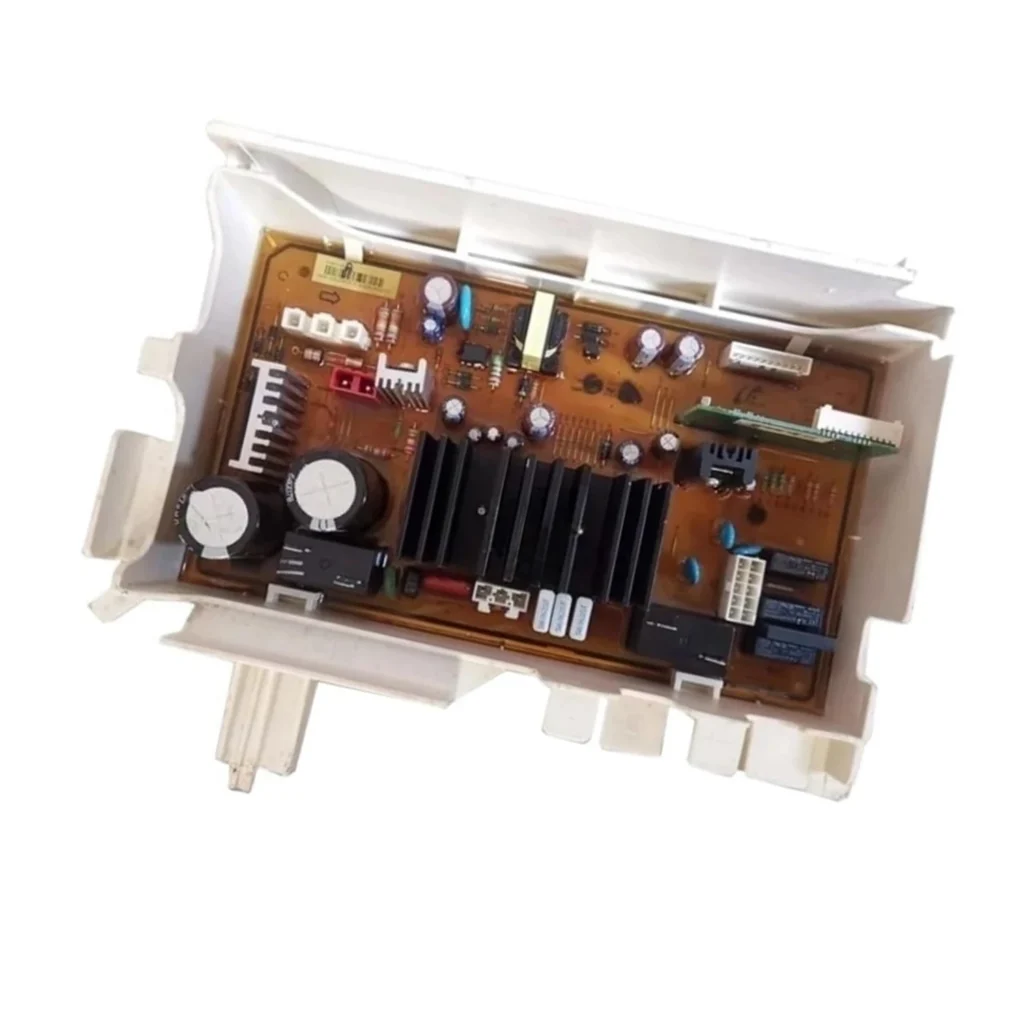
Most Samsung front load washer control boards fail between 5-8 years, but moisture damage kills them in half that time. The DC92-01640B main PCB assembly sits behind your washer's control panel, constantly exposed to humidity, detergent fumes, and temperature swings. I've seen dozens of these boards corrode prematurely — and most failures are preventable.
How Long Should It Last?
Under normal conditions, the DC92-01640B should survive 8-12 years. In reality? Most fail around the 6-year mark. What makes the difference:
- Location matters: Washers in humid basements or unheated garages see 40% shorter board life
- Detergent residue: Excess suds create vapor that corrodes circuit traces
- Power surges: Unprotected washers take multiple small hits that weaken components
- Vibration damage: Improperly leveled machines shake connections loose over time
The good news? Simple maintenance adds 3-5 years to your control board's life.
Signs It's Wearing Out
Control boards don't die instantly — they give warnings. Watch for these symptoms on your WF42H5000AW, WF45H6300AG, or any compatible Samsung model:
Door Latch Issues Are Often Board-Related
When your lid or door won't close properly, most people blame the latch. But I've diagnosed hundreds of cases where the main PCB failed to send the unlock signal. The door mechanism works fine — the board just can't communicate with it. If your door won't open after a cycle completes, that's your control board struggling.
Intermittent Display Problems
Flickering control panel displays, buttons that work sometimes but not others, or error codes that appear randomly all point to failing capacitors or corroded solder joints on the PCB. These symptoms start small — maybe once a month — then escalate to daily failures.
Cycles That Start Then Stop
The washer fills with water, starts agitating, then suddenly stops mid-cycle with no error code. When you restart it, everything works fine for a while. That's classic PCB behavior when connections are corroding but haven't completely failed yet.
Preventive Maintenance That Actually Works
Here's what extends control board life based on 20 years of seeing what works:
Control Moisture Exposure
The biggest killer of PCBs is moisture. After each wash cycle, leave your washer door open for 30 minutes. This lets humidity escape instead of condensing on the control board. If your laundry room is damp, run a dehumidifier — aim for 50% humidity or less.
Use the Right Amount of Detergent
HE washers need way less soap than you think. Excess suds create vapor that rises into the control panel area. Follow the detergent line in the dispenser — typically 2 tablespoons for a full load. Using too much detergent doesn't just waste money; it creates the humid environment that corrodes your $40.99 control board.
Install Surge Protection
Washing machines pull high current during motor startup and drain pump operation. These power surges stress the PCB's voltage regulators. A quality surge protector ($30-40) absorbs these spikes. Make sure it's rated for at least 15 amps — standard computer surge protectors aren't enough.
Keep the Control Panel Clean and Dry
Once a month, wipe down the control panel with a dry cloth. Never spray cleaners directly on buttons — liquid seeps behind the panel and corrodes connections. If you spill detergent on the controls, wipe it immediately with a barely-damp cloth, then dry thoroughly.
Level Your Machine Properly
An unbalanced washer vibrates excessively, loosening wire connections to the PCB. Use a bubble level on top of the machine — adjust the front feet until it's perfectly level side-to-side, with a slight forward tilt for drainage. Test it by running a spin cycle with wet towels — minimal walking means proper balance.
When to Replace vs Maintain
If you're seeing early warning signs but the washer still completes cycles, maintenance might buy you 2-3 more years. Once symptoms become consistent — door won't latch every time, display completely dead, or error codes every cycle — the board's already failing. At that point, replacement is your only option.
Consider replacement when:
- The machine is 7+ years old and showing board symptoms
- You see visible corrosion on connections when you remove the control panel
- Symptoms occur on every cycle, not occasionally
- Multiple functions fail simultaneously (door lock + display + cycle selection)
The DC92-01640B replaces DC92-01640A, DC92-01640C, and DC92-01640E versions — all have similar lifespans and failure patterns.
The Annual Deep Check
Once a year, do a thorough inspection. Unplug the washer, remove the top panel (usually 2-3 screws at the back), and look at the control board area with a flashlight:
- Check wire connections to the PCB — they should be tight and corrosion-free
- Look for discoloration on the circuit board (brown or green spots mean moisture damage)
- Smell for burning odors (indicates overheating components)
- Test the control panel buttons — they should click crisply, not feel mushy
If you see corrosion starting, clean it now with electrical contact cleaner before it spreads. That 15-minute inspection can prevent a $200+ service call.
Frequently Asked Questions
Can I repair a corroded control board instead of replacing it?
In theory, yes — someone with electronics skills can reflow solder joints or replace capacitors. In practice, it's rarely worth it. PCBs have multiple failure points, and fixing one usually just reveals the next. For $40.99, replacement makes more sense than spending hours troubleshooting a corroded board. Plus, you risk making it worse if you're not experienced with circuit board repair.
Will a power surge strip really protect my control board?
Absolutely, but only if you use the right one. Standard computer surge protectors aren't rated for appliance current draw. Get one rated for 15 amps minimum with at least 1500 joules of protection. The washer pulls high current during motor startup — a quality surge protector absorbs those spikes that otherwise stress the PCB's voltage regulators over time.
My washer is in an unheated garage — does temperature affect the control board?
Cold itself isn't the problem — it's the temperature cycling and condensation. When a cold washer suddenly runs hot water through it, moisture condenses everywhere, including on the control board. If possible, move the washer to a climate-controlled space. If not, run a space heater in the garage during winter to minimize temperature swings. And definitely leave the door open after each cycle so moisture can escape before it freezes.
Element showing wear?
DC92-01640B · Replace before it fully fails