
Samsung Washer Won't Drain — 5 Causes & How to Fix DC96-01585D
You throw open the washer lid expecting clean, damp clothes. Instead, you find them swimming in murky water. The cycle finished — you heard it beep — but the drum's still full. That standing water isn't going anywhere on its own, and your Samsung front-loader just became a very expensive bathtub.
This drainage failure hits hard on laundry day, but it's one of the most common issues with Samsung washers like the WF210ANW/XAA, WF220ANW/XAA, and WF501ANW/XAA models. The good news? You can usually diagnose it yourself before water damage becomes a bigger problem.
Quick Symptom Check
Before you start pulling parts, confirm what you're dealing with:
- Standing water remains after cycle completes — partial or full drum
- Washer stops mid-cycle with water trapped inside
- Strange humming or grinding noise during drain cycle, but no water movement
- Error codes display — commonly "ND" (No Drain) or "5E" on Samsung models
- Clothes come out soaking wet even though cycle finished
If you're seeing any combination of these, you've got a drainage system problem. Let's work through the causes from most to least likely.
Cause #1: Clogged Drain Pump Filter (70% of Cases)
Samsung washers have a debris filter that catches coins, hair ties, lint, and other small items before they reach the pump. It's located behind the small access panel at the front bottom-right of most models including the WF210ANS/XAC and WF221ANG/XAA.
How to check:
- Place towels on the floor — water will spill when you open this
- Pop off the small access panel (usually just clips in place)
- Place a shallow pan under the filter cap
- Slowly unscrew the filter cap counterclockwise — water will pour out
- Once drained, remove the filter completely and inspect for debris
You're looking for accumulated lint, small socks, coins, or that missing earring. Even a small blockage here prevents drainage. Clean it thoroughly under running water, check the filter housing cavity for debris, then reinstall.
Cost: $0 (maintenance item)
Time: 10-15 minutes
Difficulty: Easy — no tools required
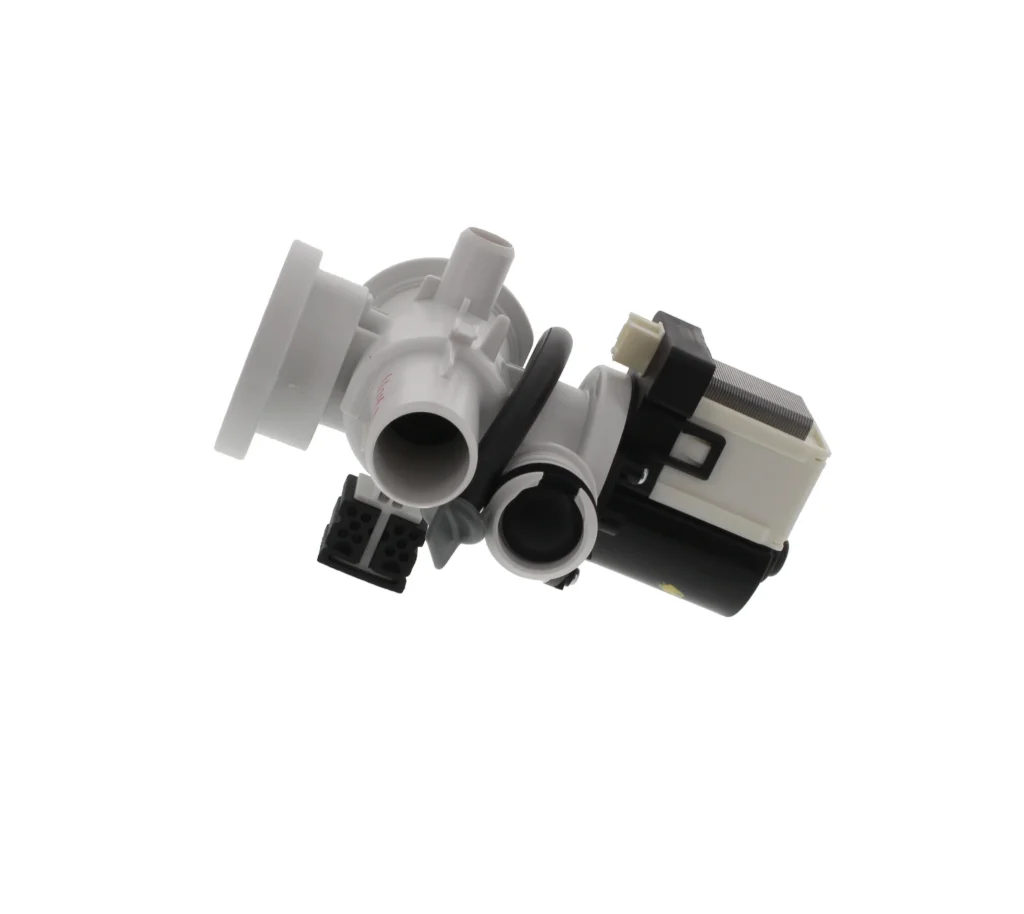
Cause #2: Failed Drain Pump Assembly (DC96-01585D)
If the filter's clean but water still won't drain, the pump itself has likely failed. The DC96-01585D drain pump assembly moves about 8 gallons per minute when working properly. When it dies, nothing moves.
Testing the pump:
- Access the filter area again and shine a flashlight into the pump cavity
- Try spinning the pump impeller with a pen or screwdriver — it should rotate freely without catching
- Run a drain cycle and listen closely at the filter opening — you should hear the motor activate
- If you hear humming but no water movement, the pump's seized
- If you hear nothing, the pump motor has electrically failed
The DC96-01585D assembly includes both the motor and pump housing. Common failure points include bearing seizure from hard water deposits, impeller damage from foreign objects, or motor winding failure. This part fails most often in washers 5-8 years old with heavy use.
Replacement steps: You'll need to tip the washer forward or lay it on its back to access the pump from underneath. It's held by 3-4 screws and has wire harness connections plus two large hoses clamped to it. Have towels ready — residual water will drain when you disconnect hoses.
Cost: $166.99 (DC96-01585D assembly)
Time: 45-60 minutes
Difficulty: Moderate — basic tools, some disassembly required
Cause #3: Blocked or Kinked Drain Hose
The drain hose runs from the pump to your home's standpipe or laundry sink. If it's kinked, crushed, or clogged, water backs up even with a working pump.
Inspection process:
- Pull the washer away from the wall enough to access the rear
- Trace the drain hose from machine to drain point — look for sharp bends or kinks
- Check where it enters the standpipe — lint can accumulate here and create a dam
- Disconnect the hose at both ends and flush water through it outside or in a utility sink
- Make sure the standpipe itself isn't clogged (pour a bucket of water in to test)
Samsung recommends the drain hose be installed no more than 96 inches above the floor and no less than 18 inches. Too high and the pump can't push water up; too low and you might get siphoning issues.
Cost: $0-$25 (if hose needs replacement)
Time: 15-20 minutes
Difficulty: Easy
Cause #4: Faulty Pressure Switch
The water level pressure switch tells the control board when the tub is empty. If it's stuck reading "full," the control board won't attempt to drain — or will stop the drain cycle prematurely thinking the job's done.
Testing approach:
- Unplug the washer completely
- Locate the pressure switch (usually top-right inside the cabinet, with a small air hose connected)
- Disconnect the air hose and blow gently through it — you should hear a click from the switch
- Check the air hose for blockages or water — it should be clear and dry
- If the switch doesn't click, it's likely failed
This isn't a common failure point, but it happens. The pressure switch on Samsung models is typically part number DC96-01703C if you need to replace it.
Cost: $35-$50
Time: 30 minutes
Difficulty: Moderate
Cause #5: Control Board Drain Cycle Malfunction
Least likely, but worth mentioning: the main control board might not be sending voltage to the drain pump even though everything else works fine. This usually presents with error codes and other operational oddities beyond just drainage.
You'd typically see this after a power surge or if the washer has had water intrusion into the control panel area. Testing requires a multimeter to check voltage at the pump connector during a drain cycle.
Cost: $150-$300 (control board replacement)
Time: 1-2 hours
Difficulty: Advanced — requires electrical testing
When to Call a Pro
Here's the honest assessment: if you've cleaned the filter, checked the hose, and confirmed the pump runs but nothing moves, you're looking at pump replacement. That's a DIY-friendly repair if you're comfortable tipping the washer and working with basic hand tools.
Call a professional if:
- You're not comfortable working with electrical connections
- The washer needs to be fully disassembled to access components
- You've replaced the pump but drainage issues continue
- Error codes persist after addressing mechanical issues
- You're seeing water leakage from places other than the drain system
Professional diagnosis typically runs $80-$120, with repair costs depending on parts needed.
Preventing Future Drain Problems
Once you've got your Samsung draining properly again, keep it that way:
- Clean the drain filter monthly — set a phone reminder
- Check pockets before loading — coins and small items are pump killers
- Use HE detergent only — regular detergent creates excess suds that can overwhelm the drain system
- Run a cleaning cycle quarterly — helps prevent buildup in drain pathways
- Don't overload the washer — puts extra strain on the pump motor
Frequently Asked Questions
Will a Samsung washer drain without power?
No, the drain pump requires power to operate. However, you can manually drain a Samsung washer by accessing the drain filter at the front bottom panel. Unscrew the filter cap slowly (have towels ready) and gravity will drain the water into your collection pan. This is essential if you need to move the washer or prevent standing water issues during a power outage.
How long should a Samsung washer drain pump last?
The DC96-01585D drain pump typically lasts 7-10 years with normal use (6-8 loads per week). Heavy-use households might see failure around year 5-6. Hard water significantly shortens lifespan due to mineral buildup on impeller bearings. If your pump fails earlier than 5 years, check for recurring drain blockages or foreign objects that might have damaged it prematurely.
Can I use my washer if it won't fully drain?
Don't run additional cycles if water remains in the drum. You'll compound the problem, risk overflow, and potentially damage clothes with dirty standing water. Plus, running the washer with a partially failed pump can burn out the motor completely. Manually drain via the filter access panel, then diagnose and fix the issue before the next load. Your laundry can wait; water damage to your floor can't be undone.
Diagnosed the problem?
DC96-01585D · In Stock · Fast shipping