
Whirlpool Refrigerator Water Dispenser Not Working — 5 Inlet Valve Failures & Fixes
You press the dispenser paddle and hear a faint click, but nothing comes out. Not a drop. Your Whirlpool GSC25C4EYB02 or WRS321CDBM00 just stopped dispensing water overnight, and now you're filling water bottles from the sink like it's 1995.
Before you start Googling new refrigerators, that click you're hearing? It's actually good news. It means the control board is trying to send power to the water inlet valve — the part that opens to let water flow to your dispenser and ice maker.
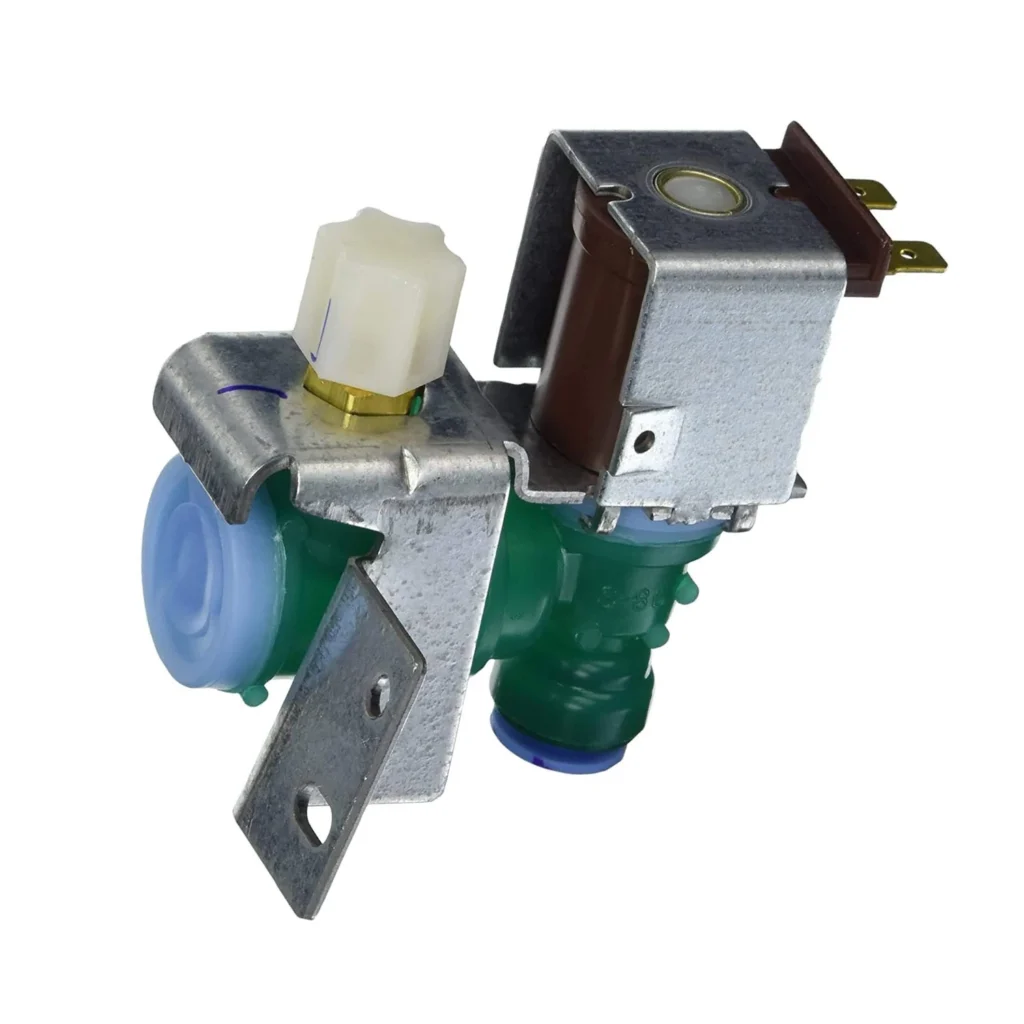
The W10238100 water inlet valve is the gatekeeper for all water entering your fridge. When it fails (and on models like the WRS526SIAE00 and GSF26C5EXA00, it does fail), you'll know immediately. Let's walk through exactly what's happening and how to fix it.
Quick Symptom Check
Your water inlet valve is likely the culprit if you're experiencing:
- No water from dispenser — You hear a click or hum, but zero water flow
- Slow water dispenser — Takes forever to fill a glass, weak stream
- Ice maker stopped working — No ice production, empty bin
- Constant dripping inside fridge — Water pooling under crisper drawers
- Water dispenser won't shut off — Keeps running after you release paddle
Cause #1: Inlet Valve Solenoid Failure (70% of Cases)
Probability: Very High
The valve contains two solenoid coils — one for the dispenser, one for the ice maker. These electromagnetic coils open and close the valve. After thousands of cycles, the copper windings inside break down or short out.
How to diagnose: Unplug the fridge and remove the lower rear access panel. The inlet valve is where your water line connects at the bottom back. You'll see two wire terminals. Using a multimeter set to ohms, test each coil. You should get 200-500 ohms. Anything above 1000 ohms or infinite resistance means the coil is dead.
On models like the WRL767SIAM00 and GSS30C6EYW00, this is the most common failure point. The valve mechanically looks fine, but electrically it's toast.
Cause #2: Low Water Pressure (15% of Cases)
Probability: Moderate
The W10238100 valve requires minimum 20 PSI to open properly. If your home water pressure is below this — common in homes with well systems or older plumbing — the valve won't fully open even when energized.
How to diagnose: Disconnect the water line from the fridge and hold it over a bucket. Turn the water on. You should get a strong, steady stream that fills a quart container in less than 10 seconds. If it's a trickle, your pressure is too low.
Check for kinked supply lines behind the fridge (happens during installation) or a partially closed shut-off valve. On the WRS526SIAH00, that flexible braided line loves to kink right at the compression fitting.
Cause #3: Sediment Blockage in Valve Screen (10% of Cases)
Probability: Moderate
Inside the valve's inlet port is a tiny mesh screen designed to catch debris. If you have hard water or old galvanized pipes, mineral deposits and rust particles accumulate here, restricting flow.
How to diagnose: Remove the water line from the valve inlet. Look inside the threaded port with a flashlight. That small screen should be clean. If it's brown, green, or packed with white calcium deposits, that's your problem.
You can try cleaning it with a toothbrush and vinegar, but honestly? If it's blocked enough to cause symptoms, the valve internals are probably compromised too. Replace it.
Cause #4: Frozen Water Line or Valve (3% of Cases)
Probability: Low (but seasonal)
If your fridge is in an unheated garage or the temperature inside is set below 34°F, water can freeze in the valve body or supply tube. This is more common with the GSF26C5EXS00 and similar side-by-side models where the water line runs through the freezer compartment.
How to diagnose: Unplug the fridge and use a hairdryer on low heat to warm the valve and surrounding lines for 10-15 minutes. If water suddenly starts flowing after this, freezing was your issue. Long-term fix: increase the fridge temperature setting or add insulation to exposed water lines.
Cause #5: Internal Valve Diaphragm Tear (2% of Cases)
Probability: Very Low
The valve uses a rubber diaphragm to seal water flow when closed. Over time, this can crack or tear, causing either constant dripping or complete flow failure.
How to diagnose: This one's tricky to test without disassembly. If you've confirmed the solenoids test good electrically, water pressure is adequate, and there's no blockage, but the valve still won't open (or won't close), the diaphragm is likely damaged. There's no repair option here — replacement is required.
How to Replace the W10238100 Water Inlet Valve
This is a straightforward repair that takes about 30 minutes:
- Unplug the refrigerator and turn off the water supply shut-off valve
- Pull the fridge away from the wall — you need access to the back
- Remove the lower rear panel (usually 2-4 screws)
- Disconnect the water line from the inlet (have a towel ready for residual water)
- Unplug the wire harnesses from both solenoid terminals
- Remove the mounting bracket screws (typically two) and pull the old valve out
- Install the new W10238100 in reverse order, ensuring connections are tight
- Turn water back on slowly and check for leaks before pushing the fridge back
The valve works across dozens of Whirlpool, KitchenAid, Maytag, Jenn-Air, and Kenmore models including the WRF560SEHW00 and GSC25C6EYW00. Always verify your model number before ordering.
When to Call a Pro
You should consider professional help if:
- You're not comfortable working with water lines or electrical connections
- The valve replacement doesn't fix the problem (suggests control board issue)
- You're seeing water leaking from multiple locations inside the fridge
- Your refrigerator is still under warranty
Most appliance techs charge $150-250 for this repair including the part. If you're handy and buy the valve yourself for $139.99, you'll save about $100 in labor.
Frequently Asked Questions
Can a bad water inlet valve cause the ice maker to stop working?
Absolutely. The inlet valve supplies water to both the dispenser and ice maker. If the ice maker solenoid coil fails (or both coils fail), your ice production stops completely. You'll typically notice the dispenser still works if only the ice maker coil is bad, or vice versa.
How long does a refrigerator water inlet valve typically last?
Most water inlet valves last 5-8 years with normal use. However, factors like hard water, frequent use, and power surges can shorten this. If your fridge is 7+ years old and you're experiencing water flow issues, the valve is often the first thing to check.
Will a water filter cause low water pressure symptoms?
Yes, but only if it's severely clogged. A dirty filter reduces flow but usually won't stop it completely. If you haven't changed your water filter in over 6 months, replace it first before suspecting the inlet valve. It's the cheaper troubleshooting step and takes 30 seconds.
Diagnosed the problem?
W10238100 · In Stock · Fast shipping