
How to Extend Your LG Washer Circulation Pump Life — Maintenance Guide
Always unplug washer before accessing pump area. Water will spill when removing drain filter — have towels ready. Never run washer with drain filter removed.
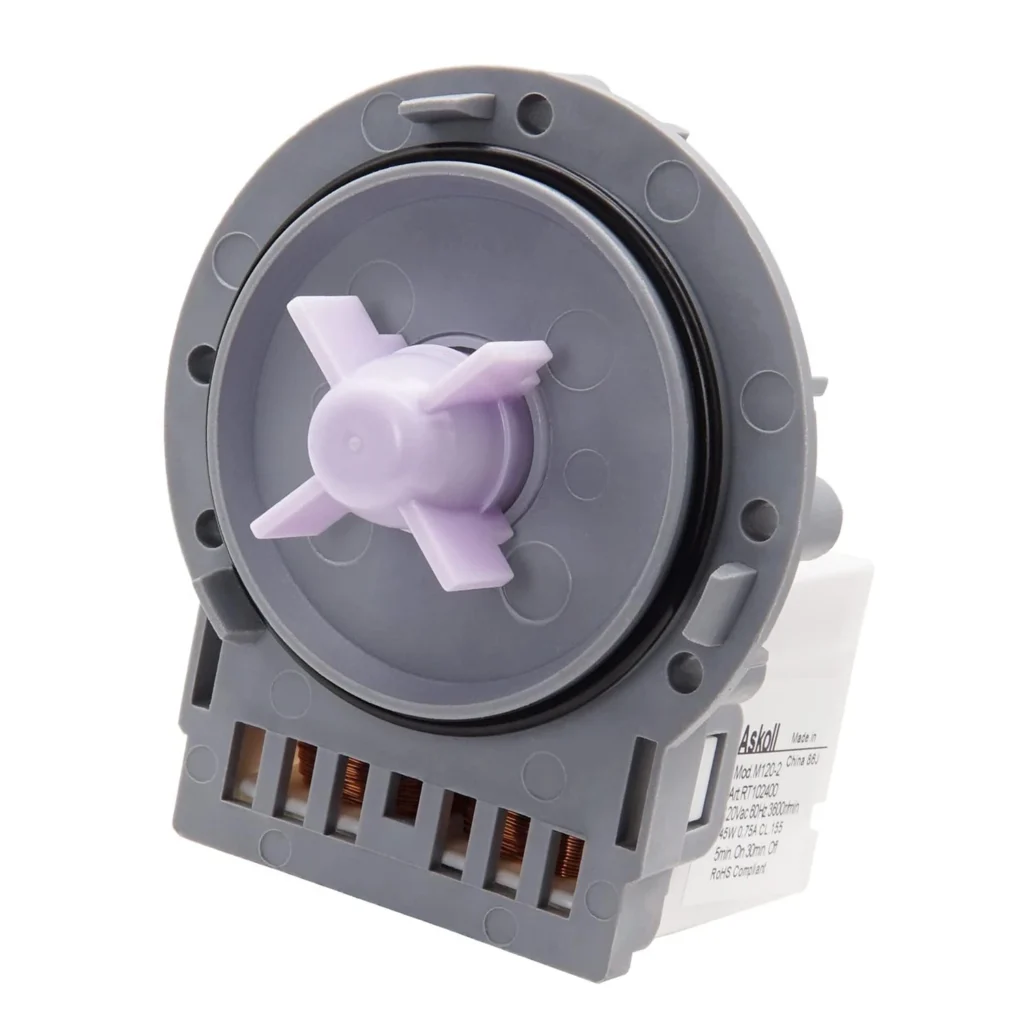
The average LG washer circulation pump should last 8-10 years, but most fail around year 5. I've replaced dozens of these on models like the WM3987HW and WM4270HWA — and nearly every time, the owner says the same thing: "It was draining fine until last week."
That sudden failure? It's usually preventable. The EAU61383503 pump motor is built tough, but it can't handle years of detergent buildup, hard water deposits, and forgotten coins grinding through the impeller.
How Long Should It Last?
Under ideal conditions, this circulation pump will run 8-10 years. I've seen some hit 12 years on soft water with regular cleaning. But here's what actually affects lifespan:
- Water hardness: Hard water cuts life by 30-40%. Mineral deposits coat the impeller and slow the motor.
- Detergent type: Too much soap creates sludge that clogs the pump chamber. Use HE detergent only — and half what you think you need.
- Load frequency: Running 2-3 loads daily wears it faster, but surprisingly, washers that sit unused for weeks also fail sooner. Seals dry out.
- What goes in the drum: Pet hair, lint, coins, and small socks are pump killers. They wedge in the impeller housing.
On models like the WM4000HWA and WM5000HVA, I typically see pump failure between 60,000-80,000 gallons pumped. That's roughly 4,000-5,000 wash cycles if you're keeping track.
Signs It's Wearing Out
The #1 symptom of a failing circulation pump is simple: the washer will not drain. But before it dies completely, you'll usually get warnings.
Slow or Incomplete Draining
If your WM3770HWA or WM4270HVA takes longer than 2-3 minutes to empty, the pump's struggling. You'll notice clothes are soaking wet at cycle end, or there's standing water in the drum. The pump motor might still be running — you can hear it humming — but the impeller's partially blocked or worn down.
Grinding or Rattling Noise During Drain
A healthy pump is nearly silent. If you hear grinding, clicking, or rattling when the washer drains, something's caught in the impeller or the bearings are shot. On LG front-loaders, this noise comes from behind the lower kickplate panel. Don't ignore it — what starts as a rattle becomes a burnt-out motor within weeks.
Error Codes OE or dE
LG washers throw an OE code (won't drain) or dE code (door won't unlock because water's still inside) when the pump can't keep up. If you're getting these codes and the drain filter is clean, the pump's on borrowed time. Models like the WM3875HVCA and WM3900HWA are particularly sensitive to pump flow rate — even a 20% reduction triggers the code.
Preventive Maintenance Schedule
Most pump failures happen because of neglect, not defects. Here's what actually works:
After Every 10-15 Loads: Check Pockets
Coins, screws, bobby pins — I've pulled all of them from dead pumps. They wedge between the impeller and housing, score the plastic, and eventually jam the motor. Takes 10 seconds to check pockets before loading. Worth it.
Monthly: Clean the Drain Filter
That round cap behind the kickplate at the bottom front? That's your drain pump filter. Unscrew it (have a towel ready — water will spill), pull out the lint, hair, and mystery gunk. If this filter clogs completely, the pump runs dry and burns out. On the WM4370HWA and WM4500HBA, I've seen filters so packed that water couldn't pass at all.
Every 3 Months: Run a Cleaning Cycle
Use the washer's tub clean cycle with either Affresh tablets or white vinegar. This dissolves detergent buildup and hard water scale inside the pump chamber. Don't skip this if you have hard water — those mineral deposits are abrasive and wear down the impeller blades.
Annually: Inspect the Pump Housing
If you're comfortable pulling the front panel, check the actual pump. Look for cracks in the plastic housing, listen for bearing noise when you spin the impeller by hand, check that the rubber gaskets aren't dried out. This 5-minute inspection catches problems before they strand you with a tub full of wet laundry.
When to Replace vs Maintain
Here's the honest answer: if the pump's already making noise or throwing codes, maintenance won't save it. The bearings are shot or the impeller's damaged. At that point, you're looking at the EAU61383503 replacement ($121.99).
But if your washer's draining normally and you start these habits now? You'll likely get the full 8-10 year lifespan. Maybe longer.
One more thing: if you replace the pump, don't just swap it and walk away. Clean the entire drain path — hose, filter, and sump. Otherwise, you're installing a new pump into the same dirty system that killed the old one.
Frequently Asked Questions
Can I clean the pump without removing it?
Sort of. You can clean the filter and run descaling cycles, which helps. But if there's something stuck in the impeller or the bearings are contaminated, you need to pull the pump. On LG front-loaders like the WM3987HW, it's 6 screws to drop the front panel, then 3 more to detach the pump. Not terrible if you've got basic tools.
How do I know if it's the pump or just a clogged drain hose?
Disconnect the drain hose from the washer and check if water flows freely into a bucket when you run a drain cycle. If water barely trickles out, the pump's weak. If water gushes but the hose is clogged or kinked, that's your problem. Also check the standpipe where the hose connects to your home plumbing — I've seen those completely blocked with lint.
Will using less detergent really make a difference?
Absolutely. HE washers use 10-15 gallons per cycle, not 40 like old top-loaders. You need maybe 1-2 tablespoons of HE detergent, max. More doesn't clean better — it just creates suds that coat the pump and don't rinse out. I've pulled pumps from WM4200HWA washers that were packed with soap scum like peanut butter. The owners were using 3-4 times the recommended amount.
Element showing wear?
EAU61383503 · Replace before it fully fails