
Samsung Washer dE Error Code — What It Means & How to Fix
Door not detected as closed and locked
The dE error code appears when the washer's control board does not receive confirmation that the door is properly closed and locked. The door lock assembly contains both a mechanical latch and electromagnetic lock that must function correctly for the safety circuit to close. When either component fails or the door striker is misaligned, the washer will not start the cycle.
Never attempt to bypass the door lock safety circuit. The drum spins at high speeds that can cause serious injury if the door opens during operation.
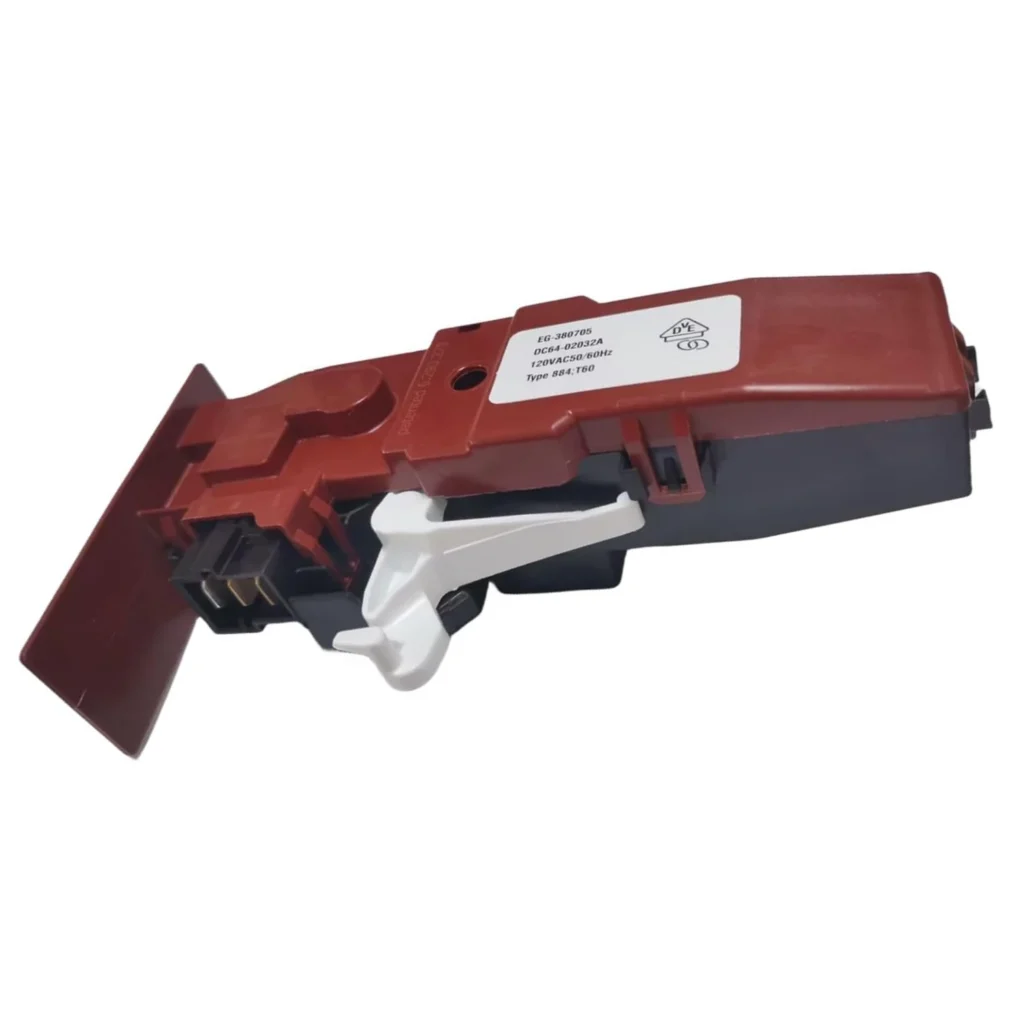
You load up the washer, press start, and instead of that reassuring click of the door locking, you get "dE" flashing on the display. The drum sits there, full of wet clothes, not moving. You try opening and closing the door three times. Still nothing. This is the Samsung washer door lock refusing to engage — and it's one of the most common error codes on front-load models like the WF210ANW, WF220ANW, and WF363BTBEUF series.
What dE Actually Means
The dE error code (sometimes displayed as "dE1", "dE2", or "door") means the washer's control board isn't receiving confirmation that the door is properly closed and locked. Samsung washers won't start a cycle unless the door lock assembly sends an electrical signal confirming three things: the door is physically closed, the latch has engaged, and the lock mechanism has activated. When any part of this sequence fails, you get dE.
The door lock assembly (part number DC64-02032A) contains both a mechanical latch and an electromagnetic lock. The mechanical part catches the door striker. The electromagnetic part — energized by the control board — physically locks the door closed during the wash cycle. If either component fails, the safety circuit stays open and the machine won't run.
Most Likely Causes
Failed door lock switch assembly: The DC64-02032A unit itself wears out after 3-5 years of regular use. The electromagnetic coil burns out, or the plastic latch mechanism cracks. This is the cause in roughly 70% of dE error cases. You'll often hear a faint clicking when you close the door, but the lock doesn't actually engage.
Misaligned door striker: The metal striker plate on the door itself can bend or loosen, preventing proper engagement with the lock assembly. This accounts for about 15% of cases. Check if the striker sits flush when the door closes — if it's recessed or angled, the latch can't catch it.
Damaged door boot seal: If the rubber door seal is torn or has shifted out of position, it can prevent the door from closing tightly enough to trigger the lock. Less common (about 10% of cases), but worth checking if you see visible damage to the boot.
Wiring harness issues: The wire connector to the door lock can corrode or come loose, breaking the signal circuit. Rare but possible, especially in humid laundry rooms. Maybe 5% of dE errors.
Step-by-Step Fix
1. Confirm it's the door lock: Unplug the washer. Open the door and visually inspect the lock assembly on the right side of the door opening. Look for cracks in the plastic housing or burn marks on the electrical connector. Close the door slowly and watch whether the striker plate aligns with the latch opening. If the striker misses or sits crooked, you've found a secondary issue.
2. Test the lock electrically: If you have a multimeter, set it to ohms. Disconnect the wire harness from the door lock (it's a 4 or 6-pin connector). Test resistance across the lock coil terminals — you should read 1000-1500 ohms. If you read infinite resistance (open circuit) or zero ohms (short), the lock is dead and needs replacement.
3. Remove the front panel: You need access behind the door boot. Open the door fully and use a flathead screwdriver to pry off the metal wire clamp holding the boot seal in place — it's a continuous spring band. Once loose, peel the boot back from the front panel to expose the door lock mounting screws.
4. Remove the old lock assembly: The DC64-02032A mounts with three Phillips screws. Remove them and carefully pull the assembly away from the frame. Disconnect the wire harness if you haven't already. Note the position — the latch mechanism faces inward toward the drum.
5. Install the new DC64-02032A: Position the replacement lock so the latch opening aligns with where the door striker will hit. Secure with the three mounting screws (don't overtighten — the plastic housing can crack). Reconnect the wire harness, making sure it clicks fully into place.
6. Reassemble and test: Stretch the door boot back over the front panel edge and reseat the wire clamp. Close the door and plug the washer back in. Run a drain/spin cycle to test — the door should lock within 5 seconds of pressing start, and the dE error should be gone.
When the Fix Doesn't Work
If you've replaced the door lock assembly and you're still getting dE, the problem is upstream in the control system. Check the main control board for visible burn marks or corrosion around the door lock relay. On models like the WF361BVBEWR and WF365BTBGWR, the control board can develop cold solder joints that break the door lock circuit. You'll need to replace the main PCB (a $150-250 part plus labor).
Less commonly, the door striker plate itself may need replacement if it's bent beyond adjustment. Samsung sells the striker separately, but you'll need to drill out the old rivets and install the new one with machine screws.
Frequently Asked Questions
Can I bypass the door lock to finish a load of laundry?
No, and don't try. The door lock is a critical safety feature — if the door opens during the spin cycle, the drum is rotating fast enough to cause serious injury. Samsung washers are programmed to refuse operation if the lock circuit is incomplete. The only safe fix is replacing the failed component.
Why does my door lock click but still show dE?
You're hearing the mechanical latch engage, but the electromagnetic lock coil isn't activating. The control board sends power to the lock coil after the latch closes. If the coil is burned out, the latch will catch but the electrical feedback signal never reaches the control board, so you still get the dE error. The whole DC64-02032A assembly needs replacement — the latch and lock aren't serviceable separately.
How long does a Samsung door lock assembly typically last?
Expect 4-6 years with normal use (6-8 loads per week). Heavier use shortens the lifespan — families running 10+ loads weekly often see failure around the 3-year mark. The electromagnetic coil eventually fatigues from repeated heating cycles. Once it starts to fail, you'll notice the door taking longer to lock (8-10 seconds instead of 3-4) before it stops working entirely.
Before replacing the lock assembly, check that the door striker plate is aligned and not bent. A misaligned striker accounts for 15% of dE errors and is a free fix.
Need the control board or touchpad?
Genuine OEM & aftermarket options in stock