
Samsung Washer Won't Drain or Spins Slowly — 5 Causes & How to Fix
You're standing in front of your Samsung WA50K8600AV with a drum full of soaking wet clothes that just completed its cycle — except it didn't actually complete anything. The washer's sitting there humming, the drum barely turned during spin, and now you've got 40 pounds of waterlogged laundry that's too heavy to lift out. You run another drain cycle. Nothing. The water just sits there mocking you.
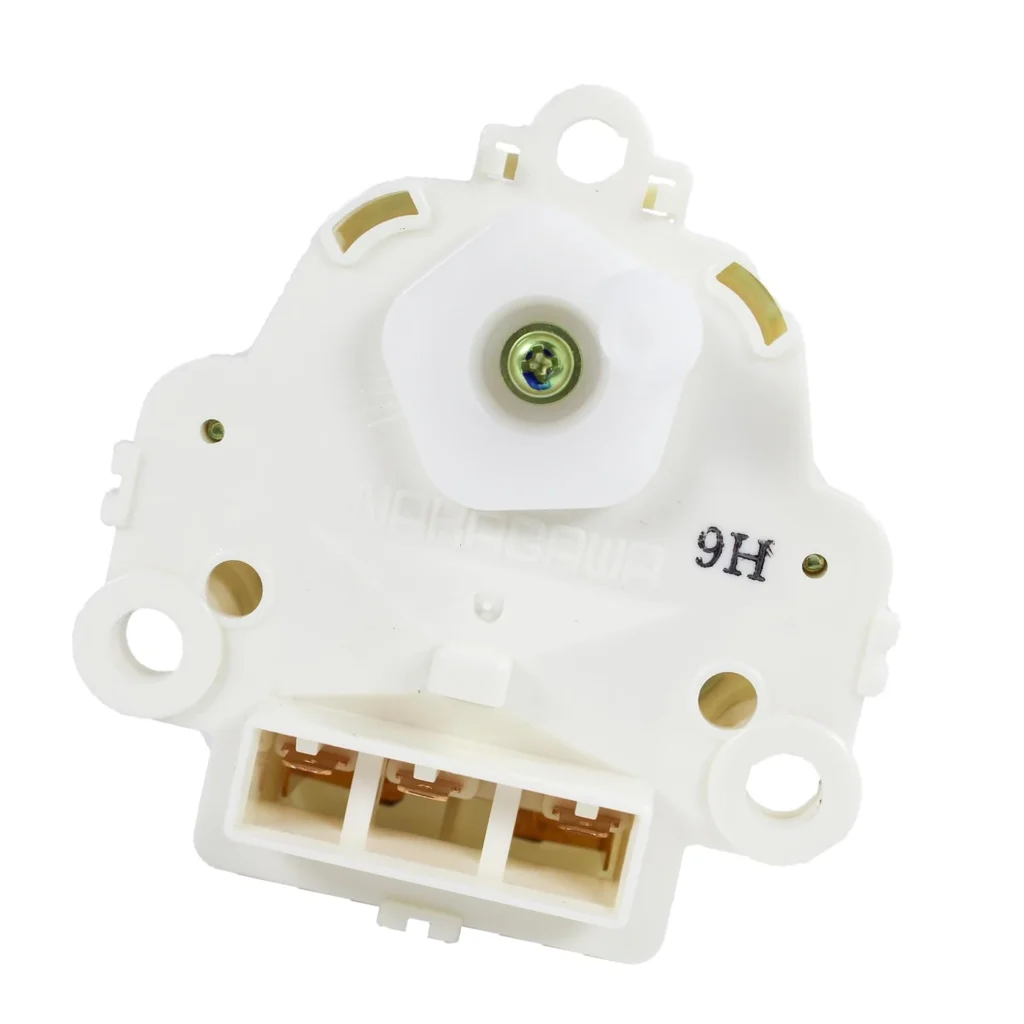
This is the classic signature of a failed drain clutch motor assembly — the DC31-00090B component that controls both water drainage and the engagement of your washer's spin cycle. When this part fails, your washer can't transition from wash to spin, leaving clothes drenched and your laundry routine completely derailed.
Quick Symptom Check
Your Samsung washer likely has a drain clutch failure if you're experiencing:
- Water remains in drum after cycle completes — clothes are soaking wet, water visible at bottom of tub
- Weak or no spin action — drum rotates slowly during spin cycle or doesn't spin at all
- Washer hums but doesn't drain — you hear motor noise but no water movement
- Error codes displayed — dC, dE, or 5E codes appear on control panel
- Intermittent drainage issues — sometimes drains fine, other times leaves water behind
This issue affects numerous Samsung top-load models including the WA48J7700AW, WA50K8600AV, WA50M7450AW, and WA50F9A8DSW series. If you're seeing two or more of these symptoms, you're likely dealing with a drain clutch motor assembly problem.
Cause #1: Failed Drain Clutch Motor Assembly (Most Likely — 60% of Cases)
The DC31-00090B drain clutch is a combined unit that handles two critical functions: pumping water out and engaging the clutch that allows high-speed spinning. When the internal motor burns out or the clutch mechanism wears down, your washer loses both capabilities simultaneously.
How to diagnose:
- Start an empty spin cycle and listen carefully at the bottom-rear of the washer
- No sound at all? The motor's likely completely dead
- Humming but no water movement? The motor runs but the pump impeller or clutch is seized
- Grinding or clicking sounds? Internal clutch components have failed
- Check for error codes — dC code specifically points to drain clutch issues
Why it fails: These assemblies typically last 7-10 years, but failure accelerates if you regularly overload the washer or wash heavy items like comforters. The motor bearings wear out, the clutch pads deteriorate, or the plastic impeller cracks. Once it starts failing, it won't get better — only worse.
The fix: Replace the entire DC31-00090B assembly ($102.99). This isn't a repair job; the unit is sealed and must be swapped as one piece. Budget 1-2 hours for the replacement if you're comfortable with appliance work — you'll need to access the bottom of the washer and disconnect electrical connectors and hoses.
Cause #2: Clogged Drain Pump Filter (15% of Cases)
Before you blame the motor, check the obvious culprit: the drain filter. Samsung top-loaders have a filter that catches coins, lint, bobby pins, and small clothing items. When this clogs completely, even a perfectly good drain motor can't push water through.
How to check:
- Locate the drain pump access panel at the bottom-front of your washer
- Place towels down — you'll release trapped water
- Unscrew the filter cap slowly (counter-clockwise)
- Pull out the filter and inspect for debris buildup
If you find a wad of lint, pet hair, or foreign objects, clean everything thoroughly and reassemble. Run a drain cycle. If water now drains properly, you just saved yourself $100. If it still won't drain, the motor itself has failed.
Cause #3: Kinked or Damaged Drain Hose (10% of Cases)
Sometimes the problem isn't the motor at all — it's the exit route. If your drain hose has developed a kink, been crushed behind the washer, or has internal deterioration, water can't escape even when the pump is working perfectly.
Check these points:
- Pull the washer forward and inspect the full length of drain hose
- Look for sharp bends, kinks, or compressed sections
- Feel along the hose for hard, brittle sections (indicates age deterioration)
- Ensure the hose isn't inserted too far into the standpipe (creates airlock)
- Verify the standpipe height is between 34-51 inches from floor
If you find damage, replace the drain hose. If you find a kink, straighten it and secure the hose properly. This is a 10-minute fix that costs under $20.
Cause #4: Faulty Control Board Communication (10% of Cases)
Your drain motor might be fine, but if the main control board isn't sending it the signal to operate, you'll get the same symptoms. This is more common after power surges or if your home has electrical issues.
Test procedure:
- Unplug washer for 5 minutes (hard reset)
- Plug back in and run diagnostic mode (varies by model — check your manual)
- Listen for relay clicks from the control board when drain cycle should start
- Check wire harness connections between control board and drain motor for corrosion or looseness
If you're getting error codes but can't hear the motor attempting to run at all, and connections look good, the control board may need replacement. This is a $150-300 repair that's best left to a pro unless you're electrically savvy.
Cause #5: Worn Drive Belt or Pulley Issues (5% of Cases)
Less common in top-loaders, but if your washer is 10+ years old, the drive belt that connects the motor to the drain pump assembly can slip, crack, or break. You'll hear the motor running but get no actual pumping action.
Visual inspection:
- Unplug washer and tip it back (requires two people)
- Remove the bottom access panel
- Inspect the belt for glazing, cracks, or looseness
- Check pulleys for wobble or damage
If the belt looks worn or damaged, replace it ($15-25 part). If pulleys are damaged, you're looking at a more extensive repair that might not be worth it on an older machine.
When to Call a Pro
DIY the drain clutch replacement if you're comfortable working with basic tools and can safely access the underside of your washer. But call a professional if:
- You're getting multiple error codes beyond just drain issues
- The control board needs replacement (complex electrical work)
- Your washer is still under warranty (DIY voids most warranties)
- You've replaced the drain motor but issues persist (indicates deeper mechanical problems)
- You're physically unable to tip or move the washer safely
Professional repair for drain clutch replacement typically runs $200-300 including parts and labor. Whether that's worth it depends on your washer's age — if it's under 7 years old, probably yes. Over 12 years? Consider replacement.
Frequently Asked Questions
How long does a Samsung drain clutch motor typically last?
Most DC31-00090B assemblies last 7-10 years under normal use conditions. Heavy use, frequent overloading, or washing bulky items regularly can reduce lifespan to 5-6 years. Once symptoms start appearing, the part typically fails completely within 2-3 months — the wear pattern is progressive and irreversible.
Can I just replace the pump part instead of the whole assembly?
No. The DC31-00090B is a sealed integrated unit combining the drain pump motor, clutch mechanism, and pump housing. Samsung doesn't sell individual internal components, and attempting to disassemble the unit voids any remaining warranty and usually causes more damage. You must replace the complete assembly.
Will my washer drain at all with a bad clutch motor?
It depends on how the motor failed. If the motor's completely dead, you'll get zero drainage. If the motor runs but the clutch is slipping or the impeller is damaged, you might get slow, partial drainage — just not enough to properly spin clothes dry. Some failures are intermittent at first, working on some cycles but not others, before failing completely.
Diagnosed the problem?
DC31-00090B · In Stock · Fast shipping