
How to Extend Your LG Evaporator Fan Motor Life — Maintenance Guide
Always unplug your refrigerator before accessing the evaporator fan motor. The fan can start unexpectedly when doors close or temperature rises.
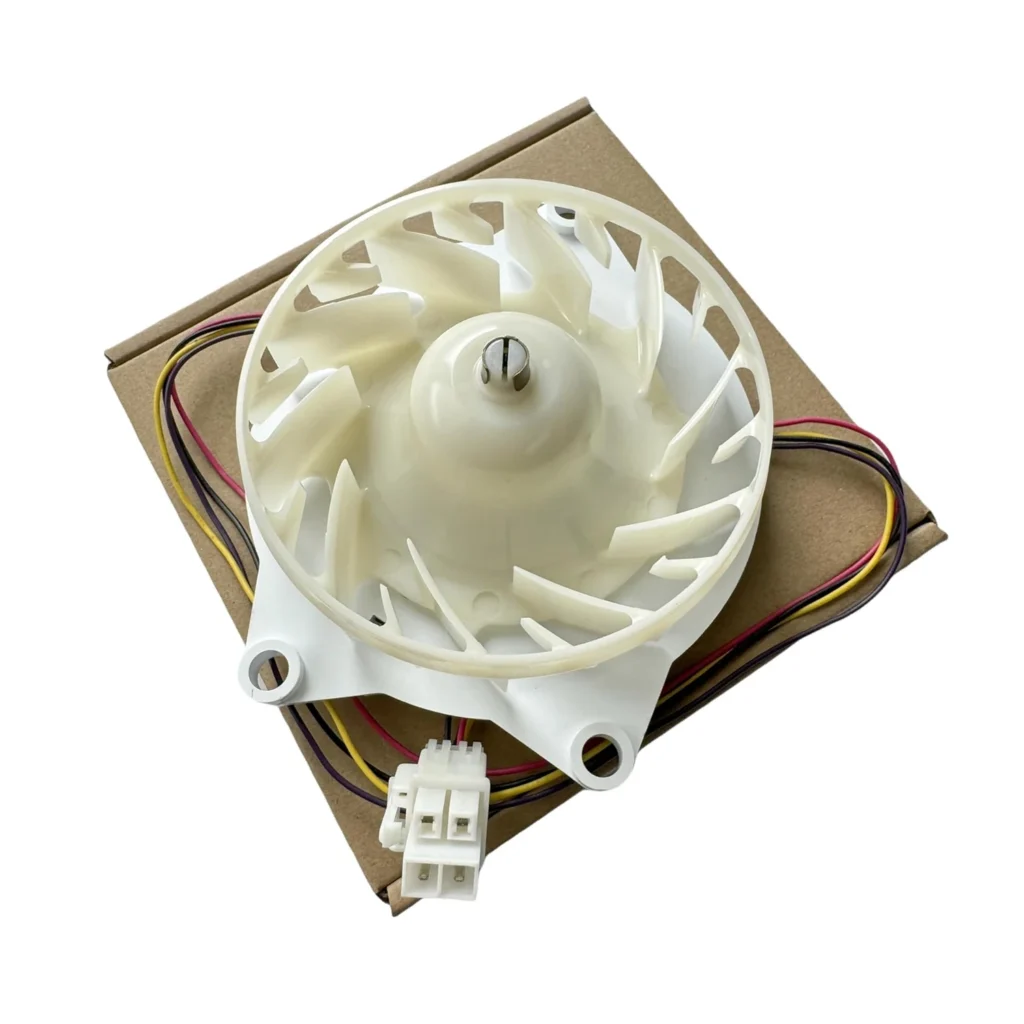
Most LG evaporator fan motors (like the EAU64824805) should run 8–12 years without issues. But I've seen them fail at year 3 because of ice buildup nobody noticed. The difference? Five minutes of attention every few months.
If your LRMVS3006S or LRFVC2406D is running louder than usual, or you're getting temperature swings between the fridge and freezer, your evaporator fan is probably working overtime — which shortens its life dramatically.
How Long Should It Last?
Under normal conditions, the EAU64824805 motor should give you 10–15 years of service. That's the engineering spec. Reality? Most replacements I see happen between years 5 and 8.
What kills them early:
- Ice accumulation — When defrost cycles don't complete properly, ice forms on the fan blades. The motor strains against the resistance until the bearings wear out.
- Dust and debris — Evaporator fans pull air constantly. In homes with pets or dusty environments, the motor vents clog, causing overheating.
- Voltage fluctuations — Power surges damage the motor windings over time. Common in areas with unstable electrical grids.
- Door seal failures — When warm, humid air enters the freezer constantly, the fan runs non-stop trying to maintain temperature.
Models like the LMXS28626S and LRSXS2706V have particularly demanding cooling requirements due to their size — the fan motor works harder in these units.
Signs It's Wearing Out
Your LG refrigerator will tell you when the evaporator fan motor is struggling. You just need to know what to listen for.
Unusual Noises From the Freezer
A healthy EAU64824805 runs almost silently — a gentle whir you barely notice. When bearings start wearing out, you'll hear grinding, squealing, or a rhythmic clicking. The noise usually gets worse over several weeks.
On models like the LRFXC2416S, the fan is mounted behind the back panel of the freezer. If you hear the noise stop when you open the freezer door, that's your evaporator fan. (The condenser fan is underneath and doesn't stop when you open doors.)
Inconsistent Temperatures
The evaporator fan circulates cold air from the freezer into the refrigerator section. When it's failing, you'll notice the freezer stays cold but the fridge runs warm — or vice versa depending on where the thermistor is located.
Check both sections with a thermometer. Freezer should be 0°F, fridge should be 37°F. If there's more than a 5-degree variance and the compressor is running, suspect the fan motor.
Frost Buildup Patterns
Look at the back wall inside your freezer. You should see even frost distribution or none at all after a defrost cycle. When the fan isn't circulating air properly, you'll get heavy frost in one area and none in others.
This is particularly noticeable on the LRMDS3006D and LRFDS3016S models, which have larger evaporator coils. Uneven airflow creates obvious frost patterns.
Preventive Maintenance Schedule
Every 3 months: Pull out the bottom grille and vacuum the condenser coils underneath. While you're there, listen for the evaporator fan. It should be a consistent hum with no variation.
Every 6 months: Check your door seals. Close the door on a dollar bill — if you can pull it out easily, the seal is compromised. This makes your evaporator fan work significantly harder.
Annually: Inspect the defrost system. If you're comfortable removing the back panel inside the freezer (unplug first), check for ice buildup on the evaporator coils and fan blades. Any ice means your defrost heater or timer needs attention.
For models like the LRSOS2706S with electronic controls, also check that the defrost cycle is completing. You can usually verify this in the diagnostic mode — consult your service manual for the button sequence.
When to Replace vs Maintain
Here's the honest truth: evaporator fan motors aren't really repairable. Once the bearings go or the windings fail, you're replacing the whole assembly.
But you can prevent premature failure:
Replace if: The motor makes grinding noises even after you've defrosted and cleaned everything, the fan blade doesn't spin freely when you rotate it by hand (unplug first), or you're seeing temperature problems that persist after addressing ice buildup.
Maintain if: The fan is running quietly but you're seeing early warning signs like minor temperature fluctuations or occasional frost patterns. Address the root cause — usually defrost system issues or door seals — before the fan motor pays the price.
The EAU64824805 costs less than $100 and takes about 30 minutes to replace once you've accessed it. Compare that to the cost of spoiled food from a complete failure, and preventive maintenance makes financial sense.
Real-World Longevity Tips
Don't block the vents inside your fridge or freezer. I've seen countless LRMVC2306S and LRFVC2406S units with boxes or bags pressed against the back wall, restricting airflow. The fan motor runs continuously trying to compensate.
Keep your freezer at least half full. An empty freezer makes the evaporator fan cycle more frequently because there's less thermal mass to stabilize temperature. If you don't store much frozen food, fill milk jugs with water and use them as spacers.
Consider a surge protector for your refrigerator. Not a cheap power strip — an actual appliance-rated surge protector. It'll protect not just the fan motor but all the electronic controls.
Frequently Asked Questions
How can I tell if my evaporator fan motor is running?
Open your freezer door and listen. On most LG models including the LMXS28626D, you should hear the fan shut off within 10 seconds of opening the door. If you don't hear it stop, it might not be running at all. You can also press the door switch manually (it's usually on the top right inside the freezer) — the fan should stop immediately.
Why does my evaporator fan motor freeze up repeatedly?
If you're constantly finding ice on the fan blades even after manual defrosting, you've got a defrost system problem — not a fan motor problem. Check the defrost heater (it should show continuity when tested with a multimeter), the defrost thermostat (should close when cold), and the defrost timer or control board. On models like the LRFDS3006S, a failed defrost heater is the most common culprit.
Can I lubricate my evaporator fan motor to make it last longer?
No. The EAU64824805 uses sealed bearings that can't be serviced. Attempting to oil them usually just attracts dust and makes things worse. If the motor is getting noisy, it needs replacement — there's no maintenance procedure that'll restore quiet operation once the bearings are worn.
Element showing wear?
EAU64824805 · Replace before it fully fails