
How to Replace 4323EA2001C Shift Actuator Coupling on LG Washers — Step-by-Step
Unplug washer completely before repair. Washer must be tilted forward for access — get help, machine is heavy. Water may drain during disassembly.
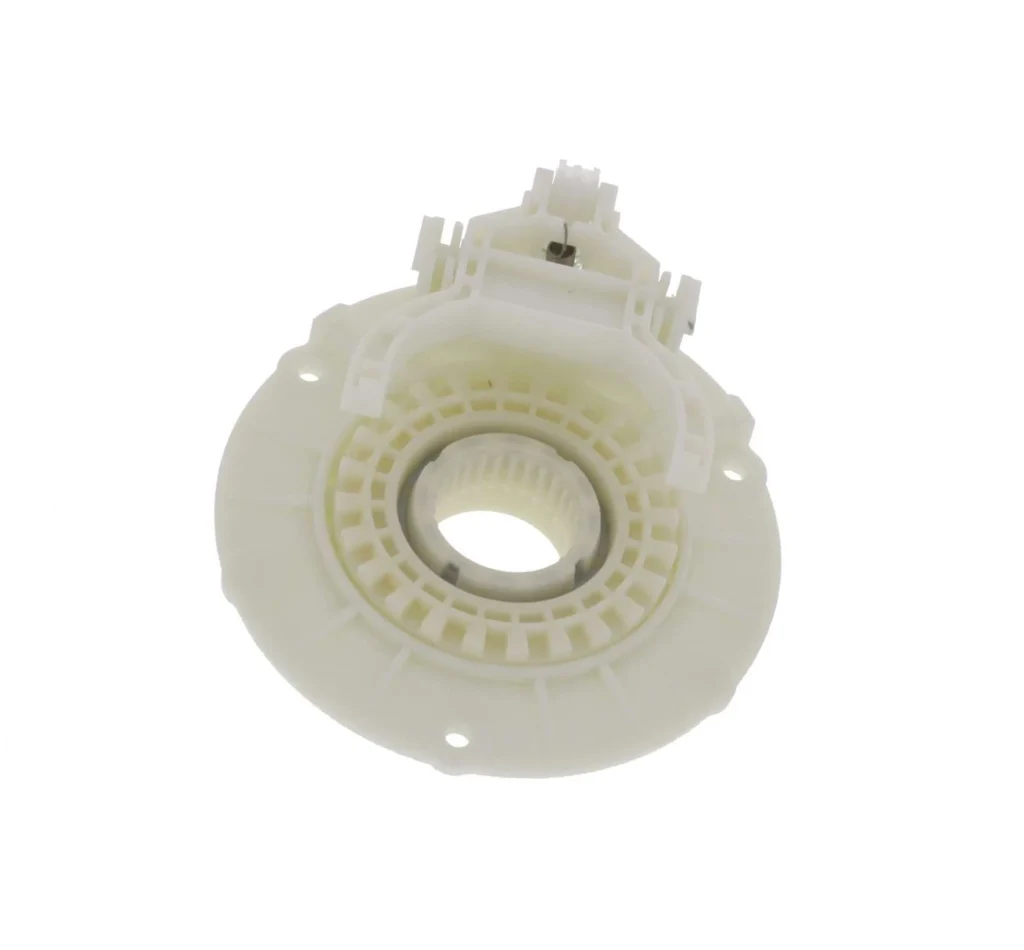
Your LG washer starts the cycle, fills with water, then just sits there agitating endlessly without draining or spinning. You restart it — same thing. The motor's running, but the drum won't transition into spin mode. Nine times out of ten, you're dealing with a failed shift actuator coupling.
This coupling connects the shift actuator motor to the transmission, allowing your washer to switch between agitation and spin modes. When it strips or cracks — usually from years of load cycles — your washer gets stuck in one mode. The good news? This is a straightforward DIY repair that'll save you $200+ compared to a service call.
What You Need Before Starting
Tools required:
- Phillips head screwdriver
- Flat head screwdriver
- Socket wrench set (10mm and 13mm most common)
- Needle-nose pliers
- Towels for water cleanup
- Work gloves (optional but recommended)
Repair time: 45-60 minutes for first-timers, 30 minutes once you know the layout
Difficulty: Moderate — Requires accessing the underside of the washer and working with transmission components
Safety First
Warning: Unplug your washer completely before starting this repair. Water may drain from hoses during disassembly, so keep towels handy. The shift actuator is located underneath the washer, so you'll need to tilt or lay the machine on its front — get help if needed, these washers are heavy.
Step 1: Access the Bottom of the Washer
Unplug the washer and turn off both water supply valves. Pull the machine away from the wall to give yourself working room. Place a thick blanket or cardboard on the floor in front of the washer. Carefully tilt the machine forward onto the blanket — you need access to the entire underside. If your washer has a drain hose and water inlet hoses that don't have enough slack, you may need to disconnect them temporarily.
Step 2: Locate and Remove the Shift Actuator
Looking at the bottom, you'll see the shift actuator motor mounted to the side of the transmission — it's a black cylindrical motor with wires attached. Disconnect the wire harness by pressing the release tab. Remove the mounting bolts (typically two or three) holding the actuator to the transmission housing. Keep track of these bolts — they're specific lengths. Pull the actuator straight out. The old coupling may come out with it or stay stuck on the transmission shaft.
Step 3: Remove the Old Coupling
This is where you'll see the damage. The coupling is a small rubber or composite piece with internal teeth that engage the transmission shaft. If it's stripped, cracked, or missing chunks, that's your problem. Use needle-nose pliers to carefully pull it off the transmission shaft if it's still attached there. Check the shift actuator shaft as well — sometimes the coupling splits and part stays on each side. Clean both shafts with a rag to remove any debris or old coupling material.
Step 4: Install the New 4323EA2001C Coupling
Your new coupling has internal splines that must align with both the transmission shaft and the actuator motor shaft. First, slide it onto the transmission shaft, making sure the teeth fully engage — you should feel it seat completely. Then align the shift actuator so its shaft enters the other end of the coupling. The coupling acts as a flexible bridge between the two shafts. Push the actuator back into position, rotating it slightly if needed to get the splines to mesh. Once aligned, it should slide together smoothly.
Step 5: Reinstall and Test
Bolt the shift actuator back to the transmission housing. Reconnect the wire harness until it clicks. Double-check that nothing is pinched or binding. Carefully tilt the washer back upright, reconnect water hoses if you disconnected them, and plug it in. Run a small test load on a normal cycle — you should hear the actuator engage and the washer should transition from agitate to spin without issues.
Testing After Installation
Start with an empty washer test cycle. Listen for the shift actuator motor engaging — it'll make a brief humming or clicking sound when switching modes. The washer should agitate briefly, then drain and spin up to full speed within 2-3 minutes of starting. If it's still getting stuck in agitate mode, double-check that the coupling is fully seated on both shafts. A partially engaged coupling will slip under load.
Why This Part Fails
The shift actuator coupling endures constant torque reversals — agitate left, agitate right, shift to spin, reverse back. Over thousands of cycles, the internal teeth wear down or the material cracks from fatigue. Overloading your washer accelerates this wear. Models like the WT1201CW, WT5001CW, and WT4801CW are known for this issue around the 5-7 year mark, especially in households running multiple loads daily.
Frequently Asked Questions
How do I know if it's the coupling or the shift actuator motor itself?
If you hear the actuator motor running but the washer won't shift modes, it's almost always the coupling. If the motor is completely silent when the washer should be shifting, test the motor for continuity or replace it. The coupling is the wear item that fails far more often than the motor.
Will this work with my Kenmore washer?
Yes, if your Kenmore washer has an LG-manufactured transmission (model numbers starting with 796.xxxx series typically do). The 4323EA2001C replaces part numbers PS7786658, AP5674447, and ACP72929002, which were used across both LG and LG-made Kenmore front and top-load washers from roughly 2008-2016.
Can I run the washer if the coupling is damaged but still partially working?
Don't. A slipping coupling puts extra strain on the shift actuator motor, which will burn it out prematurely. You'll end up replacing both parts instead of just the $40 coupling. Plus, your clothes won't spin properly, so they'll come out soaking wet anyway. Replace it now and save yourself the hassle.
The coupling teeth must fully engage both shafts — rotate the actuator slightly while pushing to help the splines mesh properly.
Need the part for this repair?
4323EA2001C · In Stock · Ships next business day