
How to Extend Your Samsung Washer Door Lock Switch Life — Maintenance Guide
Always unplug the washer before cleaning the door lock area. Never bypass the door lock to run the washer — this safety mechanism prevents opening during high-speed spin cycles.
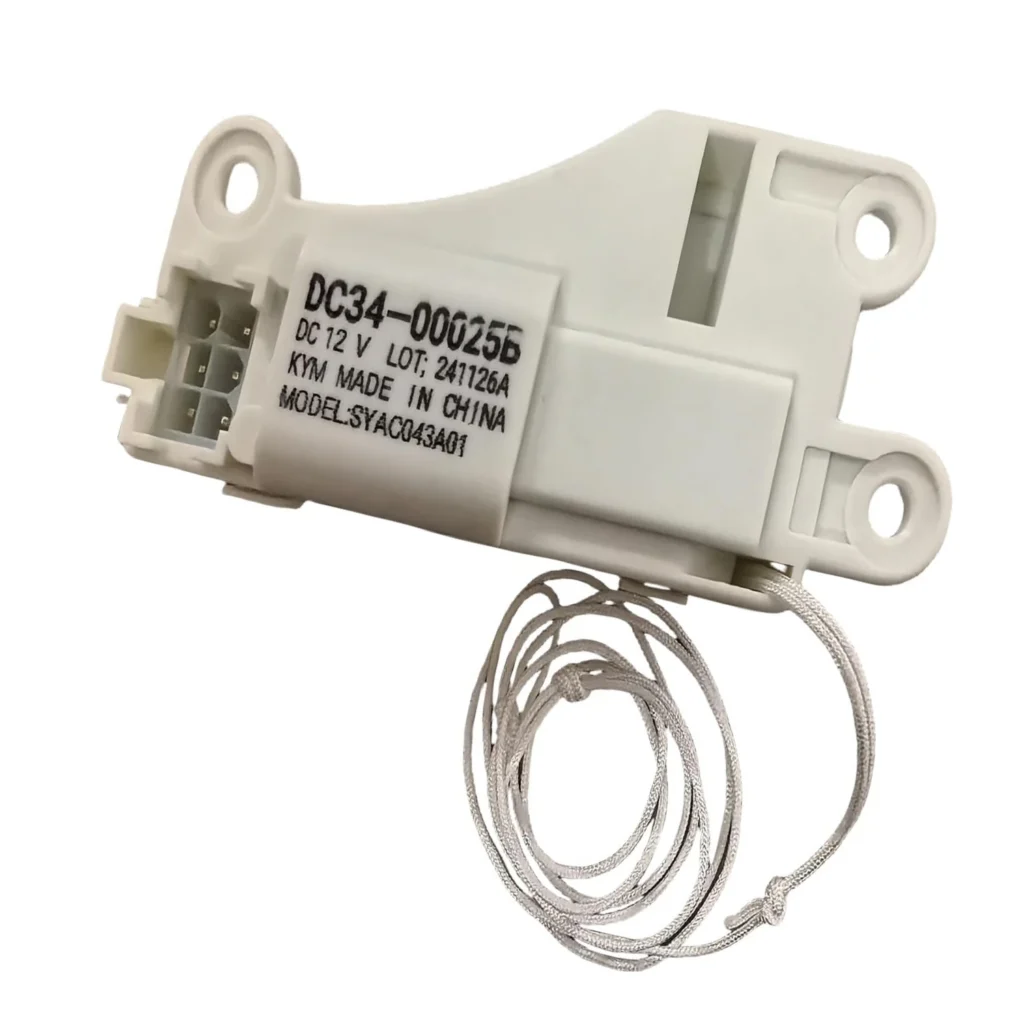
Most Samsung washer door lock switches fail between 3-5 years, but the ones that make it past 7 years all have something in common: their owners understood that this electromechanical component needs regular attention, not just reactive replacement.
The DC34-00025B door lock assembly is compatible with over 100 Samsung washer models including the WF42H5000AW/A2, WF42H5600AW/A2, and WB09H7300GP/A1 series. It's a safety-critical component that prevents the door from opening during the wash cycle when the drum is spinning at high speeds.
How Long Should It Last?
Under normal use, you're looking at 4-6 years of reliable service. But here's what affects that timeline:
Heavy use accelerates wear. If you're running 10+ loads per week, you're cycling the lock mechanism 500+ times annually. That's double what Samsung's testing assumes for "average" households.
Water exposure is the silent killer. The door lock sits right in the splash zone where detergent residue, hard water minerals, and lint accumulate. Over time, this buildup causes the striker to stick or the locking solenoid to work harder than it should.
Temperature cycling matters too. If your washer lives in an unheated garage or laundry room where temps swing from 35°F to 90°F seasonally, the plastic housing contracts and expands, creating micro-cracks that let moisture in.
Signs It's Wearing Out
Catch these early and you might extend the part's life by cleaning or adjusting rather than replacing.
The Door Won't Fully Latch on First Try
You close the door, press start, and nothing happens. You push harder, hear a click, and the cycle begins. This hesitation means the striker plate alignment is off or there's buildup preventing smooth engagement. Don't ignore it — forcing the door creates stress fractures in the locking mechanism.
Delayed Lock Engagement
The cycle starts, but you hear the lock click 2-3 seconds later than usual, or you notice the door light takes longer to indicate it's secure. The solenoid is struggling, usually because of corrosion on the electrical contacts or mechanical resistance from dried detergent.
Intermittent Door Lock Errors
Your washer displays dE, dE1, or door lock error codes sporadically — sometimes the cycle runs fine, other times it stops mid-wash. This inconsistency points to worn contacts inside the switch assembly that aren't making reliable connection anymore.
Visible Residue Around the Door Gasket
White crusty deposits or brown staining near where the door meets the gasket indicate detergent and mineral buildup. If it's visible on the gasket, it's already inside the lock mechanism.
When to Replace vs Maintain
Here's the honest decision framework: if cleaning and adjustment don't solve the problem within two attempts, order the replacement. Don't waste another week troubleshooting a $35 part.
Maintain if: The door locks but shows early warning signs (slight hesitation, visible buildup, occasional slow engagement). Cleaning now buys you 6-18 months.
Replace if: You're getting consistent error codes, the door won't lock at all, you hear grinding sounds, or you've already cleaned it twice with no improvement. The internal components have failed.
One exception: if your washer is over 8 years old and you're already replacing the door lock, consider whether other components (drain pump, shock absorbers) are likely to fail soon. Sometimes it makes more financial sense to replace the machine than to keep fixing aging parts.
Frequently Asked Questions
Can I manually unlock the door if the lock switch fails?
Yes, but you need to access the manual release tab. Unplug the washer, wait for the drum to stop completely, then reach under the front lower panel (remove the kick plate) and pull the small emergency release tab near the door lock assembly. The door should pop open. Never force it while the machine has power.
Does using high-efficiency detergent affect door lock lifespan?
Absolutely. Regular detergent in an HE washer creates excess suds that don't fully rinse out. That residue accumulates everywhere — including inside the door lock mechanism. Stick to HE detergent and use 25% less than the bottle recommends. More isn't better.
Should I leave the washer door open between loads?
Yes, and it directly impacts the door lock. Leaving the door closed traps moisture inside the boot gasket and around the lock assembly, accelerating corrosion. Leave it open 4-6 inches after each wash. This simple habit can add 2+ years to the lock's functional life.
Element showing wear?
DC34-00025B · Replace before it fully fails