
GE Front Load Washer Not Filling with Water — 5 Causes & How to Fix
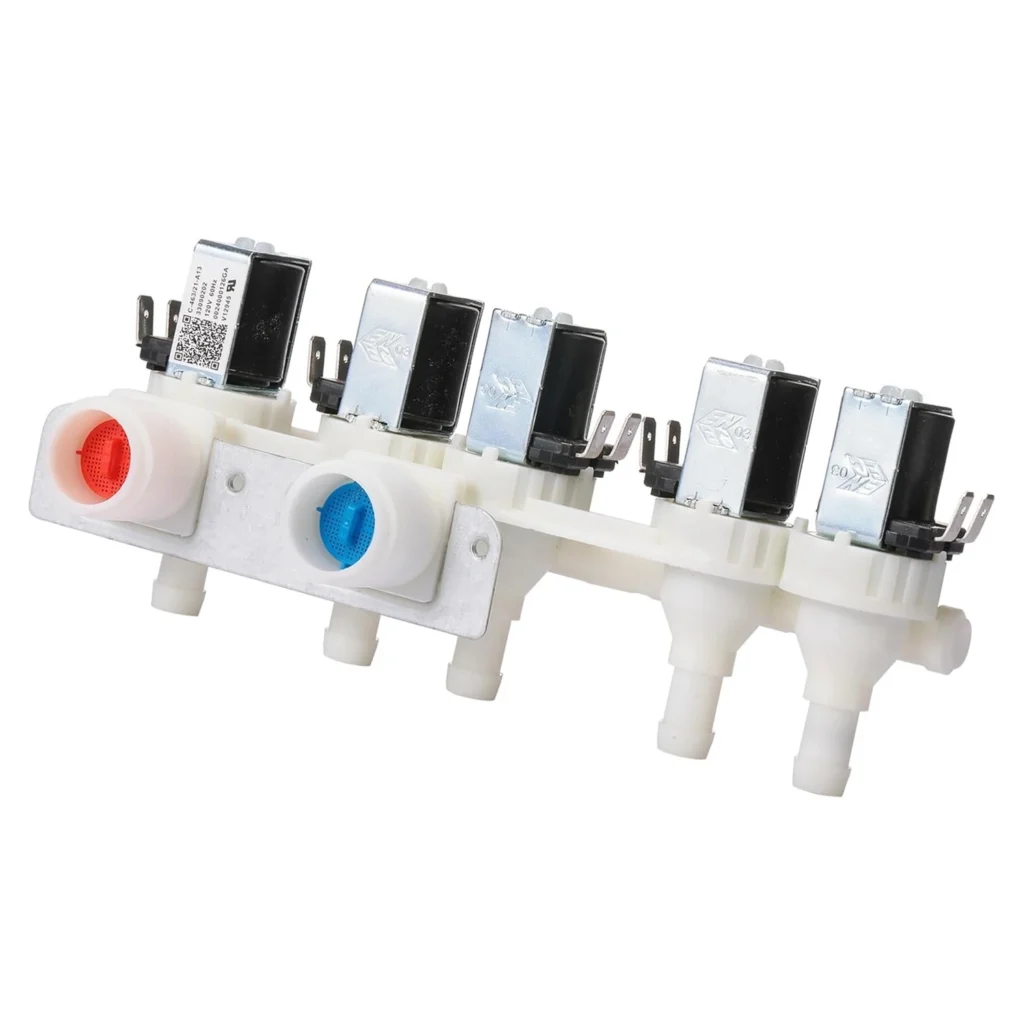
You start a load of laundry, walk away, and come back 20 minutes later to find your GE front-loader stuck with no water inside. The drum's bone dry, the cycle timer hasn't moved, and you're wondering if you're looking at a service call. Before you panic, the water inlet valve — specifically part WH23X29553 — fails more often than most people realize on GE front-load washers built after 2016.
This valve controls water flow into your washer. When it fails, you'll get either no water at all or erratic filling that leaves clothes half-soaked. I've replaced dozens of these valves on models like the GFW650SPN series and GFW850SPN units, and the failure pattern is consistent: they work fine for 3-5 years, then quit without warning.
Quick Symptom Check
Your washer likely has a water inlet valve problem if you notice:
- Washer starts cycle but drum stays completely dry
- Water trickles in extremely slowly (taking 15+ minutes to fill)
- Only hot OR cold water enters, not both
- Cycle stalls at the fill stage and won't advance
- Error codes displayed: E20, E23, or "Water Inlet Problem"
- You hear clicking from the valve area but no water flows
Cause #1: Failed Water Inlet Valve Solenoid (65% of Cases)
The WH23X29553 valve contains two solenoids — one for hot, one for cold. These electromagnetic coils open gates that allow water through. After thousands of cycles, the coils burn out or the internal rubber diaphragms harden and crack.
How to diagnose: Unplug the washer and pull it away from the wall. Remove the top panel (two screws at the back). The inlet valve sits where the fill hoses connect at the back. Disconnect the wire harness and use a multimeter set to ohms. Each solenoid terminal should read 500-1500 ohms. If you get infinite resistance or zero, the solenoid's dead.
Also check for visible cracks in the valve body or mineral buildup blocking the screens. If water pressure in your home exceeds 120 PSI, valves fail faster — the sudden pressure spikes crack internal components.
Fix: Shut off both hot and cold water supply valves. Disconnect the fill hoses (have a towel ready — water will drip). Remove the wire harness connector and the mounting screws holding the valve. The WH23X29553 replacement installs in reverse order. Total time: 25 minutes for someone who's never done it before.
Cause #2: Clogged Inlet Screens (20% of Cases)
Inside each hose connection on the valve, there's a fine mesh screen that catches sediment. If you've got hard water or old galvanized pipes, these screens plug up with rust particles and mineral deposits. Water can't flow through even though the valve's trying to open.
How to diagnose: Disconnect the fill hoses from the valve. Look inside each valve port with a flashlight. See brown/orange crud or white calcium buildup on the screens? That's your problem. Sometimes the blockage is so severe you can't see through the mesh at all.
Fix: If the screens are removable (they are on WH23X29553), carefully pry them out with needle-nose pliers. Soak in white vinegar for 30 minutes, then scrub with an old toothbrush. Rinse thoroughly. If they're damaged or the mesh is corroded, order new screens or replace the entire valve — you can't run without them or debris will damage the valve mechanism.
Cause #3: Faulty Electronic Control Board Signal (8% of Cases)
The main control board tells the inlet valve when to open by sending 120V AC to the appropriate solenoid. If the board's relay fails or a solder joint cracks, the valve never gets the signal even though it's perfectly functional.
How to diagnose: This requires testing voltage at the valve connector while the washer's running a cycle (dangerous if you don't know what you're doing). With the washer plugged in and a cycle started, carefully probe the valve connector terminals with a voltmeter. You should see 120V AC when the washer's supposed to be filling. No voltage? The control board's not sending the signal.
Fix: Control board replacement on GE front-loaders runs $200-400 for the part alone, plus it's more complex to install. Before you go that route, check all wire connections between the board and valve for corrosion or loose pins. I've found several cases where simply reseating the connector fixed the issue.
Cause #4: Kinked or Frozen Fill Hoses (5% of Cases)
Sounds too simple, but I've driven to service calls where the washer was pushed back too far against the wall, pinching the fill hoses flat. Or in unheated laundry rooms, hoses can freeze in winter.
How to diagnose: Pull the washer forward and inspect both hot and cold fill hoses for sharp bends or flat spots. Run your hand along the entire length. Feel for ice if it's cold.
Fix: Replace kinked hoses — once the inner rubber layer collapses, it won't recover. For frozen hoses, warm the room and wait. Consider relocating the washer or adding insulation if freezing is recurring.
Cause #5: Low Water Pressure from Supply (2% of Cases)
The WH23X29553 valve requires minimum 20 PSI to open properly. If your home's water pressure is weak (common in rural areas with well systems), the valve receives the electrical signal but can't physically open against the spring pressure.
How to diagnose: Test water pressure at a nearby faucet with a pressure gauge (hardware stores sell them for $10). Shut off all other water use in the house and check pressure. Below 20 PSI? That's your issue.
Fix: If you're on city water, call the utility — low pressure might indicate a problem with the supply line. On well systems, check your pressure tank and pump. You may need a booster pump installed specifically for the laundry room.
When to Call a Pro
If you've tested the valve electrically and it's getting power but still won't fill, and you've ruled out supply issues, there might be a problem with the pressure switch or internal wiring harness. These diagnoses require pressure testing equipment and schematic knowledge.
Also, if you're uncomfortable working with 120V electricity or don't own a multimeter, hire someone. Water and electricity together are dangerous, and GE front-loaders keep live voltage at the valve during fill cycles.
That said, the water inlet valve itself is genuinely a DIY-friendly repair. You don't need to remove the front panel or tip the machine. Two hoses, two screws, one electrical connector. It's one of the few washer repairs where the part access is actually convenient.
Frequently Asked Questions
Can I clean the WH23X29553 valve instead of replacing it?
You can clean the inlet screens, but if the solenoid coils are burned out or the internal rubber diaphragm is torn, cleaning won't help. There's no repair kit for this valve — it's a sealed unit. The good news is at $82.99, it's not the most expensive washer part you'll ever buy. I've seen people waste hours trying to "fix" a dead valve when replacement takes 25 minutes.
Will this valve work on older GE washer models from 2010-2015?
No. The WH23X29553 is specifically designed for GE front-loaders manufactured 2016 and later, including the GFW650 and GFW850 series. Older models use different valve designs with different mounting brackets and connector types. Check your model number against the compatibility list — if your model starts with GFWN or GFWS followed by a number in the 600-800 range and was made after 2016, you're good.
Why does my washer only fill with cold water even after replacing the valve?
Check that the hot water supply is actually turned on at the wall valve. I know that sounds obvious, but it happens more than you'd think — someone does plumbing work and doesn't fully reopen the valve. Also verify the hot water hose is connected to the hot inlet port (usually marked red). If both those check out, test the hot solenoid specifically with a multimeter. It's possible you got a defective new valve (rare but not impossible). Finally, make sure your washer's cycle settings are actually calling for hot water — many newer cycles default to cold for energy efficiency.
Diagnosed the problem?
WH23X29553 · In Stock · Fast shipping