
GE Washer Not Filling with Water — 5 Causes & How to Fix
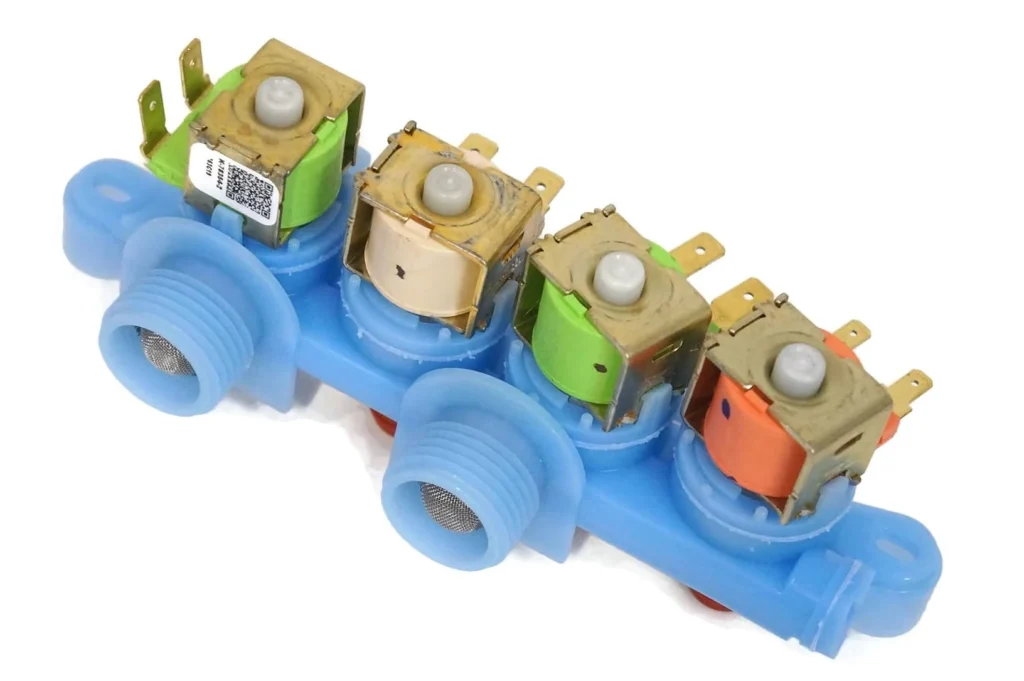
You hit start, the drum barely spins, and 20 minutes later your clothes are sitting in a puddle instead of a full tub. If your GE top-load washer (models GTW680BSJ, GTW685BSL, or similar) won't fill properly — or fills painfully slow — the quad water inlet valve assembly is the prime suspect.
This valve controls water flow into all four dispenser compartments. When it fails, you'll get weak streams, stuck cycles, or no water at all. Here's how to diagnose which component actually died.
Quick Symptom Check
- Washer fills extremely slowly or stops mid-cycle — valve solenoid coils may be weak or burned out
- Water enters one compartment but not others — individual valve port clogged or stuck
- No water enters at all, but washer runs — complete valve failure or electrical issue
- Water leaks from valve housing during fill — cracked valve body or failed internal seal
- Washer displays F21 or H20 error code — insufficient water pressure detected by control board
Cause #1: Failed Solenoid Coils (Most Likely — 65% of Cases)
The WH13X26637 assembly has four solenoid coils that open valve ports when energized. These coils burn out over time, especially in hard water areas where mineral buildup forces them to work harder.
How to test: Unplug the washer and remove the top panel (two screws at the back). Locate the inlet valve — it's where the water hoses connect at the rear. Use a multimeter set to ohms and test each solenoid terminal pair. You should read 500-1500 ohms. Open circuit (infinite resistance) or very low readings mean the coil is shot.
If one or more coils test bad, the entire quad valve assembly needs replacement. You can't rebuild individual solenoids on this part.
Cost: $51.99 for WH13X26637 assembly
Time: 30-45 minutes
Difficulty: Easy — no special tools beyond screwdrivers
Cause #2: Clogged Inlet Screens (15% of Cases)
Inside the valve where supply hoses attach, there are fine mesh screens that catch sediment. In areas with municipal water issues or old galvanized pipes, these screens plug up fast.
Diagnosis: Shut off water and disconnect supply hoses. Look into each valve inlet port with a flashlight. If the screens look brown, rusty, or blocked, that's your problem.
Try cleaning them with an old toothbrush and white vinegar. If they're heavily calcified or torn, you'll need the new valve assembly anyway — replacement screens aren't sold separately for this model.
Prevention tip: Install inline water filters on your supply lines. They cost $8-12 and extend valve life significantly.
Cause #3: Stuck Valve Diaphragms (10% of Cases)
Inside each valve port is a rubber diaphragm that opens when water pressure and solenoid action combine. Hard water minerals can cement these diaphragms in the closed position.
Testing: If solenoids test good electrically but water still won't flow through specific ports, stuck diaphragms are likely. You'll hear the solenoid click when activated (have someone start a cycle while you listen at the valve), but no water moves.
There's no practical way to disassemble and clean these on the quad assembly. Replacement is the only fix.
Cause #4: Low Water Pressure (5% of Cases)
The valve requires minimum 20 PSI to operate properly. If your home pressure is below this — common in rural areas or upper floors of buildings — the valve won't open fully even when electrically sound.
Quick test: Disconnect a supply hose and turn on the water. It should fill a gallon bucket in under 30 seconds with strong flow. If it takes longer or dribbles, pressure is your issue, not the valve.
Solutions include checking the main shutoff (partially closed valves are common after plumbing work), cleaning your home's pressure regulator, or installing a booster pump.
Cause #5: Wiring Harness Issues (5% of Cases)
The valve connects to the control board via a multi-pin harness. Vibration over years can loosen these connections or crack solder joints.
Check: Wiggle the harness connector at the valve while someone watches for water flow changes during a cycle. If flow starts/stops with connector movement, you've found it.
Inspect for corroded pins (common if the machine leaked previously) or burned/melted plastic on the connector housing. Sometimes you can clean contacts with electrical cleaner, but usually the harness or valve needs replacement.
Replacement Steps for WH13X26637
- Unplug washer and turn off hot/cold water supply valves
- Pull washer away from wall for access
- Remove two screws at back corners of top panel, slide panel back and lift off
- Disconnect inlet hoses from old valve (have towels ready for residual water)
- Label or photograph wire connections to each solenoid terminal
- Unscrew valve mounting bracket (usually two 1/4" screws)
- Remove old valve assembly
- Install new WH13X26637, reversing removal steps
- Hand-tighten hose connections, then add 1/4 turn with pliers
- Run test cycle and check for leaks
Critical note: Do NOT overtighten supply hoses. The valve body is plastic — excessive torque will crack the threads.
When to Call a Pro
DIYers can handle this repair easily. However, call an appliance tech if:
- Your washer still won't fill after valve replacement
- You see water pooling inside the cabinet (could indicate tub or pump issues)
- The control board shows multiple error codes
- You're uncomfortable working with water supply connections in a confined space
Professional diagnosis typically runs $95-150, plus parts and labor. Total repair cost through a service company: $275-400.
Frequently Asked Questions
Will this valve fit my GTW680BSJ4WS washer?
Yes. The WH13X26637 is the direct replacement for all GTW680 and GTW685 series models manufactured 2015-2022. It supersedes the older WH13X24058 part number used in earlier production runs. Check your model tag (inside the lid or on the back panel) — if it starts with GTW680 or GTW685, you're good.
Can I replace just one solenoid instead of the whole valve?
No. GE doesn't sell individual solenoid coils for this quad valve assembly. The part is designed as a sealed unit — attempting to disassemble it for individual component replacement will likely crack the plastic housing or damage internal seals. The full assembly replacement is actually more reliable long-term than trying to rebuild it piecemeal.
Why does my washer take 10 minutes to fill when it used to take 2?
This is classic weak solenoid behavior. As the coil windings degrade, they generate less magnetic force, so the valve diaphragms open only partially. Water trickles instead of flowing at full pressure. The valve still technically "works," but it's on its last legs. Replace it before it fails completely mid-cycle and leaves you with a tub full of soapy clothes.
Diagnosed the problem?
WH13X26637 · In Stock · Fast shipping