
GE Washer Won't Stop Filling or Fills Slowly — 4 Causes & How to Fix
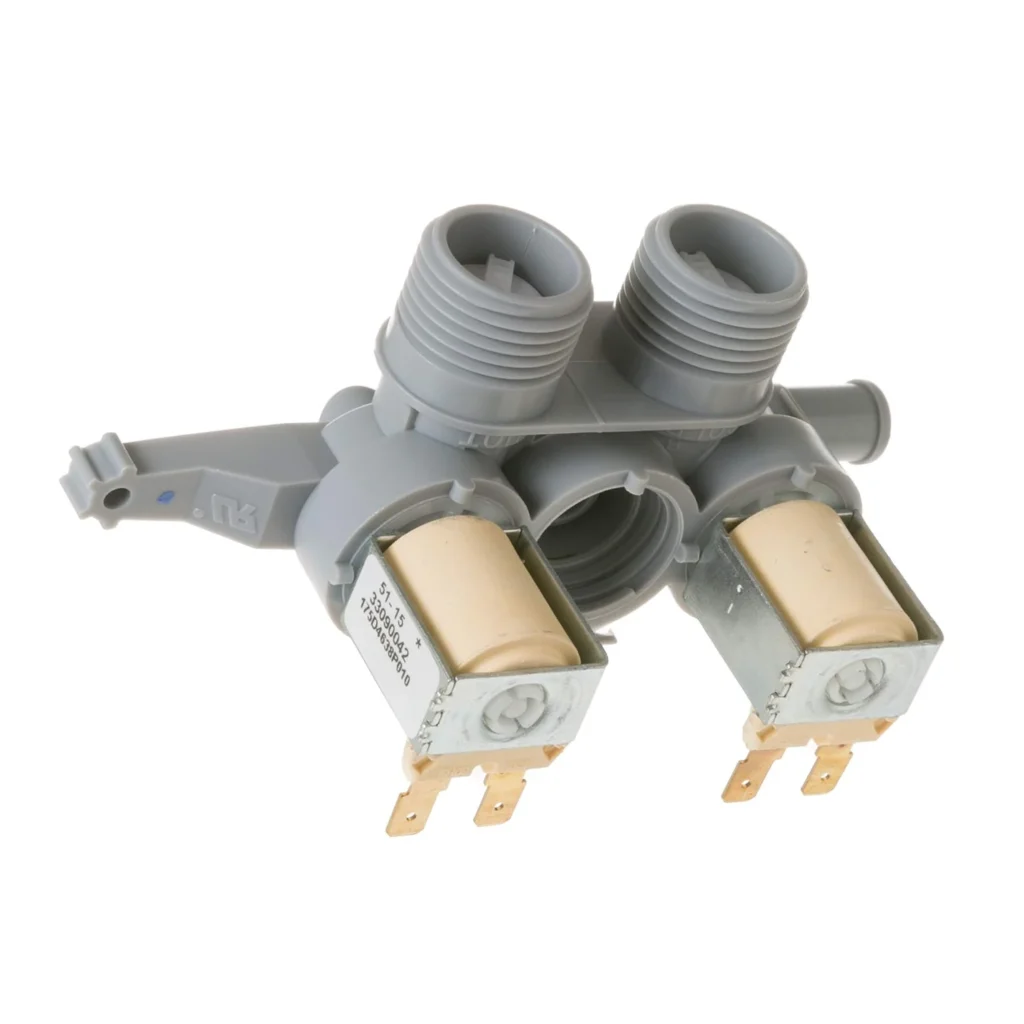
You start a load of laundry, walk away, and come back to find water pooling on your laundry room floor. Or maybe your GE washer takes 20 minutes just to fill for a rinse cycle. Both problems — continuous filling and slow filling — often point to the same culprit: a failed triple water inlet valve.
The inlet valve controls hot, warm, and cold water entering your machine. When it fails, the solenoids either stick open (causing overfilling) or get clogged with sediment (causing slow fills). Models like the GTWN4250M0WS, GCWN4950D1WS, and WPRE8150K2WT use the WH13X10037 triple inlet valve, and it's one of the most common wear items on these machines.
Quick Symptom Check
Before you tear into the machine, verify your symptoms match a valve failure:
- Washer fills continuously even when full, eventually overflowing
- Takes forever to fill — what should take 3-4 minutes takes 15-20
- Water leaking from inlet connections at the back of the machine
- No water entering on certain cycles (hot or cold specifically)
- Water temperature incorrect — getting hot when you selected cold
If you're seeing any combination of these, the inlet valve is your likely problem. But let's walk through all possible causes, starting with the most probable.
Cause #1: Failed Inlet Valve Solenoids (75% of Cases)
The WH13X10037 has three solenoids that open and close to control water flow. Over time, these solenoids wear out. The rubber seal inside degrades, or the electromagnetic coil burns out. When a solenoid fails in the open position, water flows continuously. When it fails closed or gets weak, you get slow or no fills.
How to diagnose: Unplug the washer and turn off both water supply valves. Pull the machine away from the wall. The inlet valve is where the fill hoses connect at the back. Disconnect the hoses (have a towel ready — trapped water will drip). Check the screens inside the valve for debris. If they're clean but you still have issues, the solenoids have likely failed internally.
You can test each solenoid with a multimeter set to ohms. Each should read between 500-1500 ohms. Infinite resistance means the coil is burned out. But honestly? If you've got the valve out and you're testing it, just replace it. The part costs $73.99 and failing solenoids don't get better.
Fix difficulty: Easy. Shut off water and power, remove two screws holding the valve bracket, disconnect wire harnesses and hoses, install new valve. 20-minute job for most people.
Cause #2: Clogged Inlet Screens (15% of Cases)
Inside each inlet port on the valve, there's a tiny mesh screen that filters debris from your water supply. If you have hard water or old galvanized pipes, these screens get clogged with sediment, rust particles, and mineral deposits. Restricted flow means slow fills.
How to diagnose: Disconnect the inlet hoses and look inside the valve ports with a flashlight. See brown, white, or green crud on the screens? That's your problem. You can try picking it out with needle-nose pliers or a small screwdriver, but those screens are delicate. Break one and you're replacing the valve anyway.
The fix: If the screens are only lightly blocked, you might clean them. But if your water quality is poor enough to clog these screens once, it'll happen again. Consider installing inline sediment filters on your supply hoses — $15 insurance policy that saves your $74 valve.
Cause #3: Low Water Pressure (7% of Cases)
If both supply lines have low pressure, your washer fills slowly even with a perfectly good valve. The WH13X10037 needs at least 20 PSI to function properly, and GE recommends 30-120 PSI.
How to diagnose: Turn on a nearby faucet full blast. Does it have strong pressure? Now check the shutoff valves behind your washer — are they fully open? Sometimes they get bumped partially closed. If your whole house has low pressure, that's a plumbing issue, not a washer issue.
Quick test: Disconnect the inlet hoses from the washer (keep them connected to the wall valves), point them into a bucket, and turn on the valves. You should get a strong stream from each. Weak dribble means pressure or valve problems, not the washer.
Cause #4: Electronic Control Board Malfunction (3% of Cases)
The control board tells the inlet valve when to open and close based on the water level sensor. If the board fails or the sensor gives false readings, the valve might stay energized when it shouldn't, causing continuous filling.
How to diagnose: This is rare and hard to diagnose without a schematic. If you've replaced the inlet valve and still have overfilling issues, and the water level sensor checks out (that's a separate part, usually a pressure switch or tube), then you're looking at board-level problems. That's when most people call a tech because control boards for these models run $200-300.
The Real Fix: Replacing the WH13X10037 Inlet Valve
Here's the honest truth: if your washer is continuously filling or filling slowly, and you've verified water pressure is good, just replace the inlet valve. Don't overthink it.
Before you start: Disconnect power at the breaker (not just unplugging — these washers can have residual voltage). Turn off both hot and cold water supply valves. Have towels ready.
Step-by-step:
- Pull washer away from wall for access
- Disconnect fill hoses from valve (water will drip — normal)
- Remove the two mounting screws securing the valve bracket
- Disconnect wire harness connectors (take a photo first)
- Disconnect internal hoses from valve to tub
- Install new WH13X10037 in reverse order
- Reconnect everything, turn on water, check for leaks
- Run a test cycle and verify proper fill operation
Total time: 20-30 minutes. Difficulty: easy if you can handle a screwdriver and don't mind a little water spillage.
When to Call a Pro
This is a straightforward DIY repair for most people. Call a technician if:
- You've replaced the valve and still have the same problem (suggests control board or sensor issues)
- You're not comfortable working around water and electrical connections
- The washer is still under warranty (don't void it)
- You find corroded wiring or damaged connectors during your inspection
A service call will run $150-250 for diagnosis and valve replacement. You're paying for convenience and warranty on the work. That's worth it for some people, and that's fine.
Preventing Future Inlet Valve Failures
Want your new valve to last more than 3-4 years? Two things help:
Install inline filters: $15 filters on each supply line catch sediment before it reaches the valve screens. Replace them yearly.
Don't overtighten supply hoses: Hand-tight plus a quarter turn with pliers is enough. Overtightening cracks the valve housing, causing leaks that force early replacement.
Frequently Asked Questions
Why does my GE washer keep filling even when it's full?
A stuck-open solenoid in the inlet valve is the most common cause. The valve receives voltage to open but the solenoid fails mechanically and can't close. Water continues flowing until you manually shut off the supply valves or stop the cycle. The WH13X10037 valve replacement fixes this in 95% of cases.
Can I repair a leaking inlet valve instead of replacing it?
Not reliably. The internal seals aren't serviceable parts, and attempting repair usually causes more problems. At $73.99, the WH13X10037 is cheap insurance compared to water damage from a continued leak. Replace it, don't repair it.
Will a bad inlet valve cause other washing machine problems?
Yes. Overfilling can trip the pressure switch repeatedly, making the washer think it's full when it's not, leading to incomplete cycles. Slow filling extends cycle times and can cause the control board to throw error codes. A failing valve stresses other components, so replace it promptly when symptoms appear.
Diagnosed the problem?
WH13X10037 · In Stock · Fast shipping