
GE Washer Leaking from Back — 5 Causes & How to Fix WH13X10033
You walk into your laundry room and there's a puddle spreading out from behind your GE washer. Again. You've already mopped it up twice this week, and now you're wondering if you need a new machine or if there's something fixable causing this mess.
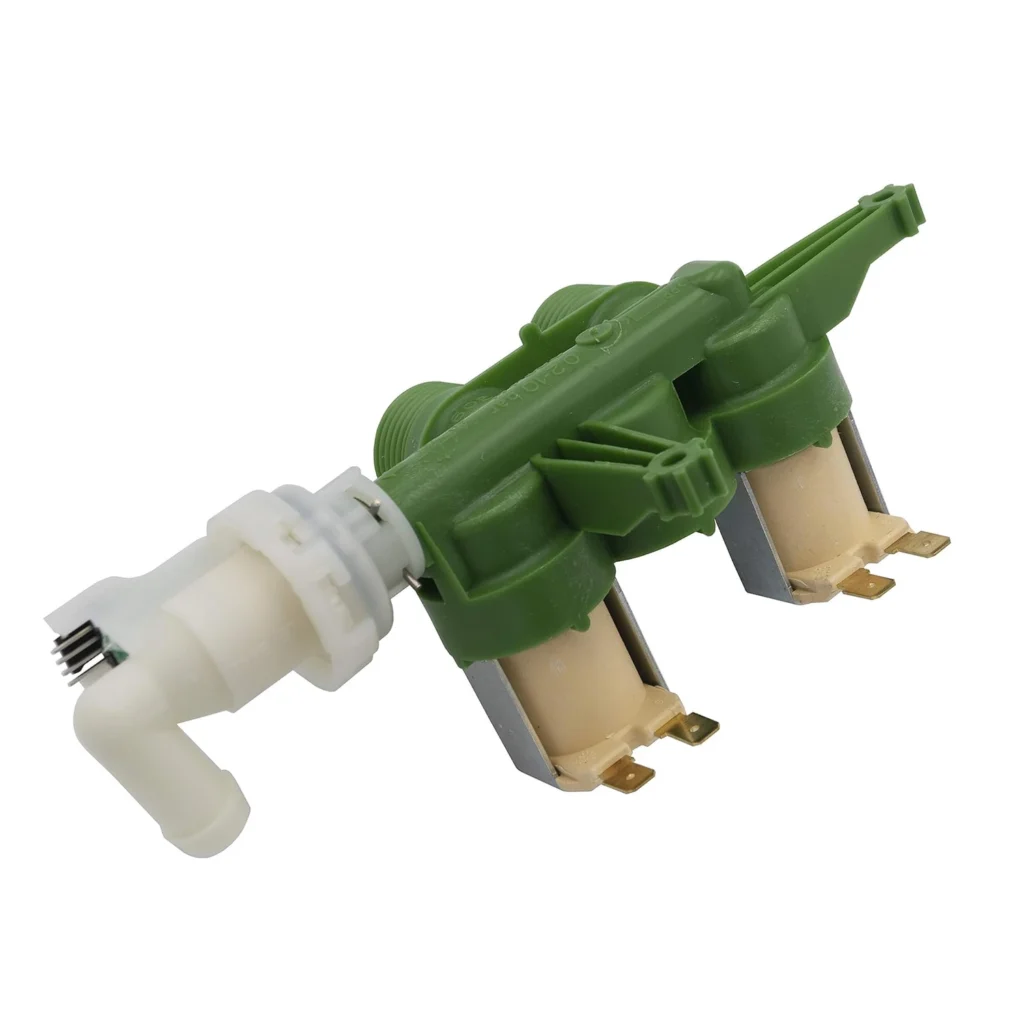
When a GE washer leaks from the back during fill or wash cycles, the water inlet valve is the first suspect — especially on models like the GWRE6270H0WW, WCRE6270H1CC, and WHRE5550H2WW. The WH13X10033 is a triple inlet valve that controls hot, warm, and cold water flow. When it fails, you'll see water seeping from the hose connections or dripping down the back panel.
Here's the thing: not every leak means you need this valve. Let me walk you through the actual causes, starting with what's most likely.
Quick Leak Location Check
- Water appears during the fill cycle, not during spin
- Leak originates from the top-back area where hoses connect
- You hear the water rushing in, then see dripping shortly after
- Puddle forms even when washer isn't running (continuous drip)
- Water stops leaking when you turn off the supply valves
Cause #1: Loose Hose Connections (60% Probability)
Before you blame the valve itself, check the obvious stuff. Those rubber hoses connecting to the valve work loose over time from vibration. I've fixed dozens of "bad valves" that were just finger-tight connections.
How to check: Pull the washer away from the wall. Look at where the three hoses connect to the valve assembly. Try tightening each connection by hand — if it moves more than a quarter turn, that's your leak. You'll need channel locks to properly snug them down, but don't go gorilla on them. Tight enough to compress the rubber washer inside, not tight enough to crack the plastic threads.
If water's pooling right at a connection point and stops when you tighten it, you're done. No new parts needed.
Cause #2: Failed Inlet Valve Solenoid (25% Probability)
The WH13X10033 has three solenoid coils — one for each water temperature combination. When a solenoid fails, it either won't open (no water flow) or won't close completely (continuous leak even when washer's off).
Diagnosis test: Turn off your washer mid-cycle and shut the lid. Wait five minutes. If water's still dripping from the valve area, a solenoid isn't closing. These coils should measure between 500-1500 ohms with a multimeter. Anything outside that range means replacement time.
Cost: The WH13X10033 valve assembly runs $81.99. There's no repairing individual solenoids — you replace the whole unit. Figure 45 minutes for the swap if you're comfortable with basic tools.
Cause #3: Cracked Valve Body (10% Probability)
Plastic doesn't last forever, especially when it's constantly under water pressure and vibration. I've seen valve bodies crack right at the mounting screw holes or where the inlet ports connect.
Look for: Hairline cracks in the white plastic housing, water seeping from the middle of the valve (not the connections), or visible stress marks around screw points. If you see any of this, the valve body's compromised. No amount of tightening fixes a crack.
This usually happens on washers 7+ years old, or if someone over-torqued the mounting screws during a previous repair.
Cause #4: Worn Inlet Screens (3% Probability)
Each inlet port has a small mesh screen that filters sediment. When these screens get clogged or deteriorate, they can prevent proper sealing or cause pressure buildup that leads to leaks at the connections.
Quick check: Unscrew the inlet hoses from the valve. You'll see small screens inside each port — they should be intact and relatively clean. If they're loaded with sediment or torn, water can bypass the seal. You can sometimes carefully clean these with a toothbrush and vinegar, but if they're damaged, you need the new valve anyway since screens aren't sold separately.
Cause #5: High Water Pressure (2% Probability)
If your home water pressure exceeds 80 PSI, it can overwhelm the valve's seals and cause leaking even when everything's technically functioning. This is rare, but I've seen it in newer construction where pressure regulators weren't installed properly.
Test it: Get a pressure gauge from any hardware store (about $10). Screw it onto an outside spigot and turn the water on. Reading over 80 PSI? You'll need a pressure reducing valve installed on your main line. The washer valve will keep leaking no matter how many times you replace it otherwise.
When to Call a Pro
If you're seeing water leak from somewhere other than the inlet valve area — like under the drum or from the front door seal — that's a different issue entirely. Also, if you've replaced the inlet valve and still have leaking after checking all connections, there might be internal cabinet damage or a cracked tub that's beyond DIY territory.
The valve replacement itself is straightforward: disconnect power, shut off water, remove three hoses, unscrew two mounting screws, swap the valve, reconnect everything. But if you're not comfortable working with water connections or don't have the 30 minutes to do it carefully, a tech will charge $150-200 including the part.
Frequently Asked Questions
Can I repair just one solenoid instead of replacing the whole valve?
No. The WH13X10033 is a sealed assembly unit. Individual solenoids aren't sold separately, and attempting to disassemble it will likely cause more leaks. When one solenoid fails, replace the entire valve assembly — it's the only reliable fix.
Will this valve fit my Hotpoint or RCA washer?
Yes, if your model number is listed as compatible. This valve works across GE, Hotpoint, and RCA front-load washers that use the triple-inlet design. Check your model number against the compatibility list — models like WPRB8350H0WT and WPRE6150H0WT use this same part.
How long should the WH13X10033 inlet valve last?
Typical lifespan is 5-8 years depending on water quality and usage frequency. Hard water shortens life because mineral deposits build up on the solenoid mechanisms. If you're replacing it before year 5, check your home water pressure — it might be too high and causing premature failure.
Diagnosed the problem?
WH13X10033 · In Stock · Fast shipping